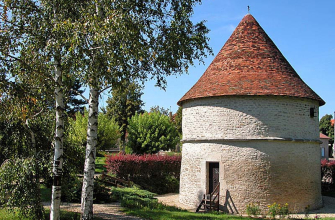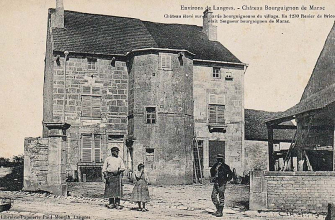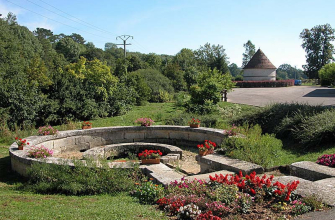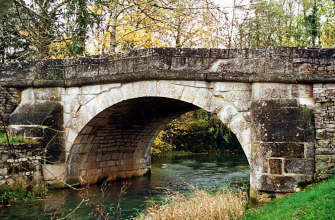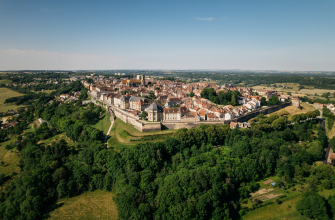
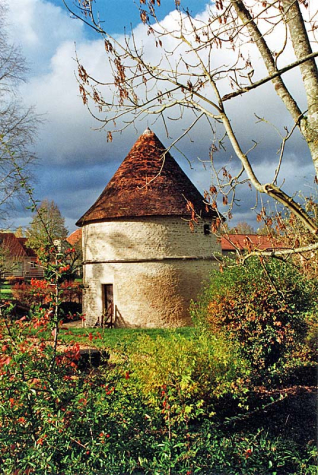
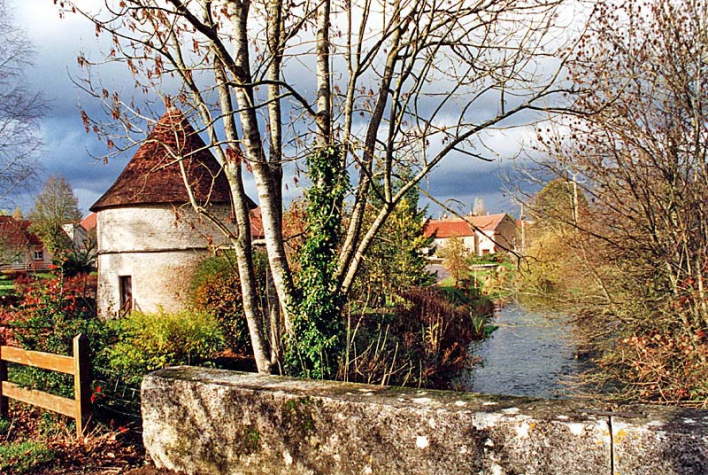
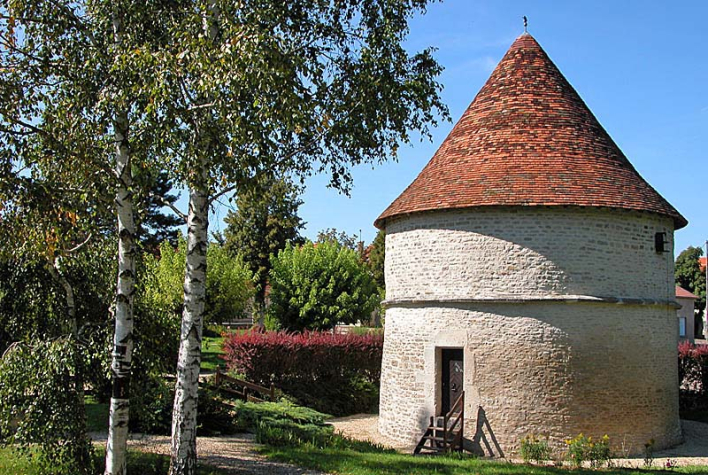
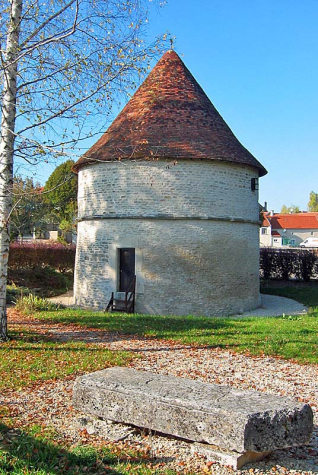
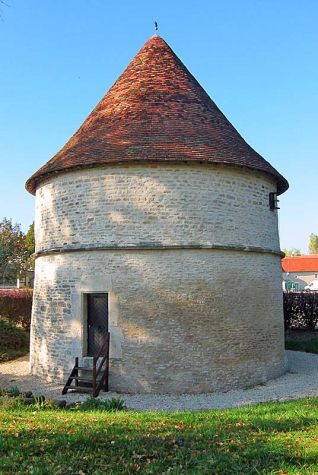
A visit to the dovecote at the place known as "la basse-cour" shows us that we are on the site of the medieval farm (no longer in existence) of the Champagne castle that dominates it on the other side of the Suize, surrounded by greenery. The dovecote, known as a "foot dovecote", survived the French Revolution with flying colours (although it was usually the first symbol of feudalism to be destroyed), and probably dates from no earlier than the 15th-16th century, contrary to the tourist signs around the village ("Colombier XIIe s.").
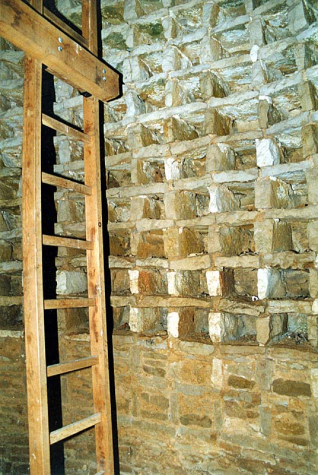
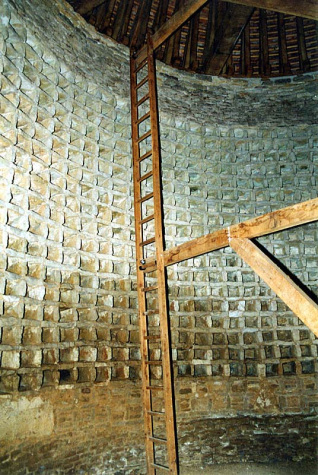
However, this dovecote is still of medieval design, with no lower room and bolt holes extending from the base of the walls (hence the name "foot dovecote"), representing a total of 1,491 bolts.
The dovecote corresponds to a dovecote right - or privilege - held by the squire, who must be the owner of seigneury dues or land (in principle, two arpents per boulin under the Coutume de Paris).
Note that the lower few rows of bolts were sealed with a smooth plaster at some unknown time (146 sealed bolts), no doubt to prevent rodents from raiding the nests. This detail complements the external drip moulding (or radière) placed at mid-height for the same purpose and the single high dormer window facing east, allowing pigeons to fly in (with a shutter that closes during the sowing season).
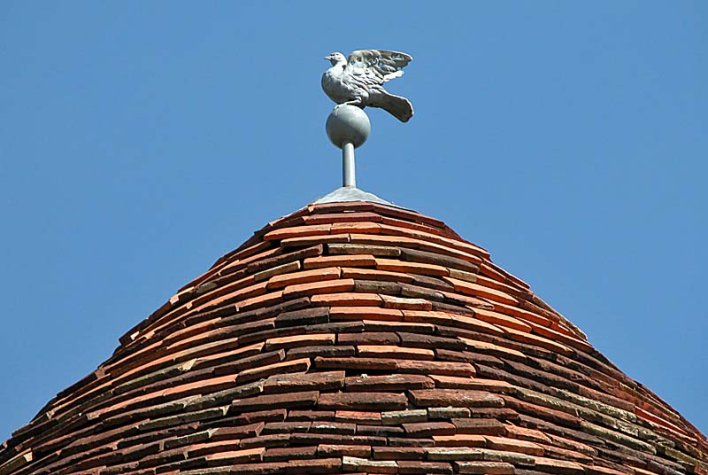
This dovecote was entirely restored by the Arc-en-Barrois tourist office between 1982 and 1984 under the chairmanship of Pierre Béguinot, who tirelessly restored the Beauvoisin underground passages near Bugnières, but never saw the project through to completion. The framework was built by the Compagnons du Devoir in their workshop at Muizon near Reims, and covered with 9,000 "gironnées" (whistle-cut) tiles.
Not open to visitors: this private site can only be seen from the outside.
Colombier du Château Champenois à Marac