Public scales or village weights between 1890 and 1960: In France, between the end of the 19th century and the beginning of the 20th, scales for livestock and agricultural products were essential tools in the economy of rural areas, which lived exclusively from farming and livestock rearing. They were necessary for negotiations and transactions. The history of the "public weight" is essentially linked to one of our country's taxes: the octroi. The octroi was a municipal tax that consisted of taxing various products entering towns according to their weight. It was a toll for goods, the forerunner of VAT. Before going to market, you had to weigh wine, sand, cattle, minerals, oil, wood and so on. Weighing goods was also a source of revenue for small towns, as it was a paid service.
To this end, during the 19th century, each municipality built a small building, usually made of local stone, at the entrance to its town or in the square. This weighbridge, also known as a bascule bridge in popular jargon, had a weighing platform in front of it. This platform accommodates all the vehicles to be weighed: carts, and later lorries, cars, wagons, etc.
Underneath, in a pit, a complex system of levers is used to weigh the load on a platform sometimes surrounded by removable barriers (to contain the livestock). A weighing cabin, a small building, houses the 'arm' of the machine with its sliding counterweight so that the weight can be read.
These scales operate on the principle of Roman scales and are highly accurate if they are properly adjusted.
A sworn officer, the weigher, is in charge of the operation and issues weighing slips. The vehicle was first loaded and then unloaded, with the difference giving the quantity of goods delivered...
With the abolition of the octroi tax in 1943, public weights gradually lost their importance. However, they were still widely used, on a self-service basis, by many trades such as farmers to weigh their crops, animals for sale, fruit and vegetable shipments, etc.
All these typical installations will become obsolete with the increase in tonnage transported by lorries and the installation of new weighing equipment in companies.
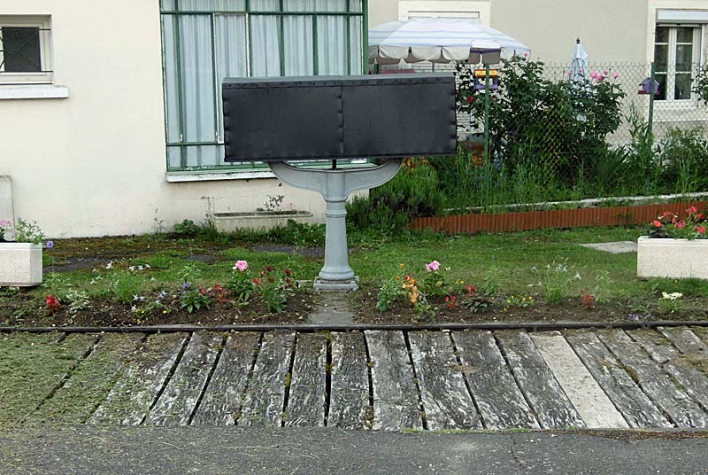
Bascule publique de Marac