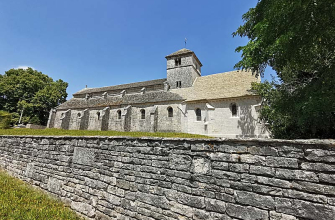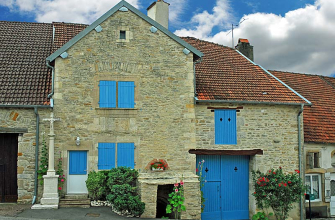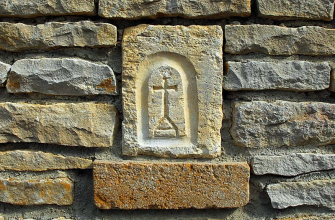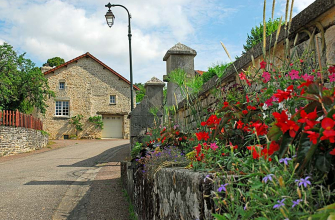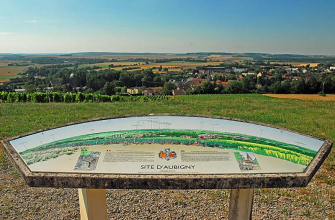
In Late Antiquity, the heights of the Aubigny site were occupied by a very important Gallo-Roman monumental site consisting of one or more fana (or fanum, commemorative funerary monuments), whose site remarkably dominated the crossroads of the Trier-Lyon road below, with its branch road to Geneva. These monument(s) dominated a large secondary Gallo-Roman settlement, whose dwellings stretched to the top of the village of Aubigny, below the houses of today.
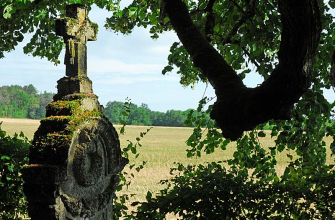
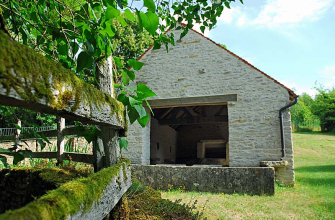
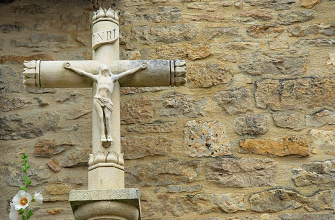
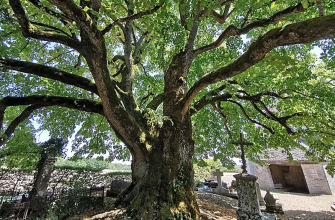
At the end of the first millennium, in 870, there was evidence of a rural settlement (villa) and/or an early feudal defensive position (the remains of which were seen in 2006 halfway up the hillside) behind the restored washhouse. This villa, with its chapel and cemetery, was the origin of the Merovingian parish of Aubigny, whose chapel was built on the exact site of the Gallo-Roman fanum(s). Later, two undated 12th-century charters mention the present-day village of Aubigny (villa Albiniaci or villa Albiniacensi) around the original farm (villa) towards the end of the Carolingian period, this time with the presence of a church, its aître (parish territory) and its cemetery.
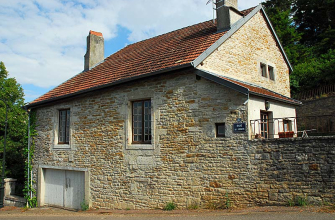
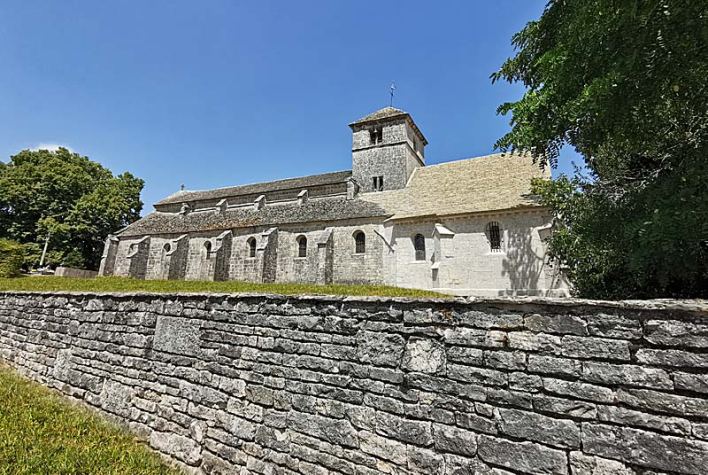
In 1099, the monks of the Benedictine abbey of Bèze (Côte D'or), encouraged by the bishop of Langres, founded a priory on this site, which was richly endowed by the lords of Montsaugeon. The Benedictines established their priory buildings on the vast terrace of the Aubigny cemetery against the church to the south, and turned it into a parish and priory church, which in the middle of the 13th century incorporated the inhabitants of the newly-created village of Vaux-sous-Aubigny, just below the main road, and then of Couzon.

Visit available on the free Id-Vizit app!
A real personal travel companion, Id-Vizit offers you personalised, fun and interactive tours!
+ More info on Id-Vizit
Circuit de découverte d'Aubigny
Localisation : AUBIGNY-SUR-BADIN