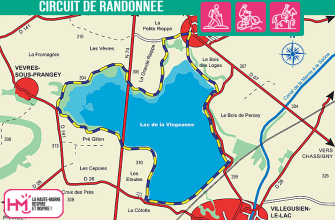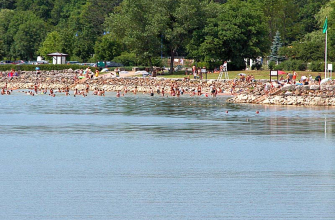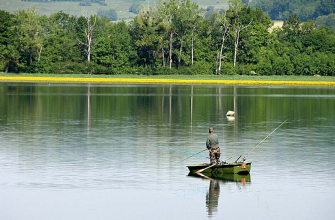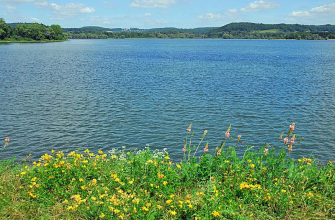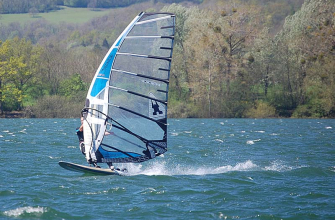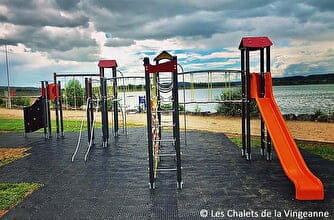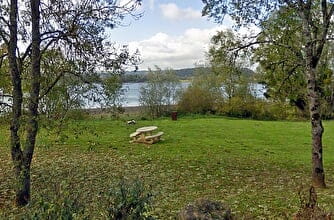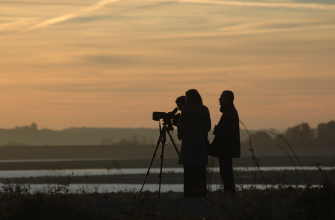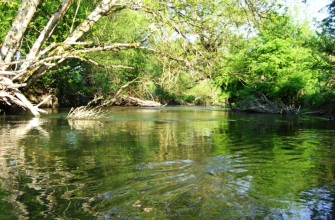
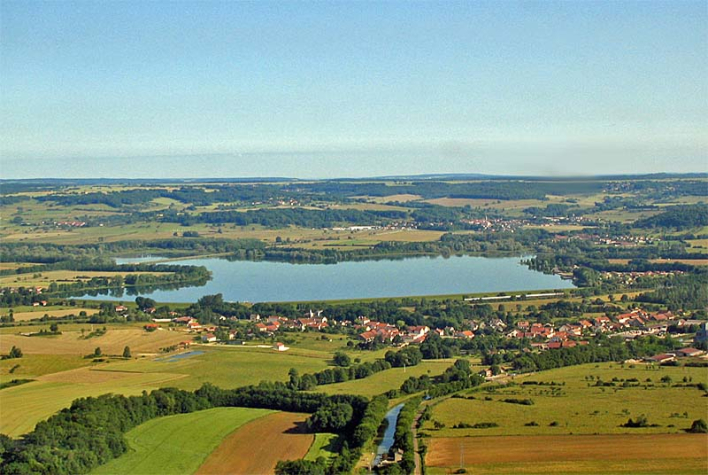
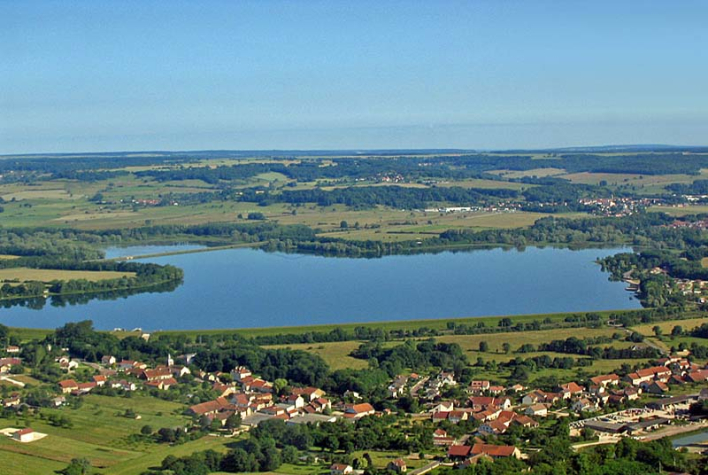
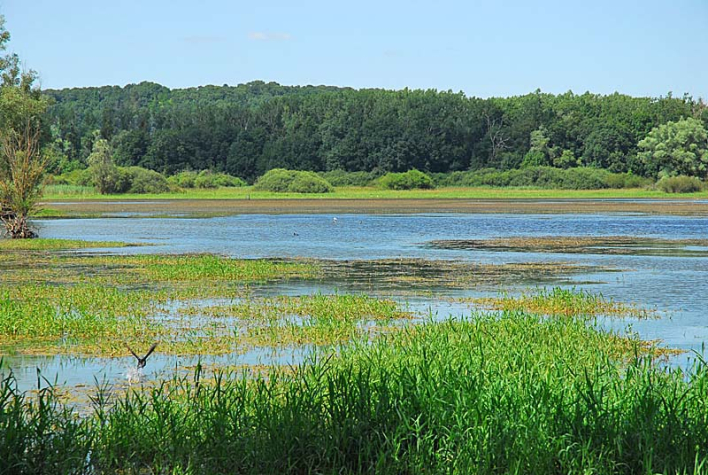
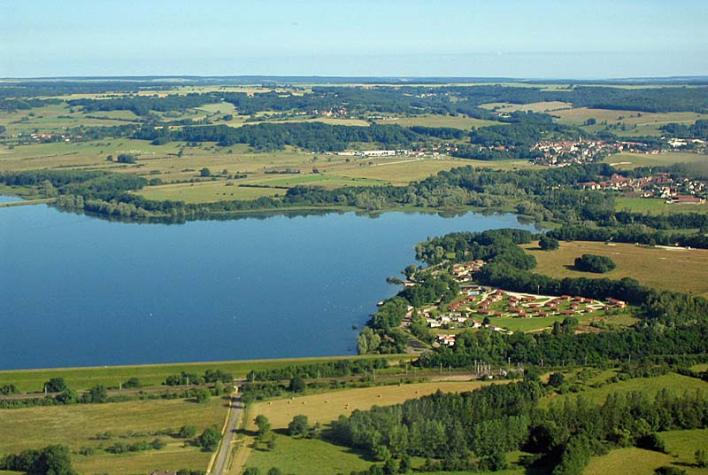
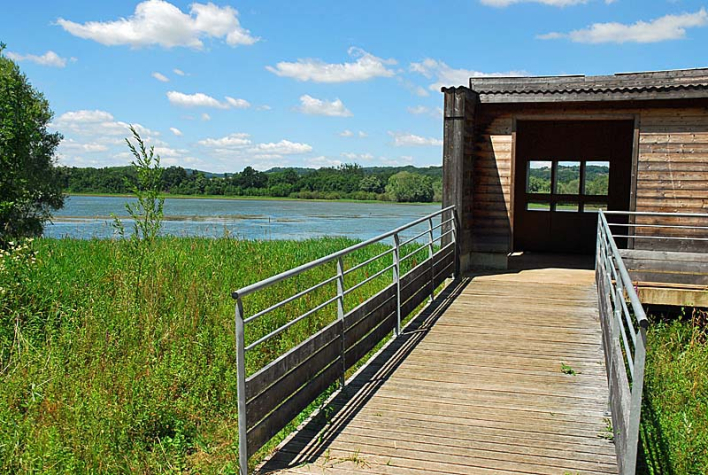
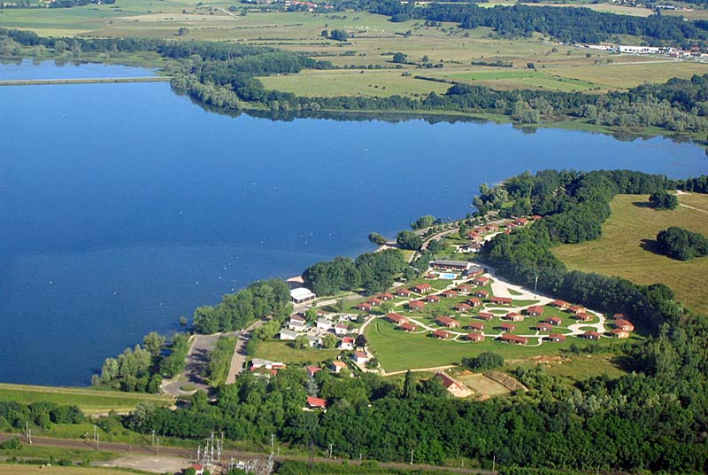
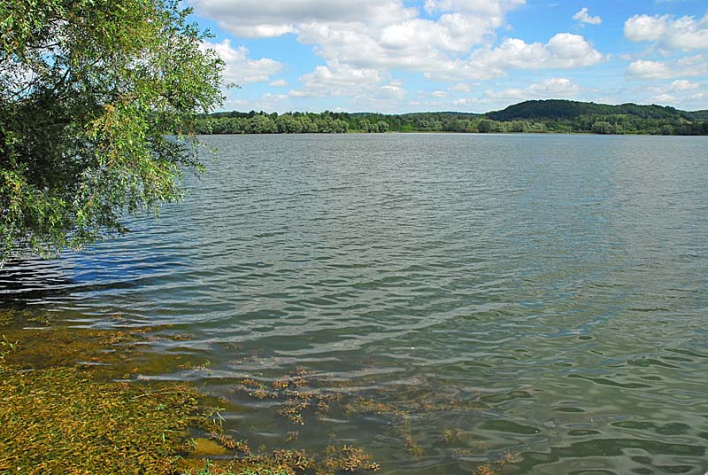
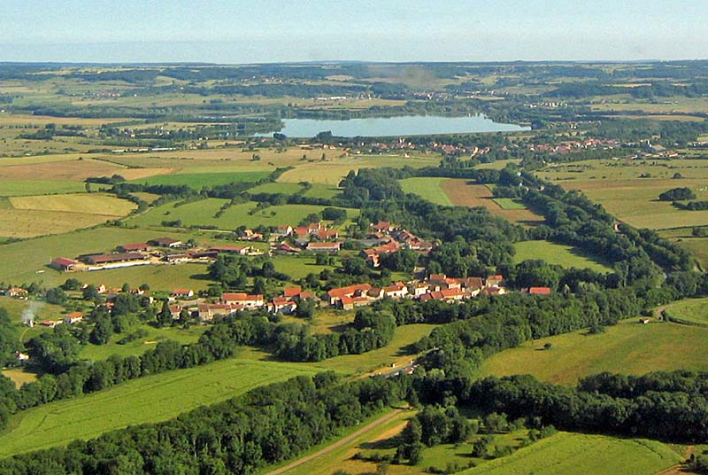
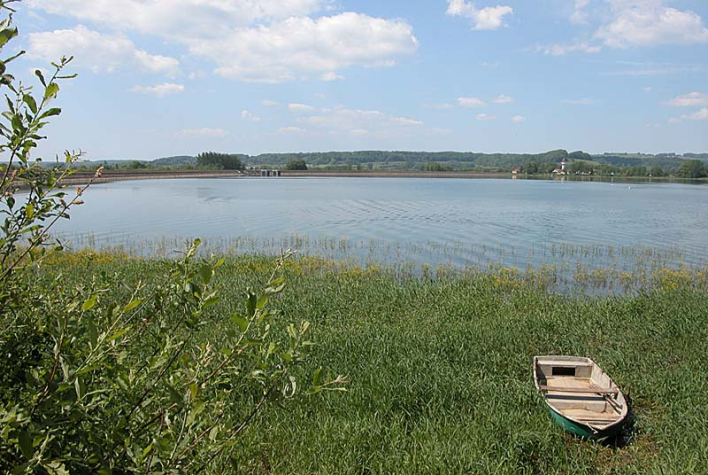
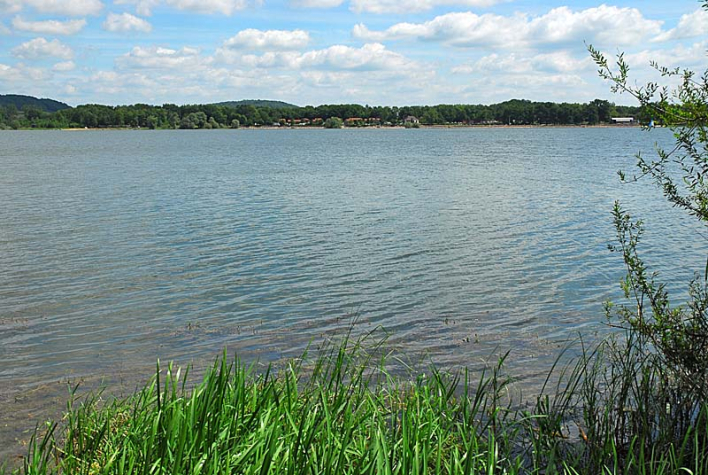
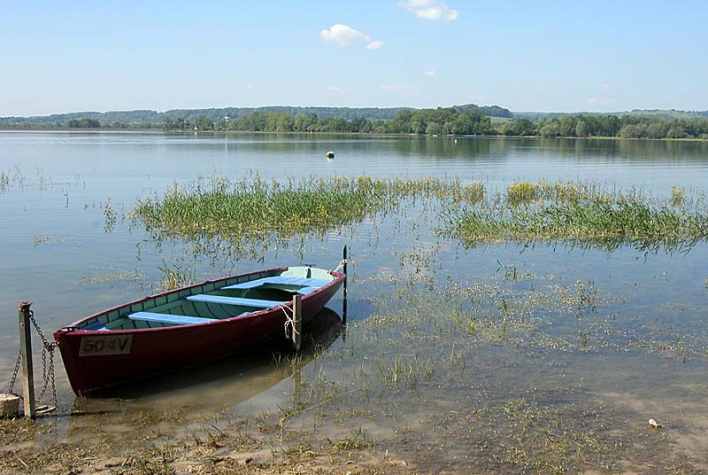
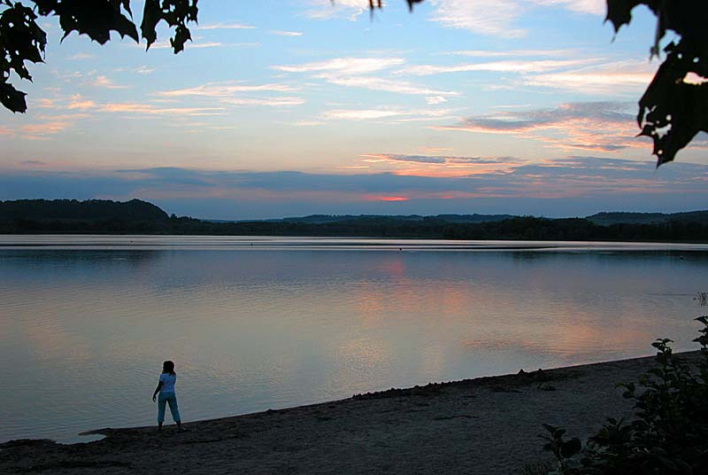
At its highest, Lake Vingeanne covers an area of 199 hectares. It has the longest dam of the 4 lakes, built in 1906. It is a favourite with birdwatchers, who come to observe the migrations and residences of numerous species of bird thanks to the discovery trail and observatory. The leisure centre and beach are ideal for family fun. You can also take an 8km walk or mountain bike ride around the park.

The walk is available on the free Id-Vizit app!
A real personal travel companion, Id-Vizit offers you personalised, fun and interactive tours!
+ More info on Id-Vizit

Fun tour also available on the Id-Vizit app:
In search of lost feathers
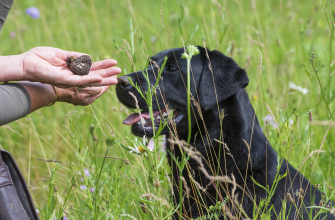
Hi, I'm Hip-Hop. I'm the son of the king of the Vingeanne festival. Yes, you've guessed it, my dad is the famous and talented feathered dog. Every year he and his mates organise a great weekend of concerts by the lake. And he's been doing it since 1997! Except that this year I made a blunder! I brought along his new feathered crown to show it off to some friends, but I lost it by the lake. Suffice to say that the feathered dog festival, without feathers, won't be much fun! I absolutely need your help to find her. So we're going to set off around Lake Vingeanne in search of a sign that might tell me what happened. You'll see that the path is lined with interpretation panels that will give us clues and teach us lots of things about the lake, its inhabitants and, of course, the music!
For nature lovers :
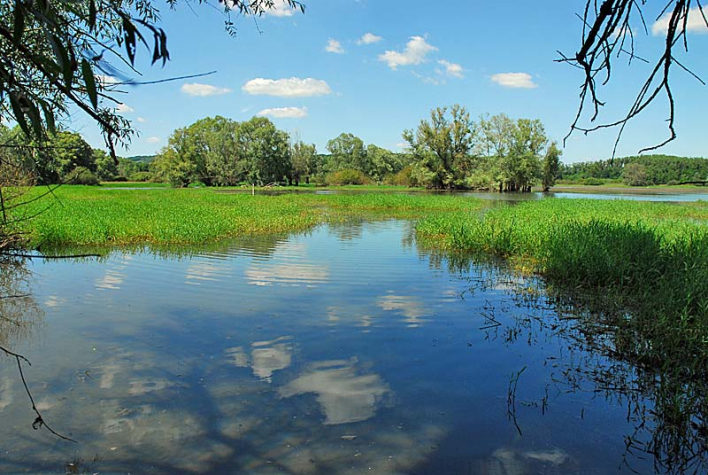
The Villegusien lake, or Vingeanne reservoir, was created at the end of the 19th century and is one of four artificial reservoirs in the Langres area designed to ensure the navigability of the Marne-Saône canal. Situated at an altitude of 300 metres, its eutrophic waters, rich in mineral nutrients, occupy the bottom of a wide depression at the foot of the Langres Plateau. This biotope is characterised by a fluvial dynamic: the water level, which varies greatly depending on the time of year and the water requirements of the canal, is very low in late summer and autumn.
Vegetation:
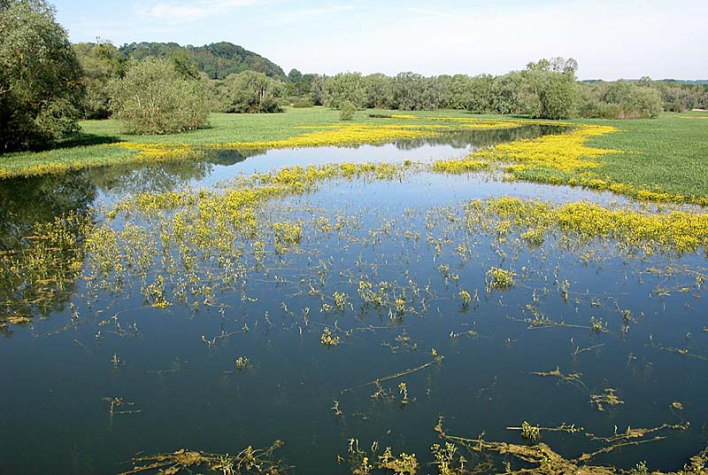
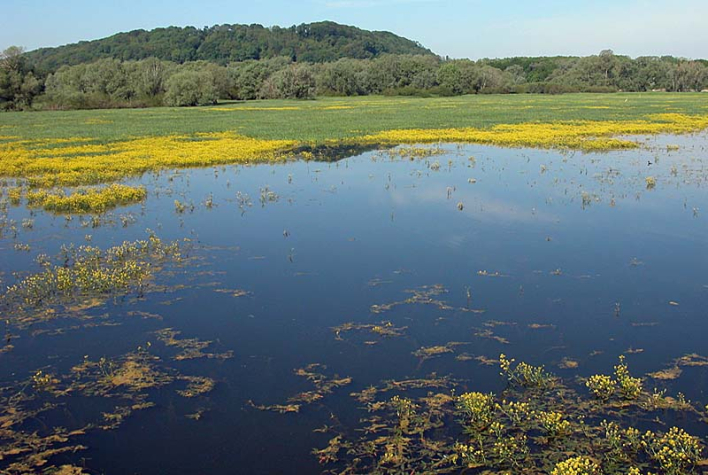
These particular conditions encourage a special type of vegetation, the layout of which is essentially determined by the humidity gradient: floating vegetation with pondweed and duckweed characteristic of the bays of the lake, inner belts (glyceria, reedbeds), outer belts (magnocariçaies with gracile sedge, shore sedge and two-spiked sedge, association with baldingère, etc.), herbaceous vegetation of the banks of the lake and the marshes.), herbaceous bank vegetation, subject to winter flooding and soil compaction in summer, nitrophilous tall grass vegetation, annual vegetation on flooded mud (Nanocyperion and Bidention), alluvial willow grove with purple willow, swamp willow grove and a highly artificial orma-fern grove.
The reservoir's south-facing embankment receives a great deal of sunlight and is home to an area of wasteland similar to the region's dry grasslands, where the very rare woodruff, which is on the red list of plants in Champagne-Ardenne, grows. Numerous plant species that are uncommon to very rare for the region can be found here, in particular the marsh germander (protected in Champagne-Ardenne), the marsh chrysanthemum (a Balkan species curiously present in the Villegusien reed bed), the Crypsis faux-vulpin (a very rare annual species found on shores, located here at the northern limit of its distribution), the Ziz pondweed and the aquatic limosella, all three of which are on the Champagne-Ardenne red list of plants.
Fauna:
The entomofauna, and more particularly the dragonflies, is rich and varied. Nearly 40 species have been recorded, including fifteen on the regional red list and one that is nationally protected: the agrion de Mercure (protected since 1993), found in the main stream of the résevoir, listed on the national red list of Odonates as an endangered species (endangered in the north of France), in the Habitats Directive and the Bern Convention, the Great Aeschne, the two-spotted cordulia, a large and very spectacular species, the Spring Aeschne, various small agrions, the Tawny dragonfly, the Gomphe vulgaire, the Southern sympetrum, the Metallic cordulia, etc.
The reservoir appears to be the most favourable site for aquatic avifauna (local and migratory) in the Haute-Marne département (apart from the Der-Chantecoq reservoir, most of which is located in the Marne département). The configuration of the lake, located in the extension of the Marne valley and largely open to the plain, makes it very attractive to birds (nearly 150 species have been recorded there to date). The sufficiently dense vegetation and the relative tranquillity of certain coves provide a highly favourable environment for bird breeding: the large mudflats uncovered in autumn are ideal areas for foraging and resting.
The importance of the site for the whole region (within a 100 km radius) led to it being classified in 1967 as a natural environment to be protected as a remarkable biotope for the migration (passage and staging) of aquatic birds, as well as for their nesting. Numerous species of waders are attracted to the mudflats in September-October.
With autumn come hundreds of ducks (including the pintail, rare but almost annual, the common teal, regular but in very small numbers, on the French list of birds in danger of extinction under the Bern Convention and the Birds Directive, and the green-winged teal, on the French red list of birds in the "rare species" category), some of which overwinter (shoveler and mallard ducks, scaups, etc.).
Villegusien is the third most important site (behind the wet Champagne lakes) for the great crested grebe and the common sandpiper (on the French red list of rare species). Sandpipers and snipes (including the rare common snipe, which is on the French red list of endangered birds under the Bern Convention and the Birds Directive) frequent the mudflats in small numbers.
Generally speaking, the Villegusien lake is a very important site for small waders in the Champagne region and certain neighbouring departments (given its surface area and geographical location), although it is clearly under-exploited by birds in transit due to the high level of disturbance (walkers, fishermen, dogs), which is considerably exacerbated by the insecurity created by hunting.
Many birds of prey meet here or nest nearby (buzzard, kite, sparrowhawk, buzzard, etc.). The reedbeds conceal the nesting grounds of a large number of passerines. The site is home to 45 species of birds on the national and/or regional red lists, whether they are nesting, breeding, migrating or overwintering. Lastly, the reservoir is of obvious interest for fish farming and is a tourist site, some of which has been developed for leisure activities.