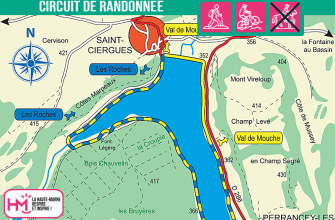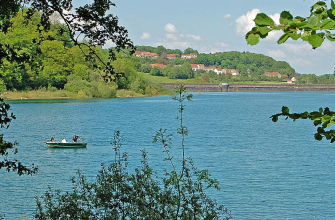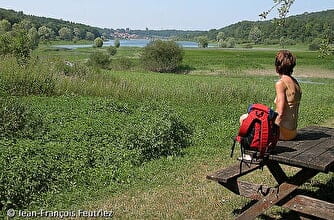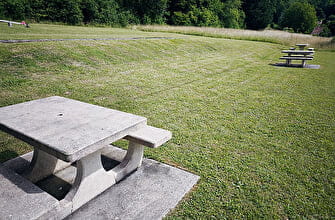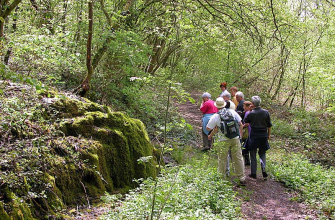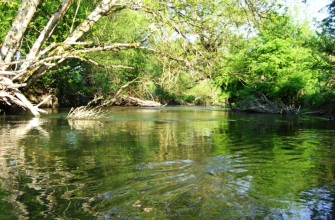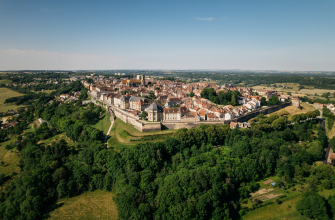
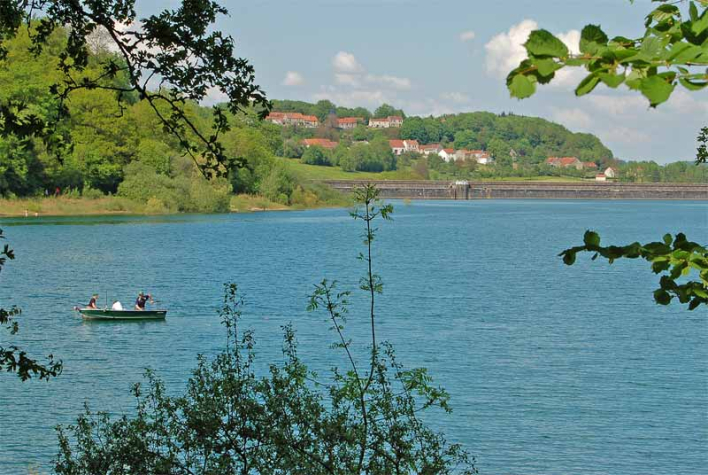
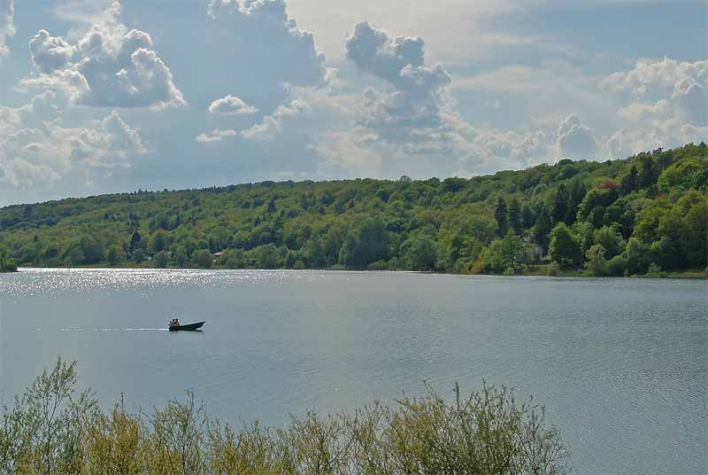
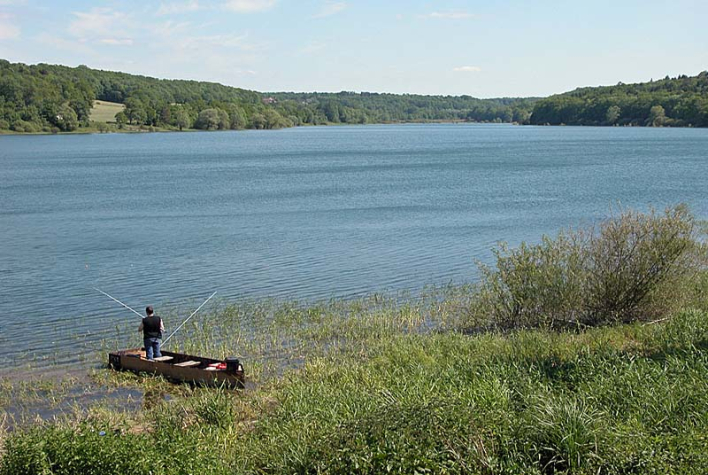
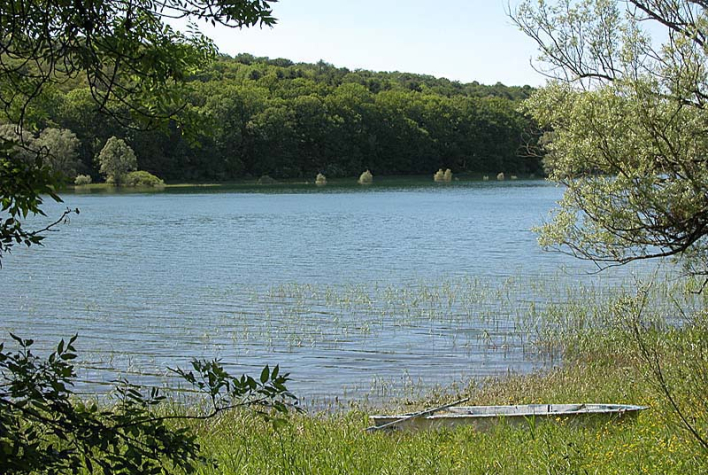
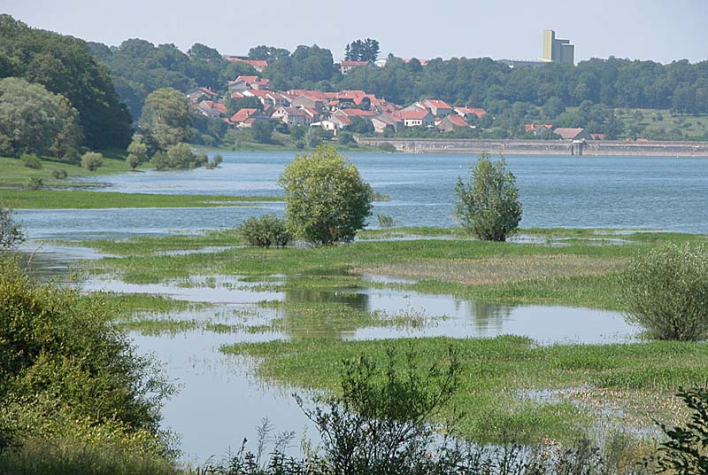
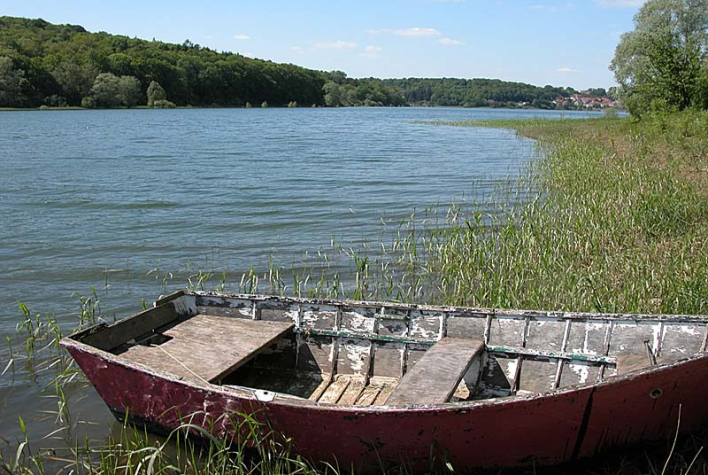
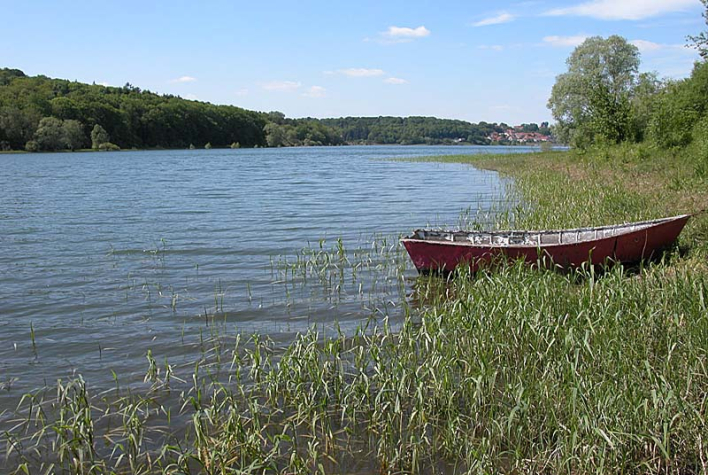
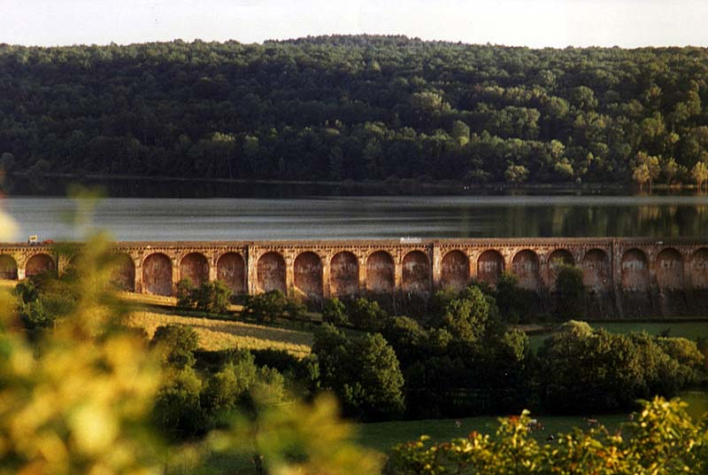
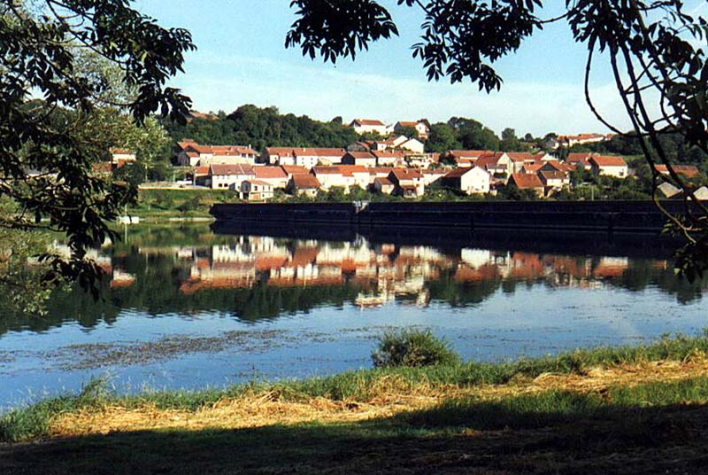
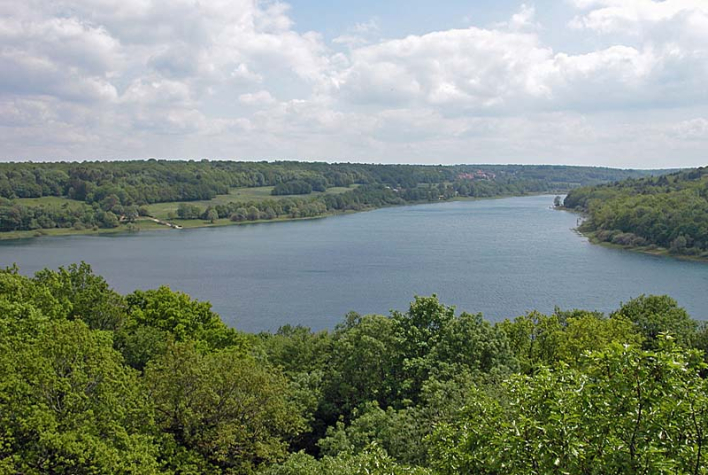
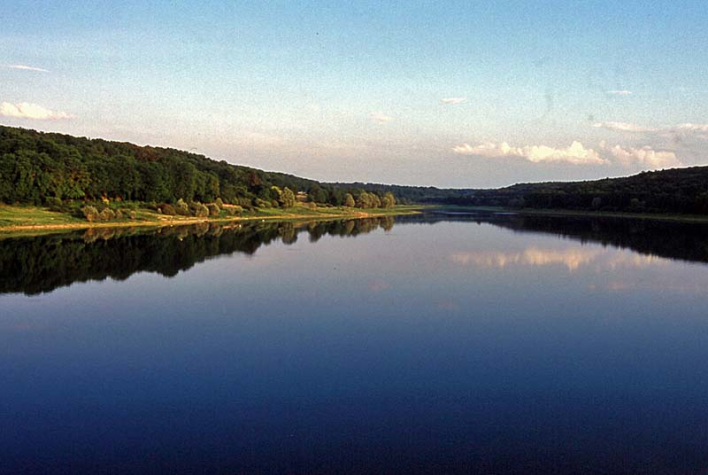
Lac de la Mouche is held back by a 410 m-long dam built as a semi-viaduct between 1881 and 1890. The 94-hectare lake is easy to walk or mountain bike around on a 7km tour. You can admire the reflections of the villages of St-Ciergues and Perrancey and the forests that dominate it.

The walk is available on the free Id-Vizit app!
Id-Vizit is your personal travel companion, offering you personalised, fun and interactive tours!
+ More info on Id-Vizit

Fun tour also available on the Id-Vizit app:
Lac de la Mouche and underwater legends
Together, we're going to discover the lake, you on the hiking trail and me under the water. This lake is known as the most natural of the 4 lakes in the Langres region. In spring, from April to June, the water is so clear that you can dive right in! Look closely and you might just spot the bubbles of our diving friends, who have also come to take advantage of the visibility offered by this lake. You know, when we dive, we think of legends and their monsters, each more bizarre than the last. But do you know all these stories?
For nature lovers :
The Lac de Saint-Ciergues, or réservoir de la Mouche, is one of four artificial reservoirs in the Langrois region created at the end of the 19th century to ensure the navigability of the Marne-Saône canal in summer. Its eutrophic waters are located at the bottom of a deep valley in the Langres Plateau, which means that the banks of the lake are relatively steep (never less than 5%). This biotope is characterised by its water level, which varies considerably at different times of the year depending on the needs of the canal (fairly low in late summer and autumn).
Vegetation:
These particular conditions favour a special type of vegetation, which has been stabilised for a very long time and which is a function of the humidity gradient: submerged vegetation with, in particular, an alga of the "water-lustre" type, which is fairly rare as it tends to regress in polluted water, amphibious vegetation and, at the junction of these two groups, the water plantain with grassy leaves, a remarkable species which had never been recorded in Haute-Marne before and which is proving to be abundant at Saint-Ciergues. Next come the abundant stands of sedge and baldingera, which are very dense on the banks of the lake and dominate the appearance of the riparian vegetation. They are home to a rare species, marsh germander, which is on the red list of plants in Champagne-Ardenne, but is well adapted to temporary flooding and has occasionally large populations here. Grassland vegetation resistant to the mechanical pressure of waves and winter flooding is found on the upper part of the banks (with angular garlic, a rare species protected in Champagne-Ardenne), followed by tall-herb vegetation that is more nitrophilic at the limit of maximum water level. The two main streams in the La Mouche reservoir, as well as the dozen or so rivulets flowing around its perimeter, provide an opportunity for the development of specilised amphibious vegetation linked to flowing water.
Fauna:
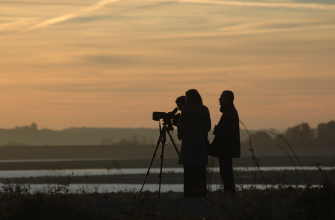
Avifauna is well represented here, although less abundant than in some of the other reservoirs in the region (few areas of landfill and mudflats). Nevertheless, the lake attracts many species of migratory birds; autumn brings waterfowl, some of which overwinter here: coots, ducks, grebes, shelducks, teal and scaups. Great grebes and coots breed here. The reedbed conceals the nesting grounds of a number of passerines and various birds of prey frequent the site. Nearly sixty species have been identified, including 34 protected species and some on the national and regional Red Lists and the Birds Directive. The lake is also an important site for the reproduction of amphibians, particularly frogs.
The state of conservation of the ZNIEFF is good, although there are some regrets about the proliferation of fires (which are concentrated in the flooded trampled grassland), destroying significant areas of interesting vegetation, as well as the overuse of the reservoir in the summer, which leads to significant degradation of the banks and plant belts located near the tarmac roads, through trampling and vehicle parking.
Lac de la Mouche