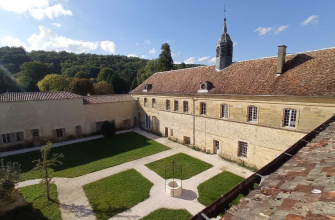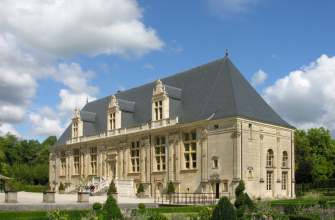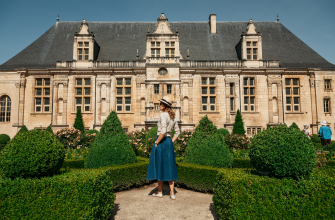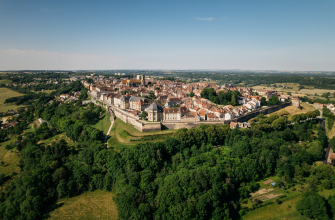
The Renaissance was a new period of splendour for Joinville: chosen as its capital by Claude de Lorraine, the first Duke of Guise, and his wife Antoinette de Bourbon, the town benefited from their patronage. The Guises shaped the town in their own image. Claude had the feudal castle on the hill overlooking the town modernised in the Renaissance style he had discovered during the wars in Italy when he accompanied François I. He then had a festival pavilion (now the Château du Grand Jardin) built in the same style, surrounded by a vast garden praised by Remy Belleau, author of the Pléïade, in his Bergerie. When he died, his wife continued his work: she commissioned his eldest son François, second Duke of Guise, to build an auditorium, and then founded the Hôpital Sainte-Croix with his second son Charles, Cardinal of Lorraine.
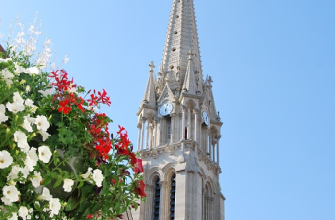
The church also benefited from their patronage (Renaissance portal). The whole town benefited from this reconstruction drive, which was all the more necessary as Charles V's troops set fire to the city in 1544. Many timber-framed houses flourished, as did stone mansions, which were extensively embellished in the 17th and 18th centuries. Joinville was at the heart of the Wars of Religion, with François and then his son Henri de Guise making the town one of the strongholds of the League.

Visit available on the free Id-Vizit app!
Id-Vizit is your personal travel companion, offering personalised, fun and interactive tours!
+ More info on Id-Vizit

Fun tour also available on the Id-Vizit app:
Jean de Joinville and his town
Hi, I'm Jean de Joinville, your guide for this tour. Are you ready for adventure?
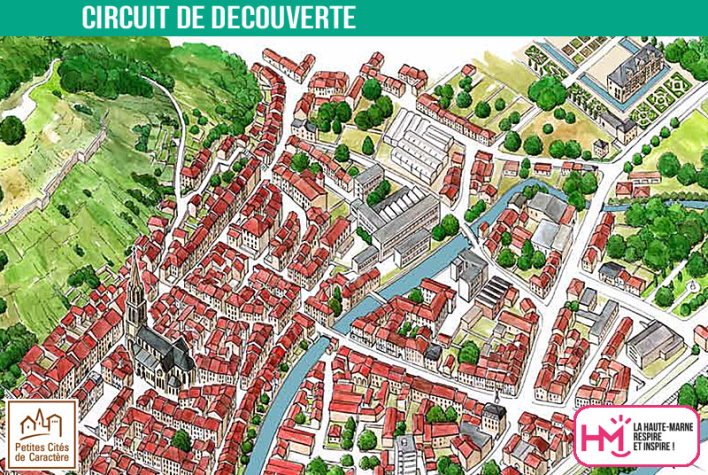
Circuit de découverte de Joinville : Cité princière
Localisation : JOINVILLE