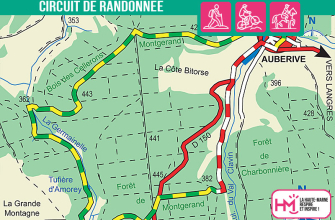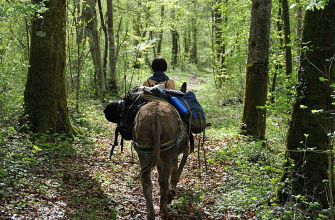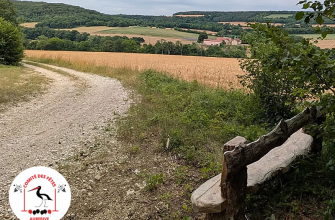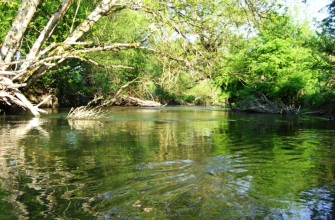
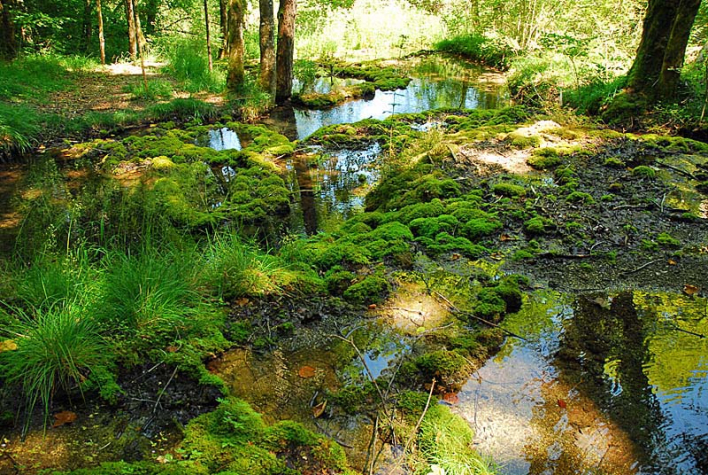
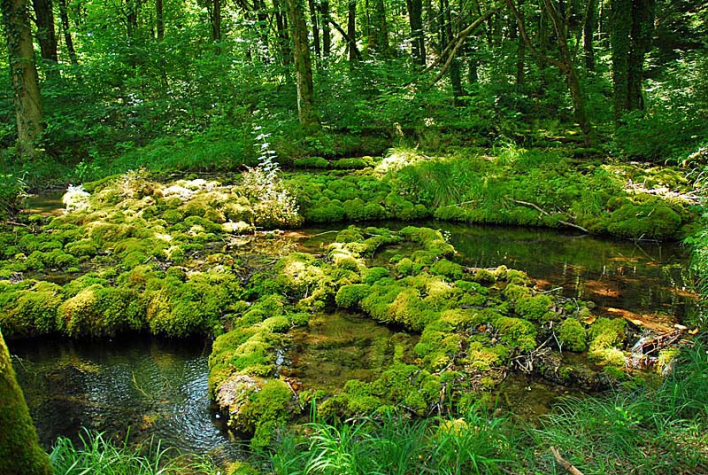
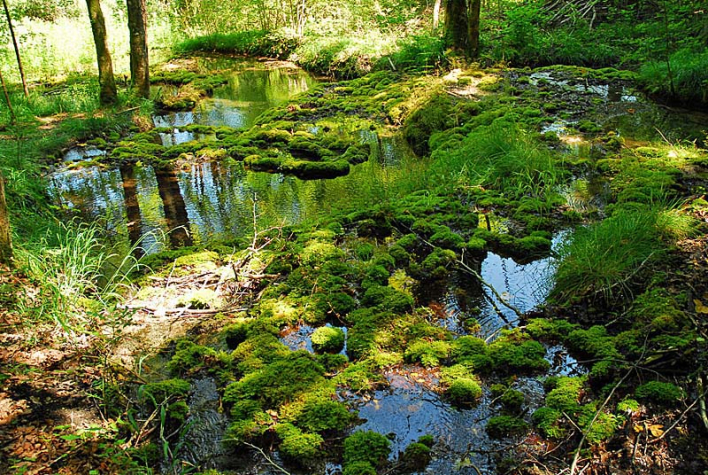
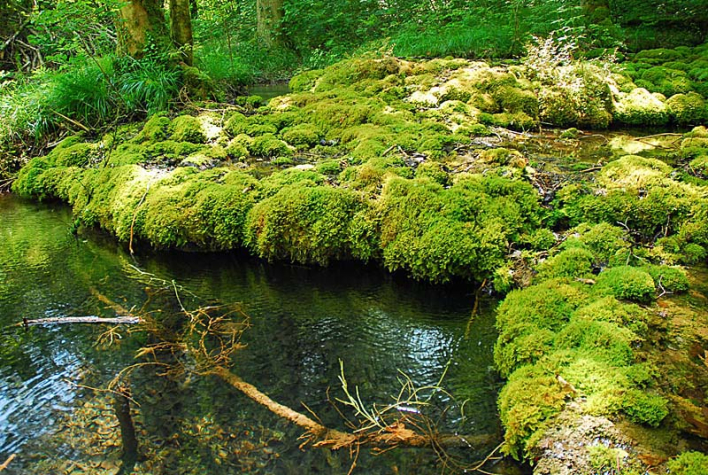
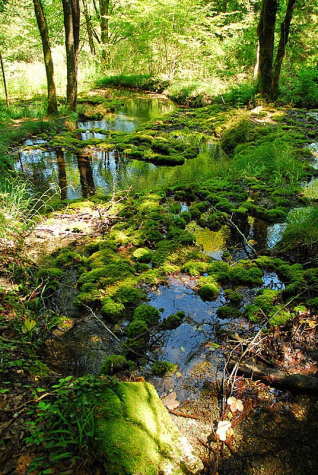
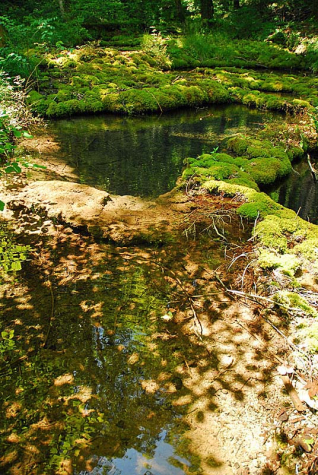
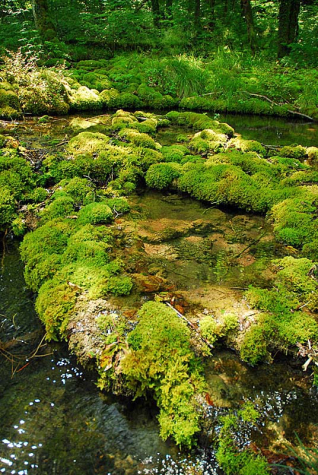
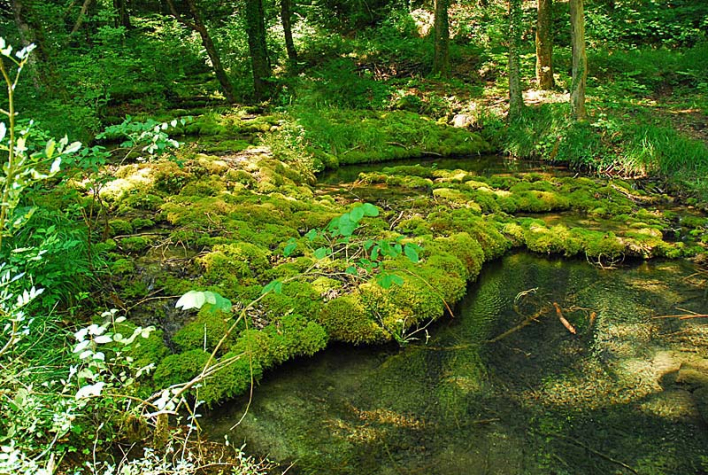
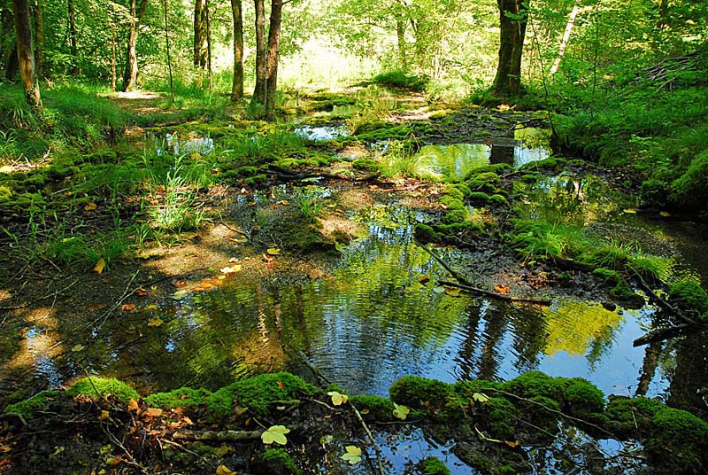
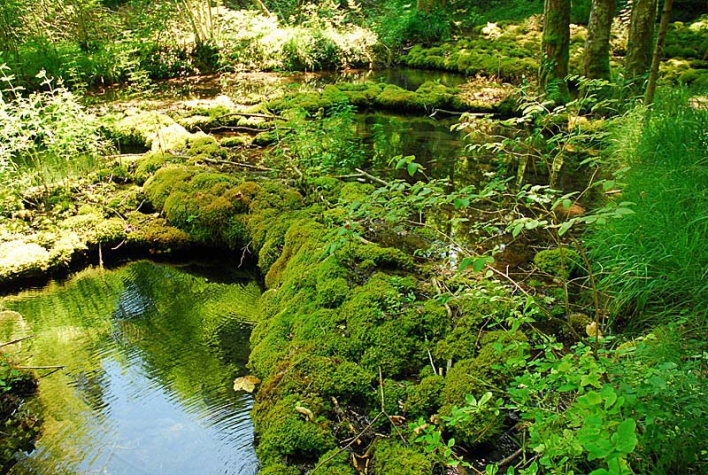
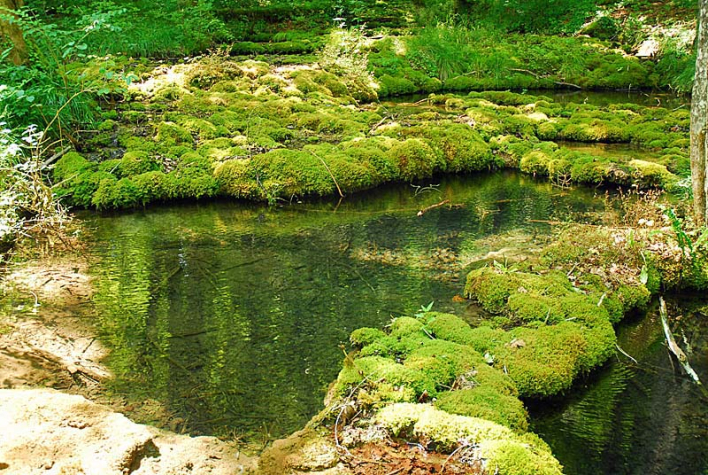
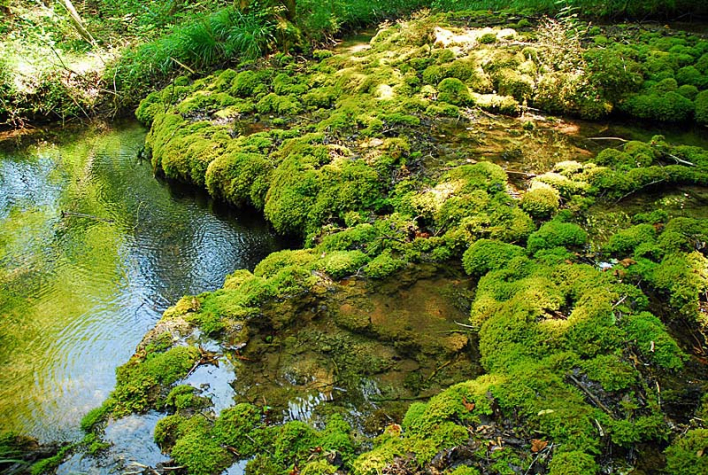
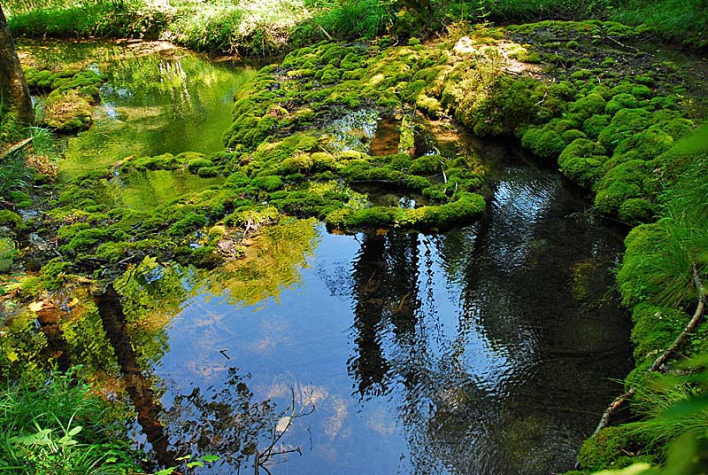
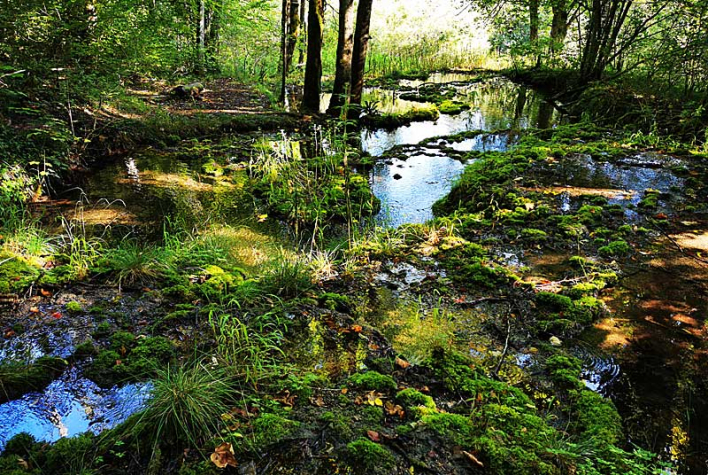
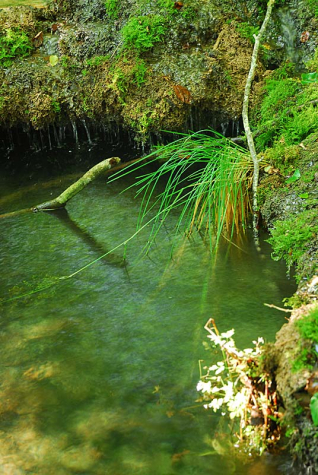
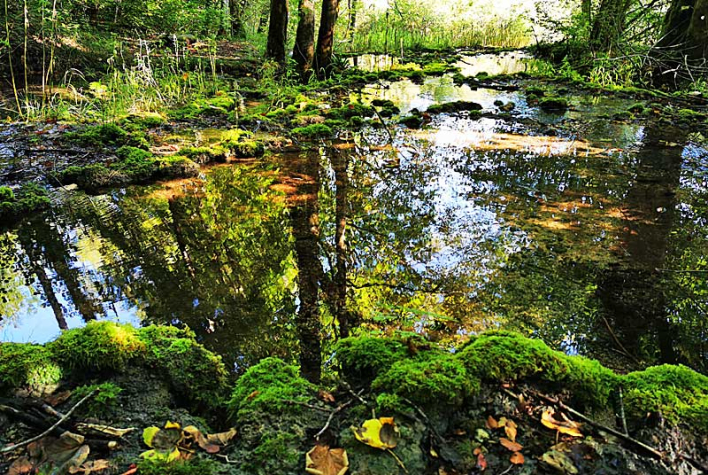
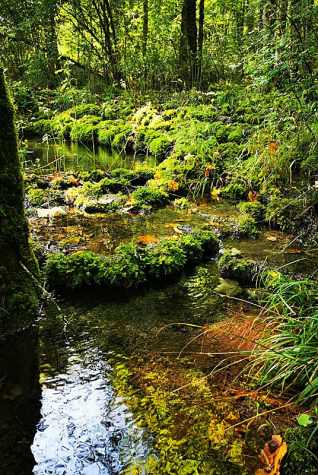
The waterfall owes its name to the porous stone known as tuff. Tuff comes from a deposit of limestone dissolved during the crossing of the Langres plateau. In contact with the air and vegetation, the limestone is deposited on the mosses, eventually creating successive small dams, giving rise to this monumental staircase. Situated in a wooded area, the waterfall is divided into numerous cascatelles, in the form of basins into which the water flows. Free access after a 15-minute walk.

Walk available on the free Id-Vizit app!
Id-Vizit is your personal travel companion, offering you personalised, fun and interactive tours!
+ More info on Id-Vizit
For nature lovers :
The Amorey ZNIEFF covers the valley and slopes of the upstream part of the Germainelle: the bottom of the valley is occupied by a tufa marsh, and the slopes are wooded, in particular with the xerophilous dry beech wood characteristic of the Auberive sector. It is part of the large ZNIEFF II forest massif south of Auberive. The marsh is fairly large and complex, both at the bottom of the slope and at the bottom of the valley, with a mosaic of low-growing schoenaija with iron-rich choin, swertie jonçaie-schoenaie, classic schoenaija with Carex davalliana, magnocariçaies with Carex stricta, paludosa, panicea and rostrata and a typical, rich and diverse molinaie. The southern part of the marsh is not very tuffy, is very wet all year round and is located within grazed meadows, which are themselves regularly grazed and trampled. The northern part is much more peaty in places, totally forested in the downstream two-thirds and open to meadows in the upstream third. There is a remarkable lateral tufa bed at the Moulinots spring, one of the most beautiful in the département, with very large Chara pools and large tufa dams. This is followed by a dry tufa bed, naturally wooded, with a wall of tufa and fern-rich vegetation. Along the side stream, the willow grove with purple and ashy willows has developed considerably.
Vegetation:
The vegetation is remarkable, with a dozen rare and/or protected species: in the forests, the three-lobed liverwort (or liver anemone), of southern origin, which is very rare, and the long-leaved cephalanthemum, a protected orchid in Champagne-Ardenne; in the marshes, the ferruginous choin, a north-pre-Alpine species, which is very rare in France, where it is found only in the east of the country, and is protected at national level (the localities in Haute-Marne form a very remote island to the west of its range), the marsh swertie, of North Pre-Alpine origin, very localized in the plains and eccentric to its main area of distribution, protected at regional level, the broad-leaved cottongrass, now in very serious decline, also protected, the marsh parnassia, rare in Haute-Marne, in margins and tall herb groups the marsh thelipteris and the creeping willow protected in Champagne-Ardenne, etc. All these species are on the regional red list of plants. The tall yellow gentian and the narrow-segmented buttercup, which are rare throughout France and are protected in the region, are also found in the molinia. Marsh willowherb and yellow sedge, which are very rare in the marshes of the Langres plateau, have also been observed here.
Fauna:
The entomofauna includes rare dragonflies such as the Agrion de Mercure, endangered in the north of France (but with some good populations in certain marshes on the Langres plateau), protected in France (since 1993), in Europe by the Bern Convention, on the list of determining species of the Habitats Directive (appendix II), in the red book of threatened fauna in France and on the red list of insects in Champagne-Ardenne. It is accompanied by, among others, two cordulégastres (bidentate and ringed), of mountain origin, rare in France, and in drier, sunnier areas, a grasshopper (Latreille's conocephalus), two locusts (mountain locust, blood locust) and a butterfly (sanguisorbe peacock) on the regional red lists. Amphibians are also well represented, including the diminishing toad, which is protected in France (since 1993) and in Europe (listed in appendix II of the Bern Convention), is listed in appendix IV of the Habitats Directive and is on the national and regional red lists. The avifauna is diverse, with 36 species, including a breeder on the Champagne-Ardenne red list of birds, the red-backed shrike (breeding in decline).
In 1992, an Arrêté de Protection de Biotope (Biotope Protection Order) was issued for the state-owned part of the marsh, and conservation management has been carried out with the help of the Fondation de France. The southern part of the marsh, which is still grazed today (with moderate intensification), is in good condition despite trampling and the introduction of grassland species. The educational value of the ZNIEFF is also highlighted here by its proximity to the Auberive Nature Initiation Centre. The site is in generally good condition.
Tufière d'Amorey