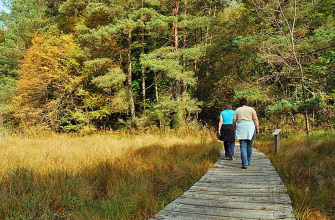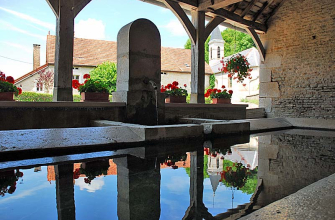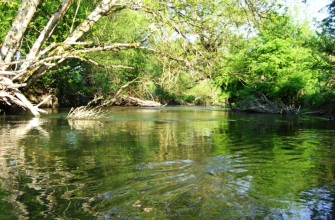
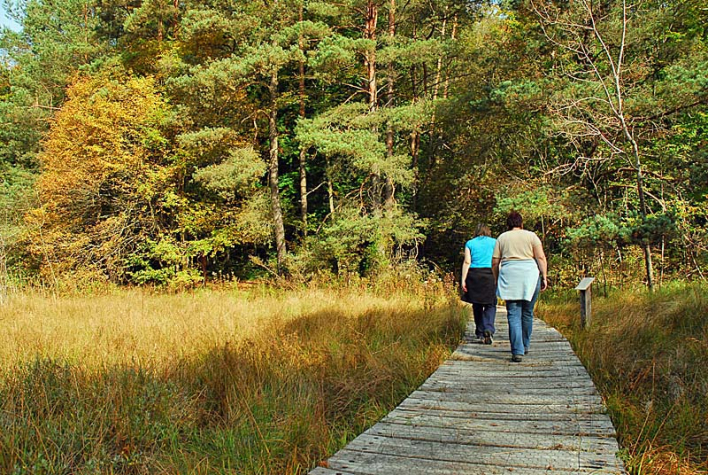
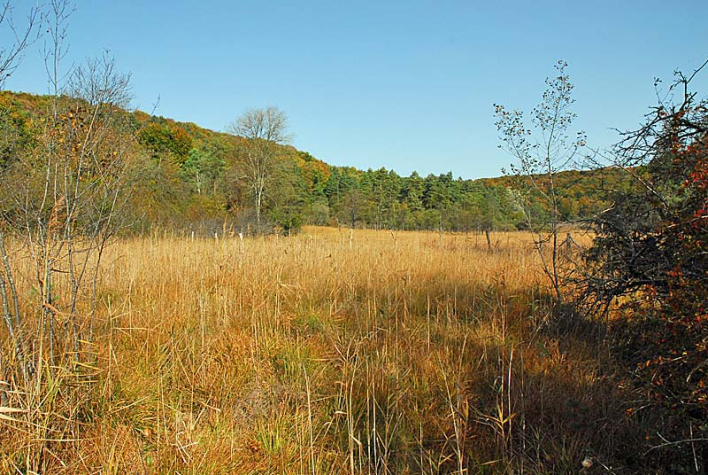
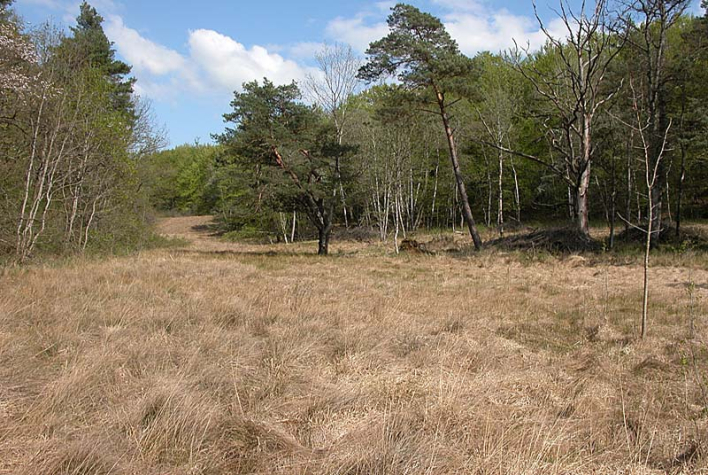
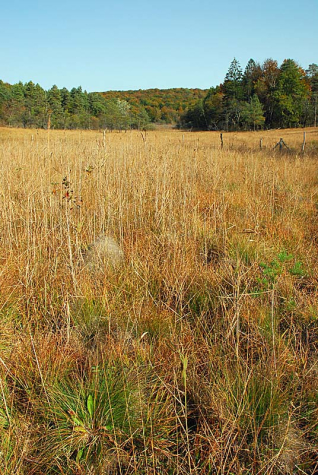
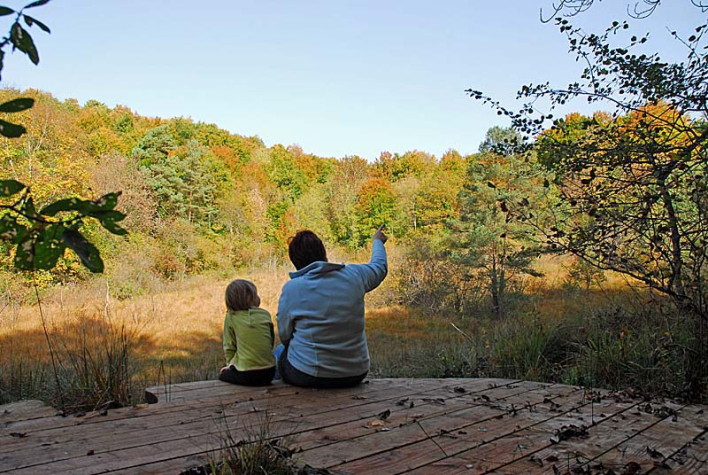
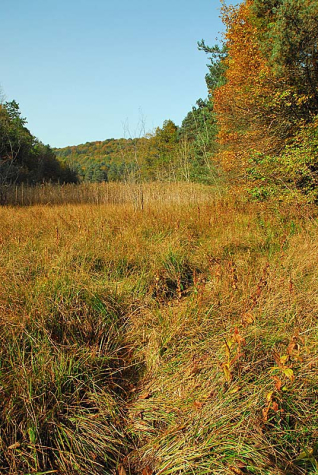
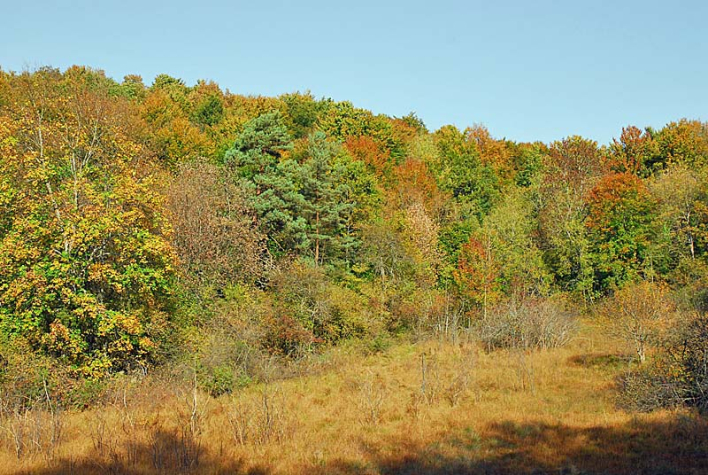
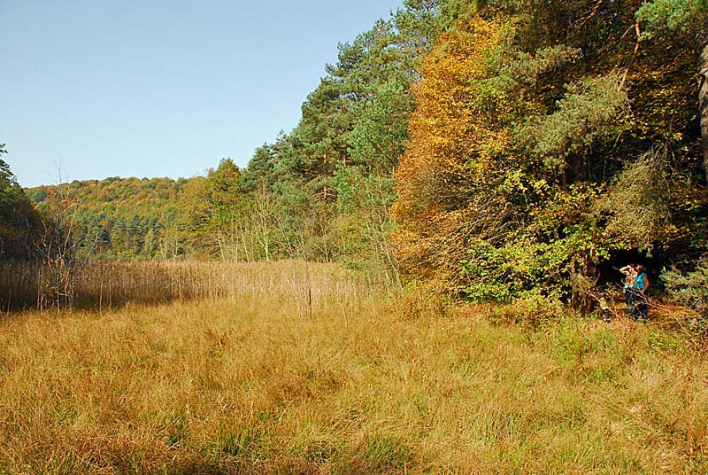
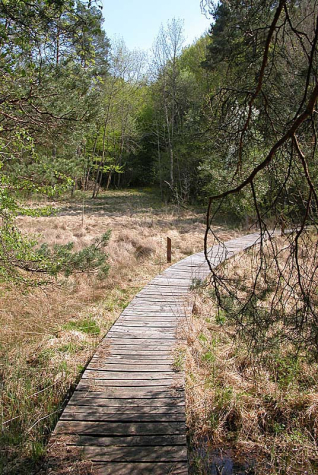
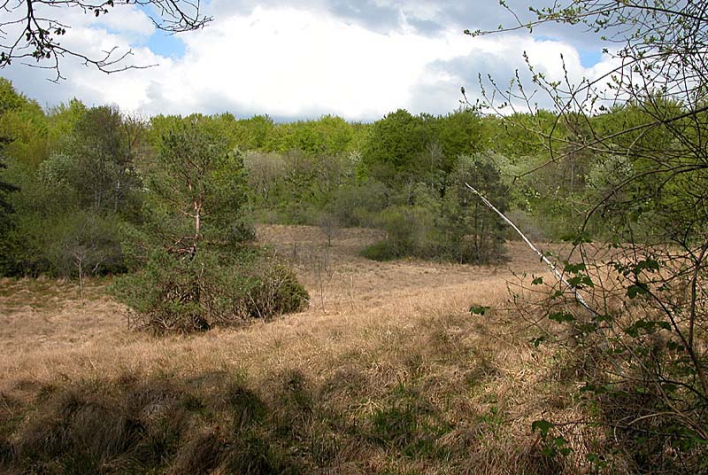
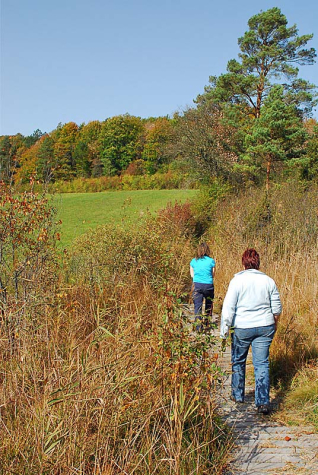
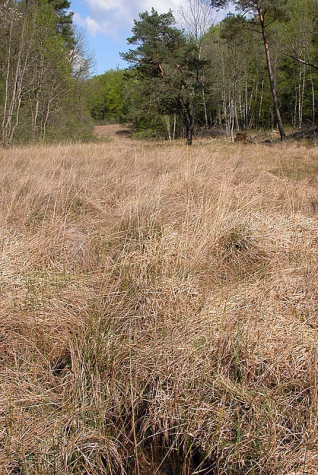
Created in 1993, the Marais de Chalmessin is a natural treasure in the middle of the woods. Its 124 hectares, managed by the Conservatoire d'Espaces Naturels de Champagne-Ardenne, are home to one of the most remarkable tufa marshes on the Langres plateau. Since the last ice age 8,000 years ago, very special conditions have enabled this narrow valley to preserve a typically mountain fauna and flora.
The discovery trail is open all year round, or guided tours are available on request.
For nature lovers:
The Marais de Chalmessin and Combe Quemaulles ZNIEFF is very typical of the Langres plateau, with a wealth of flora and fauna (including protected, endangered and rare species). The relief is very pronounced, with steep slopes facing mainly north and south, giving rise to distinctive microclimates and beautiful contrasting slopes. The numerous springs located towards the bottom and middle of the valley are considered to be the main sources of the Tille; laden with dissolved calcium carbonate, they are responsible for the tufa deposits and, as such, are at the origin of the formation of the marsh.
Vegetation:
The plateau is home to a calcicolous oak-cherry-beech forest, the cooler slopes are home to a dental beech forest and the best exposed slopes are home to a dry beech forest with Carex alba, a remarkable xerophilous and montane forest site, with rare species such as Cephalanthera xiphophyllum and Epipactis leptochila. Some areas show dynamic mosaic systems with well-developed edges and small clearings (of the Geranion sanguinei type) which, in addition to some of the forest species mentioned above, contain edge species such as Coronilla coronata or grassland species such as Aster amellus, which is protected in France, and Limodorum abortivum, which is protected at regional level. The forest bordering the marshes is essentially Aceri-Fraxinetum.
The vegetation of the tufa marshes (some of which have been cleared of undergrowth) is essentially herbaceous, with fruticaceae limited to the marsh edges and a few areas located downstream: 3/4 of their surface area is made up of a Carex davalliana sedge meadow, with plant species such as Dactylorhiza incarnata, Schoenus ferrugineus (nationally protected) and Eriophorum latifolium, which is on the Champagne-Ardenne red list of plants. Along the streams, a Carex stricta sedge meadow has developed, similar to the magnocariaca meadows and home to a rare species on the Langres plateau, the water clover menyanthe. The marshes are constantly bordered by a fringe of large peat bogs, with rare species such as Ranunculus polyanthemoides and Ophioglossum vulgatum. An irregular fringe of Filipendulion, characterised by Aconit napel, a mountain species protected in Champagne-Ardenne, and home to the very rare Salix repens variety rosmarinifolius, which is also protected, develops at the edge of the fruticides and the molinia. The marshes are bordered more or less continuously by an ashy willow and purple willow willow grove containing a rare fern, the marsh thelypterid.
Fauna:
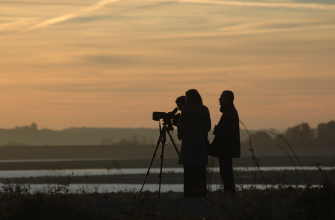
The grasslands now occupy a tiny area compared with their extent at the beginning of the century and they were more or less overgrown with scrub: this sector is managed by grazing and scientific monitoring is underway. They are still well stocked with interesting species such as Carex ornithopoda, Viola rupestris and Deschampsia media, a species that is declining as it is linked to bare and trampled areas. A study of the avifauna reveals the richness of the site in terms of the large number of species recorded, as well as its importance for the nesting and migratory stopovers of many species: the marsh is only regularly visited by a few species, mainly insectivores, which come here to feed, in particular henbirds, brambling birds and titmice. The edge of the marsh is the most frequented area and is home to both forest and hedgerow species. The forest is also well frequented.
The wet parts of the marsh are home to species such as the aquatic shrew, which is protected in France and is on the red list of mammals in Champagne-Ardenne. Eleven protected bats have been recorded, including the moustached bat, Daubenton's bat, pipistrelle, Barbastelle and Great Rhinolophus. Several groups of badger burrows, a species on the regional red list, can be seen in the Combe Roire. Roe deer, red deer (only passing through) and wild boar are moderately well represented, although the marsh is well used.
Seven species of amphibian and three species of reptile have been observed, mainly in and around the marsh: the spotted salamander (which breeds in the tufa basins of the sloping marsh), the red-legged frog, the common toad and the spadefoot toad (two of which are on the Champagne-Ardenne red list). The viviparous lizard is closely linked to marshes and the damp banks of streams, and is very rare in Haute-Marne, where it has only been recorded at a few sites on the Langres plateau and in the forests of the Der.
The sector's entomofauna is particularly well represented and diverse, with 4 protected species and 25 threatened and rare species, some of which have the same biogeographical tonality as some of the flora: Dragonflies include a species protected at national and international level (Bern Convention and Habitats Directive), the agrion de Mercure, in decline throughout Europe and included on the French red list, as well as the cordulégastre bidenté, rare in France (considered an indicator of the montane level) and highly threatened by the destruction of its biotopes, Bolton's cordulégastre, slightly less threatened, Somatochlora flavomaculata, threatened in Europe, observed above the brooks and small basins that run through the marsh (this type of habitat is quite exceptional and seems to be a local peculiarity). These Odonates are on the red list of insects in Champagne-Ardenne. The crickets are mainly found in the marsh, with Conocephalus dorsalis, Chrysochraon brachyptera and Chorthippus montanus, and in the meadows, with Omocestus viridulus, Metrioptera brachyptera and Mecostethus grossus, which is very abundant and heavily eaten by badgers. Sixty-five different species of butterfly were observed in the area, whereas the region potentially contains 95 species of Rhopalocera, which shows the great richness of the site, with three protected butterflies in particular for the marsh: the bacchante (wooded periphery of the marsh), the damier de la succise and the fadet des tourbières or daphnis, which is one of the most threatened species in France, included on the French red list as an endangered species.
Apart from a slight tendency towards natural dynamics in certain parts of the site, it is in a very good state of conservation and is one of the most remarkable botanical sites in Haute-Marne (in 1980, it was listed as one of the 10 sites of national interest in the département).
Guided tours for groups are available on request from the Conservatoire d'Espaces Naturels de Champagne-Ardenne.