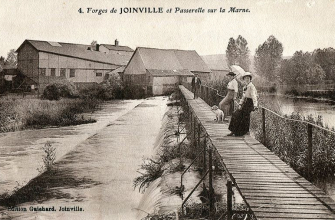
The Haute-Marne's tradition of ironworking dates back to prehistoric times, thanks to the exploitation of its natural resources: the omnipresent iron ore, charcoal from the abundant forests and the driving force of water.
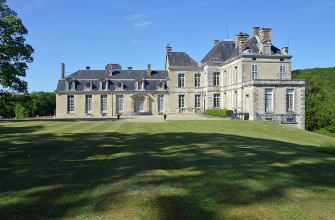
As the leading metallurgical region in the mid-19th century, the Haute-Marne has a rich industrial heritage that can be discovered as you travel through its valleys, such as the Blaise valley, the oldest and most active in France, which is home to Metallurgic Park, the first centre for the interpretation of ancient and contemporary metallurgy, and numerous witnesses to the region's metallurgical history.
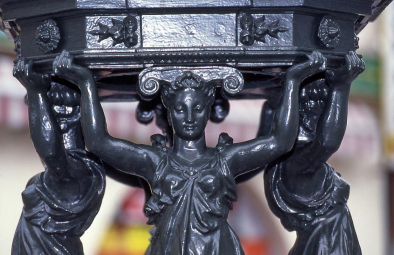
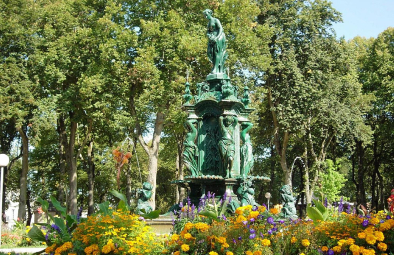
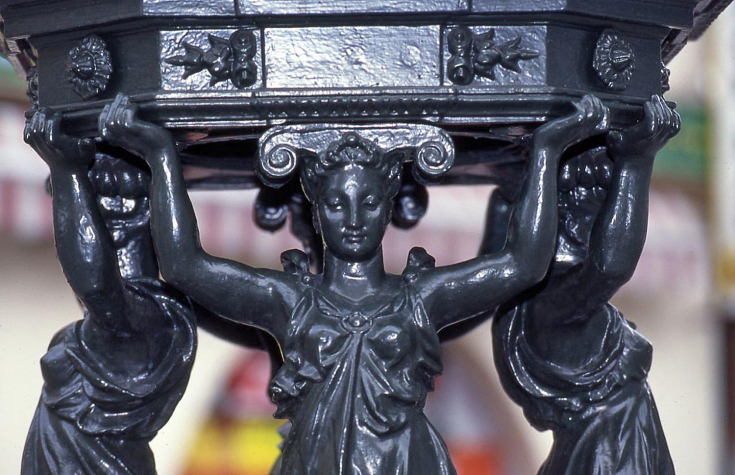
Haute-Marne is also the cradle of cast-iron art, with Val d'Osne, Durenne, Capitain-Gény, Brousseval and the Fonderies de Saint-Dizier, companies that produced cast-iron statues, fountains, vases and decorative elements between 1830 and 1930, which are used throughout France and the world.
Paris was the showcase for their expertise, notably with Guimard's Art Nouveau metro entrances and Wallace fountains.
It is in this region, between Joinville, Saint-Dizier and Bar-le-Duc, that the production and machining of precise, large-scale assemblies continues: parts for the Channel Tunnel, the Grande Arche at La Défense, the Millau Viaduct, as well as lampposts, street furniture, roads, and so on.
We invite you to rediscover this tradition along an itinerary that will introduce you to a multi-faceted industrial heritage, to the works of art and to the world of ironworkers, who are still developing cutting-edge skills in the fields of casting, forging, cutlery and surgical instruments.
Circuit des fontes d'art
Localisation : JOINVILLE