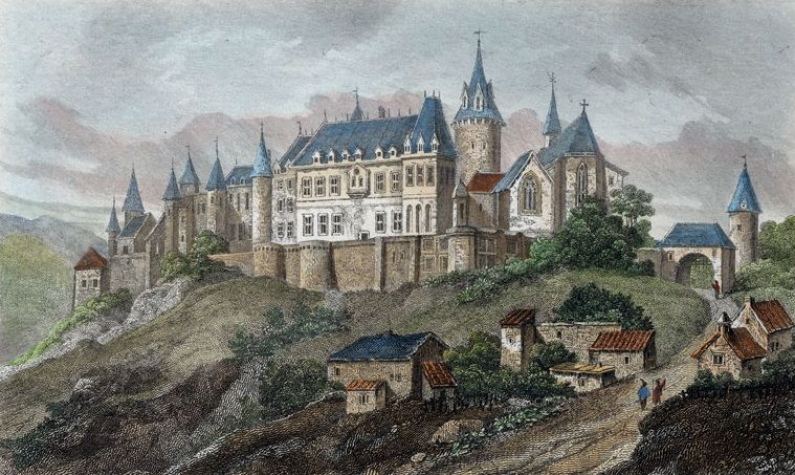
In the 11th century, Etienne, the first lord of Joinville, decided to build a motte castrale.
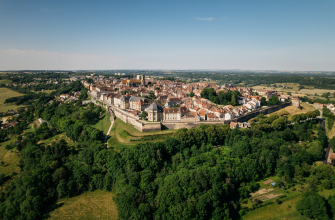
This first castle, built of wood, looked more like a tower, but it was already standing on the mound overlooking the Marne valley, a particularly strategic location. Gradually, the castle was strengthened until it became a veritable fortress, controlling the entire valley, which gradually became the barony of Joinville.
Jean de Joinville, on his way to accompany Louis IX on the VIIth Crusade, has fond memories of this:
"I will never turn my eyes back to Joinville, because my heart would not be moved by the beautiful chastel I am leaving, and by my two children".
When Joinville became the fiefdom of the Dukes of Guise in the 16th century, the château underwent major alterations, with the addition of a Renaissance wing.
The Pléiade poet Rémi Belleau, tutor to Claude de Lorraine's son René de Guise, described it wonderfully:
"On the side where the sun shines on a fine day, there is a long terrace built into the side of a rock [...].
At one end of this terrace was a glazed gallery, panelled with coloured enamelled tiles. [...]
The view was beautiful, and bordered by twelve sections of mountains, brooks, rivers, fountains, meadows, valleys, castles, villages and woods, in short all that the eye could desire for its contentment.
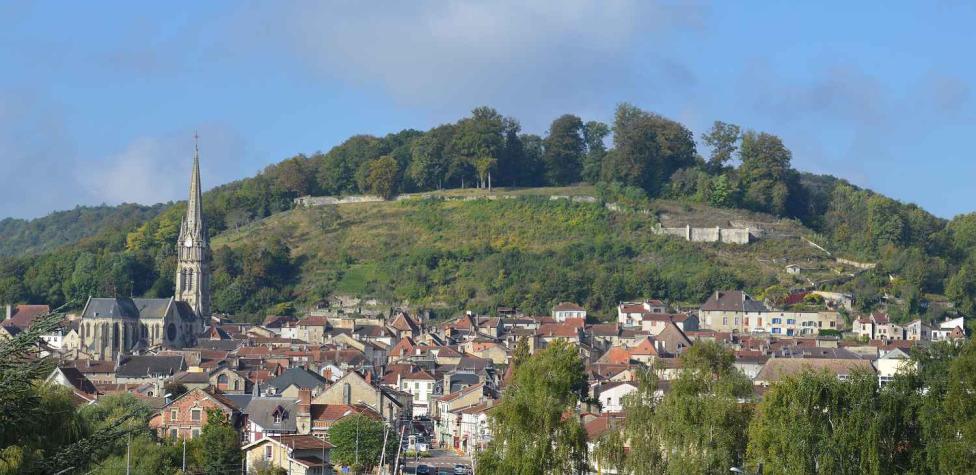
Finally, as the Guises moved to Paris, the château was gradually abandoned. At the end of the 17th century, it reverted to the Orléans family, along with all the other Guises possessions. Sold to a stone merchant by Philippe Egalité on 27 April 1791, the château was gradually dismantled. Only a few foundations remain, which can still be admired today.
The mound now offers a promenade and a viewpoint over the valley, allowing visitors to follow in the footsteps of the former lords of Château d'En-Haut.
VESTIGES DU CHATEAU D'EN-HAUT