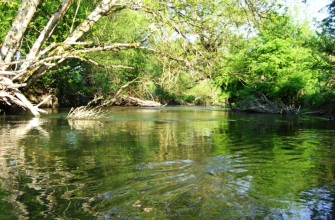
The ZNIEFF of the Lochère valley in Vivey is located around ten kilometres from Auberive, in the south of the Haute-Marne département. To the north of the village, it comprises the valley of the Vivey stream and its steep, rocky slopes, and to the south of the village, several small side valleys.
For nature lovers :
Mainly forested (woodland covers almost 80% of the ZNIEFF area), it also includes wet meadows and marshy areas along the stream, as well as thermophilous herbaceous groups (edges, grasslands and small screes) on the well-exposed slopes.
Vegetation:
The forest types are very typical and dominated by the tilia-erabagus (upper third of the slopes). This gives way to dry beech-oak woodland on well-exposed slopes (east side of the valley) and cold beech woodland (located on one of the slopes of the small valley beside the Vivey stream). The tilia-erabaceous woodland is mainly made up of lime, sycamore maple and tall ash, accompanied by a few aspens, white alders, beeches and flat maples. The herbaceous layer consists of perennial mercurial, sedge and lily of the valley. The cold beech grove with ash, sycamore maple and field maple has a well-diversified shrub layer with red currant and bois joli. The herbaceous layer includes spikenard and foxglove. The dry beech-oak woodland, partially covered with Scots pine, includes beech and sessile oak, which dominate, as well as downy oak and hornbeam. It is characterised by the presence of sword-leaved cephalanthemum (protected in Champagne-Ardenne), white sedge (a species of sub-Mediterranean origin, rare on the plains but abundant here), rock bramble, lemon balm, etc.
In the heaths and clearings of the dry beech woodland, a thermophilic border grouping develops, with aster amelle (mainly found in north-eastern and south-eastern France and protected at national level), great gentian (protected at regional level, with the Champagne-Ardenne and Burgundy stations being the only ones on the French plains), broad-leaved laser, mountain sedge, rambling phalangère, penned brachypodus and dompte-venin officinal. One of the main attractions of the ZNIEFF is the presence, between the forest edge and the dry beech forest, under a hazel coppice, of Venus's slipper orchid, an orchid with a mountain affinity, very rare on the plains, protected throughout France, listed in Annex II of the Habitats Directive and on the regional red list. Around fifteen plants have been recorded (ten of which have produced a flowering stem).
Some grasslands remain, particularly on the small scree slopes and outcrops to the south-east and north-west of the village and here and there on the road embankments. This is a group of more or less enmeshed lawns with blue sesleria, rich in a variety of orchids (red-brown epipactis, gnat orchid, pyramidal orchid, hangman's-eye orchid, two-leaved butterfly orchid, etc.). There are also three regionally protected species: bird's-foot sedge (of pre-Alpine origin), whitish helianthemum and rock violet, the latter two of which are on the regional red list, along with Salzburg spurge. They are accompanied by numerous grasses (blue sesleria, upright brome, intermediate briers, penned brachypodus, Lemann's fescue) and by globularia, pulsatilla anemone, ciliated and German gentian, oak-leaved and mountain germander, glaucous sedge, narrow-leaved flax, leontodon changeant, little pigamon, etc.
The small scree slopes are home to heterophyllous ptychotis (on the regional red list), mountain germander and globular daisy (very abundant), narrow-leaved toadflax, blue sesleria and round-leaved bellflower.
The bottom of the valley is home to mesophilic grassland, with red fescue, meadow sage, small burnet, agglomerated bellflower, soft bedstraw, clinopod, field cockle, meadow purslane and autumn leontodon. In wetter areas, the abandoned grassland evolves into a tall-herb grouping with meadowsweet, cirse maraîcher, eupatorium chanvrine, bittersweet nightshade, lysimachium vulgaris, angelica sylvestris, valerian dioica, etc. Locally, there are sedge meadows with acute sedge, marsh sedge and false panic sedge. A narrow border of Molinion can be seen very occasionally in the Lochère valley, with an orchid that is on the regional red list, the incarnate orchid; blue mullein, tomentose sedge, northern bedstraw, fang bedstraw, sanguisorbe officinale, dioecious valerian and false panic sedge make up most of the vegetation. False watercress, watercress and spearmint can be seen along the stream.
The site is also of significant geomorphological and hydrological interest, with the presence of a large resurgent spring, the source of an active scree slope (intense erosion) in the immediate vicinity of the village.
Undeveloped site
Access reserved for an informed and respectful public
Vallon de la Lochère