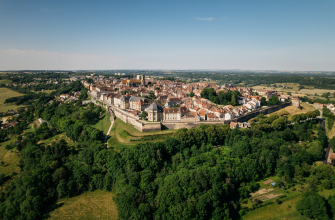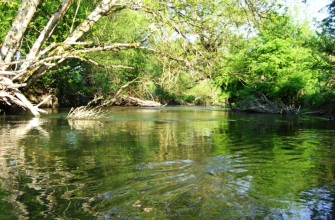
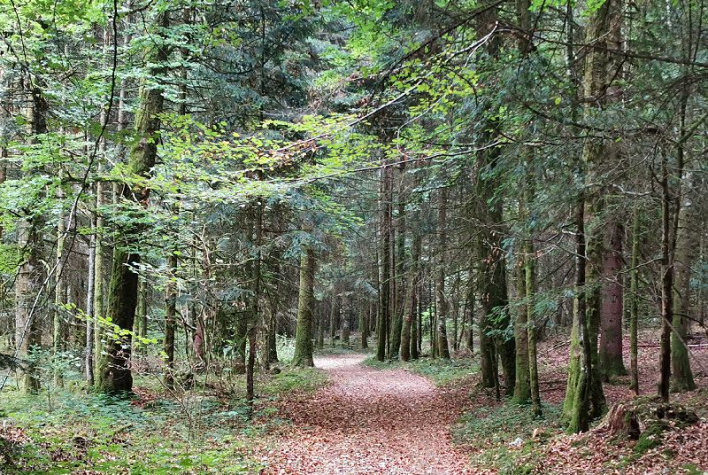
The Combe d'Erelles is one of the major sites on the Langres plateau. It opens onto the Aube valley to the south. Its steep, wooded slopes feature a variety of forest types depending on the exposure of the slopes: xerophilous beech forest on the southern slopes, maple grove, dental beech forest on the northern slopes and alder grove at the bottom of the valley. A small, tuff, linear (less than 3 hectares), very wet and partially wooded private slope marsh forms the transition between the mountain beech forest and the meadow at the bottom of the valley at the "Champ d'Erelles" locality and further east towards the "Combe de l'Herbue". Despite its small size, it is rich in flora and contains several rare and protected species.
Undeveloped site (stay on the signposted footpath)
Access reserved for an informed and respectful public
For nature lovers :
Vegetation:
Schoenaie dominates in its classic form with blackish choin, obtusifloe rush and perennial swertie, which is protected at regional level and, along with marsh parnassia, is on the red list of plants in Champagne-Ardenne. The low-growing schoenaea with iron-rich choin, a rare species protected at national level, has a very diverse flora. At the bottom of the marsh is a small alder grove, probably planted and home to the rare marsh thelypterid. A few nuclei of fruticaceae have developed in the more or less dry tufa zones, as well as a molinie at the foot of the slope in contact with the marl, with a small fern that is rare in Haute-Marne, ophioglossa vulgaris (in the Herbue marsh). Several relict grasslands remain, with a diverse southern flora rich in rare species such as the great yellow gentian (an alpine species whose only known stations on the plains are in Champagne-Ardenne and Burgundy), the bird's-foot sedge and the rock violet, all three of which are protected in the region, the reclining fumana and the apennine helianthemum, which are on the regional red list. The aster amelle, found in the thermoxerophilous fringe, is protected in France, where it is only found in the north-east and south-east, while the scabrous clover, on the red list of plants, is found on well exposed rocks and cliffs.
Fauna:
The fauna is much less well known than the flora, but the entire valley is of real interest to wildlife: the spotted salamander, souvhes lizard, wild cat, marten and various birds of prey frequent the area. The white-clawed crayfish is also found here: it is listed as a vulnerable species in France's Red Book of Threatened Fauna, has been protected nationally since 1983 and is listed in Annex III of the Convention on the Conservation of European Wildlife and Natural Habitats. The site is in good condition overall, and its landscaped character makes it a popular spot with many walkers. However, there has been a large increase in the number of fruit bushes and reconquered pine forests.
Vallon boisé d'Erelles