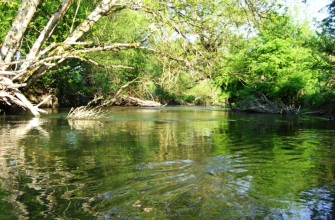
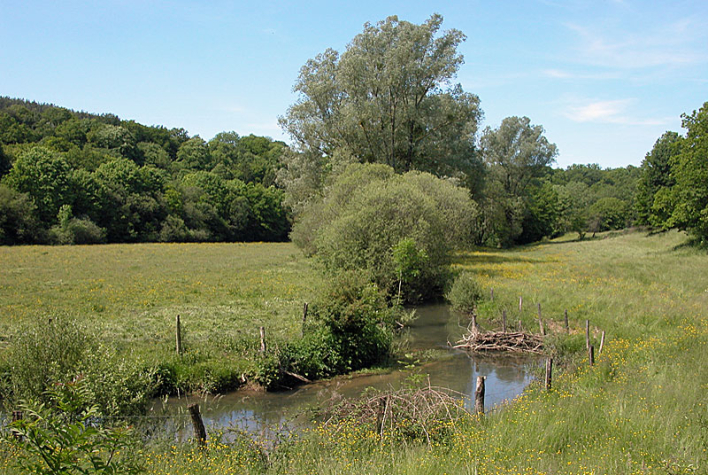
The type I ZNIEFF of the Ource valley between the communes of Colmier-le-Bas (to the west of the Ferme de la Forge) and Villars-Santenoge (to the north of the village) is located in the Montagne Chatillonnaise, around fifteen kilometres from Auberive, on the border of the Haute-Marne and Côte d'Or départements. Covering more than 230 hectares, it includes the Ource valley with its grazed or mown meadows, some adjacent valleys and their steep, predominantly forested slopes.
For nature lovers:
On the steep slopes, the main forest types are the tilia-erabaceous forest, the beech-beech forest with dental and spikenard (north-facing slopes) and, on the large boulders, the maple grove with scolopendre, cardamine impatiente and European asaret. On these scree slopes and on the shady, very cool rocks, fern vegetation grows, consisting of scolopendre, male fern, female fern, polypode, limestone polypode, white capillary, false capillary, rue-de-muraille and cétérach. At the bottom of slopes, in deep valleys, you can often spot the German hound's-tongue, which is on the red list of threatened plants in Champagne-Ardenne. On the less steep slopes, oak and chestnut groves dominate. Very locally, at the bottom of valleys, alder-ash and alpine gooseberry stand. There are numerous springs, some of which are tuffaceous (Pré Lurot) and have a well-developed fontinal vegetation.
Some limestone grasslands remain on the valley slopes. Often mown, they have a typical, well-diversified flora with orchids (pyramidal orchid, military orchid, gnat orchid, red-brown epipactis), grasses (upright brome, pyramidal koeleria, bulbous timothy, golden trefoil, pinnate brachypodus) and pulsatilla anemone, bird's-foot sedge (protected in Champagne-Ardenne), red clover (on the regional red list), yellow helianthemum, large-flowered brunelle, pedunculated laburnum, reclining tea, wild thyme, large-flowered brunelle, white brunelle, Carthusian carnation, acrid orbit, white orbit, etc. Under the high-voltage line and along certain wooded areas, thermophilous border vegetation has developed, including two species protected in Champagne-Ardenne, great gentian and red cephalanthemum (the latter is also on the regional red list), cocksfoot, mountain sedge, blue purple ruffe, lemon balm, red trefoil, yellow foxglove, etc.
Vegetation :
The valley's grassland vegetation has remained very typical, with grazed or mown meadows. The floristic originality of the grouping is linked to the presence of a protected species at regional level and included on the red list, the poet's narcissus. At Pré Molle, there is a very open grouping on marl (of the molinia type) with intermediate canche (at the limit of its range), which is on the regional red list.
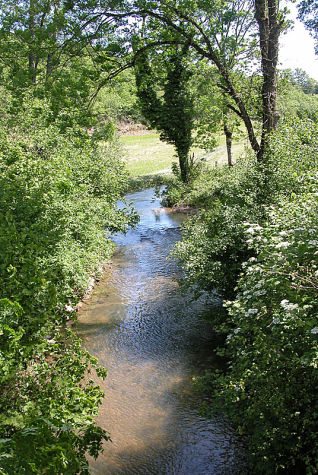
Reedbeds and filipendula beds on the banks of the Ource or at the bottom of the valley (along the Rochia stream) and sedge meadows can be found here and there: These include eupatorium chanvrine, meadowsweet, aconite napel (protected in Champagne-Ardenne), creeping valerian officinalis, aquatic scrofularia, aquatic glyceria, stiff sedge, panicled sedge, Alpine thistle, wood bulrush and others. The river's vegetation is characteristic, including floating buttercup, false watercress and watercress. Several ponds are scattered throughout the ZNIEFF (at Chanot and Tanières): their clear, cold waters are home to aquatic vegetation consisting of swimming pondweed, shiny-leaved pondweed, curly-leaved pondweed, common ribbonwort and water horsetail.
Fauna:
The fauna is very diverse, attracted by the presence of varied environments. The Chanot pond is particularly interesting: shallow, with lush vegetation, it is home to a small population of great grebe, as well as numerous amphibians including the highly vulnerable tree frog and yellow-bellied sounder (both listed in appendices II and/or IV of the Habitats Directive, appendix II of the Bern Convention, in the red book of endangered fauna in France and on the regional red list). The alpine newt, common toad, red frog and green frog also frequent the ZNIEFF. Reptiles found here include the wall lizard (listed in Annex IV of the Habitats Directive) and the garter snake. The ZNIEFF is very attractive to birds: the ponds are ideal for nesting mallards and coots, while the river and streams are home to the dipper (a rare regional breeder and on the red list of endangered birds in Champagne-Ardenne) and the grey wagtail. The forest is home to woodpeckers (green woodpecker, great spotted woodpecker), jays, tree chaffinches, grosbeaks, wood pigeons, titmice, warblers and various warblers. The site is frequented by numerous mammals (roe deer, wild cat, fox, badger, marten, squirrel, hare, etc.). The otter, which was present on the site until 1986, has not been seen since and now seems to have disappeared.
Vallée de l'Ource