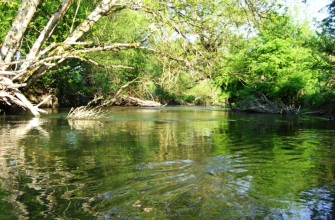
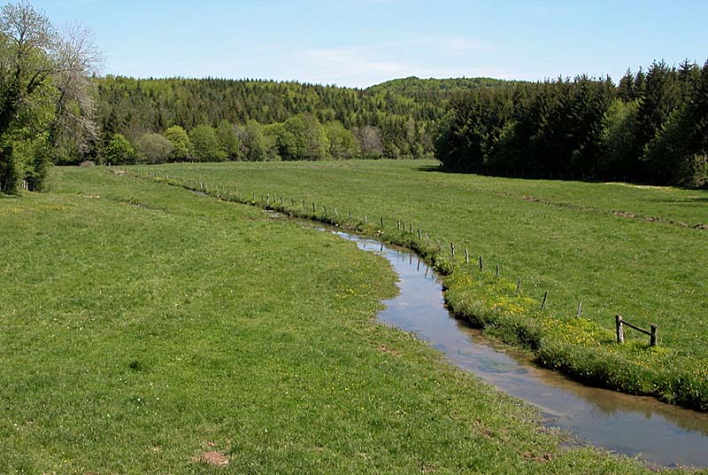
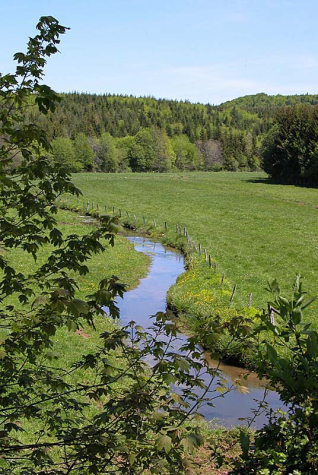
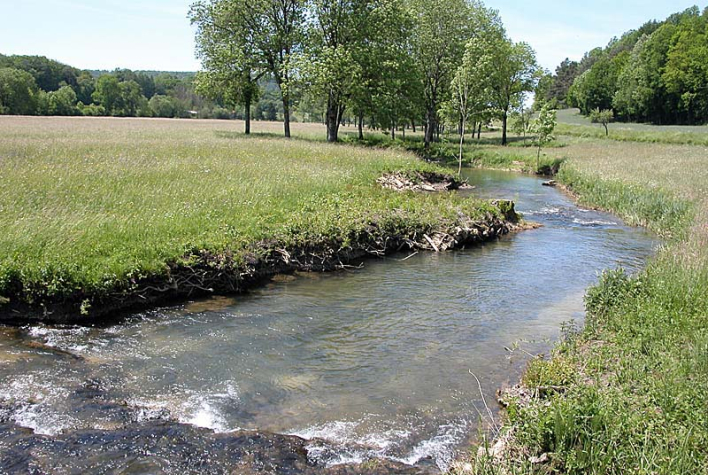
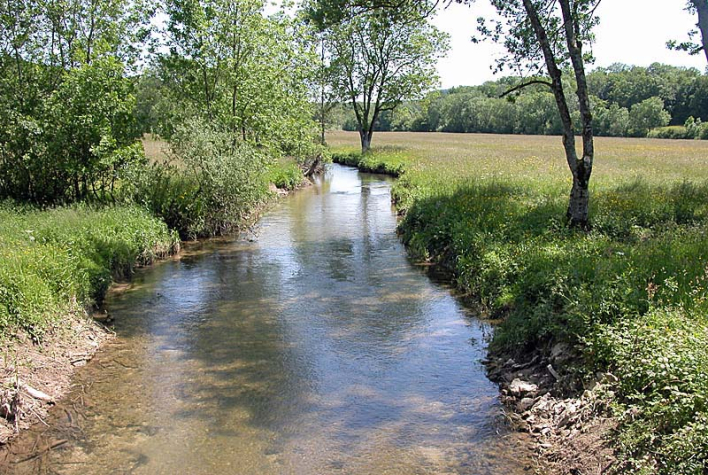
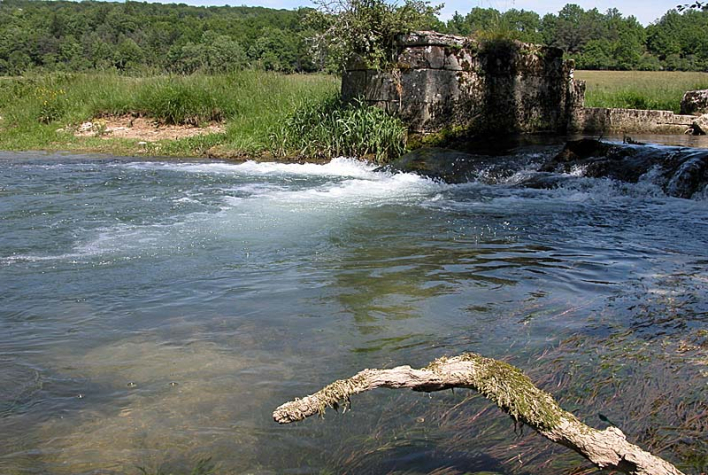
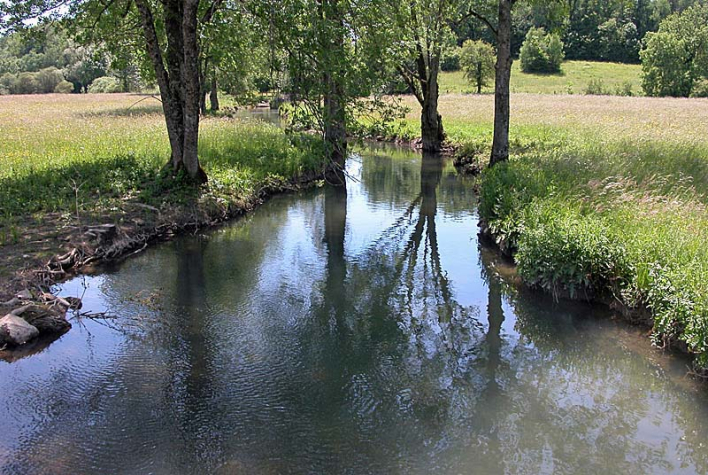
This beautiful, well-preserved valley can be explored by car or by bike (on the D20), between Auberive and Dancevoir, in search of Mother Nature's hidden secrets.
For nature lovers :
The upper Aube valley and its tributaries (the Germainelle and Vivey streams) represent a vast, well-preserved complex of aquatic environments and grassland biotopes, rich in flora and fauna. This submontane alluvial valley has remarkable vegetation in more ways than one: more or less wet meadows, mown or more frequently grazed (Arrhenatherion elatioris, Oenanthion fistulosae, Bromion racemosi), tuff or peat marshes, magnocariçaies (Caricion rostratae), filipendulaies, more rarely alluvial woodland (Alno-Padion, Salicion albae) and very locally woodland on the plateau and underlying slopes (breeding and summering area for the black stork), etc.
Vegetation:
Numerous rare or protected plant species can be found here: poet's narcissus (highly endangered and declining sharply over the last 25 years), monkshood, creeping willow, narrow-segmented buttercup, wintergreen, spatulate-leaved groundsel and a fern, marsh thelypteris. All are protected at regional level and most are on the Champagne-Ardenne red list, along with the incarnate orchid, paradoxical sedge, smooth elm, German cynoglossus and a small fern, ophioglossus.
Fauna:
A dragonfly typical of small cold valleys, the Agrion de Mercure, frequents the white waters of the river: highly endangered in Europe, it has been protected in France since 1993, listed in Annexes II and IV of the Habitat Directive and the Bern Convention, in the Red Book of endangered fauna in France (in the endangered category for the north of the country) and on the Red List of insects in Champagne-Ardenne.
Fish are highly characteristic of clear, unpolluted waters, including trout, the planer lamprey, which has been protected in France since 1988, and the sculpin, both of which are listed under the Habitats Directive.
Amphibians and reptiles are well represented, and include rare and declining species such as the spadefoot toad and the green and yellow snake, which have been protected in France (since 1993) and in Europe (Annex II of the Bern Convention) and are on the regional red list, along with the salamander and the asp viper.
The avifauna includes a variety of passerines, including the ant-torcola, a rare breeder that is in decline and is on the Champagne-Ardenne red list of birds, birds of prey (red kite, buzzard, sparrowhawk), the black stork (summering and breeding site on the plateau included in the ZNIEFF) and the dipper (or water blackbird), both of which are also on the regional red list.
Daubenton's vespertilion, a bat on the regional red list of mammals, can also be seen here.
The site is very scenic and has been proposed for the Habitats Directive. The valley is still in good condition, despite the risk of corn growing spreading: it is in excellent condition between Rouvres-Arbot and Bay-sur-Aube (over 80% hay meadows), well preserved as far as Vivey, and in a precarious state between Dancevoir and Bay-sur-Aube (numerous crops).
Vallée de l'Aube