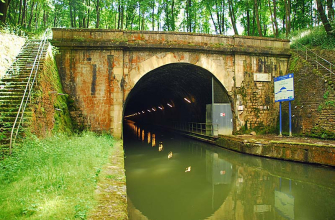
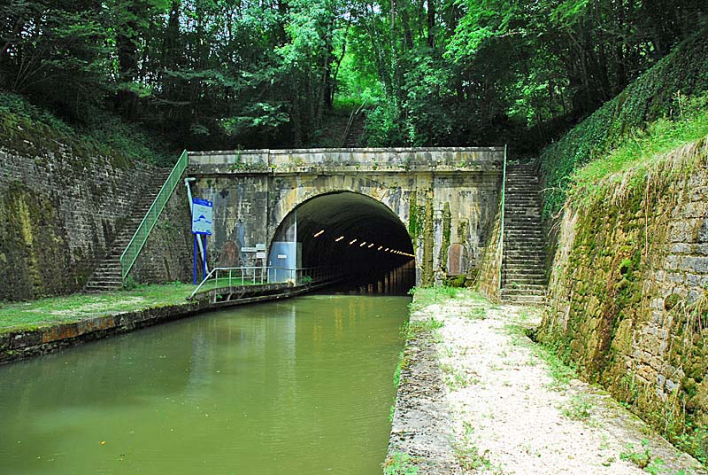
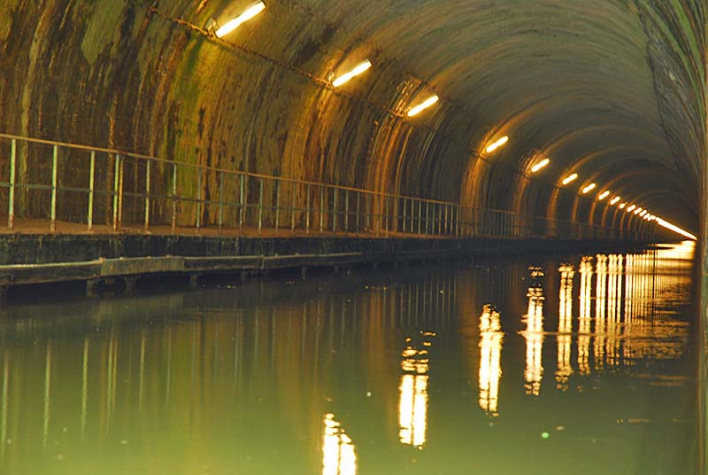
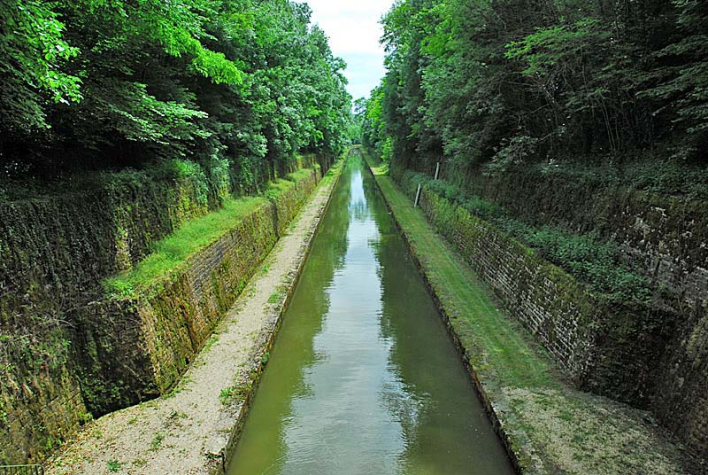
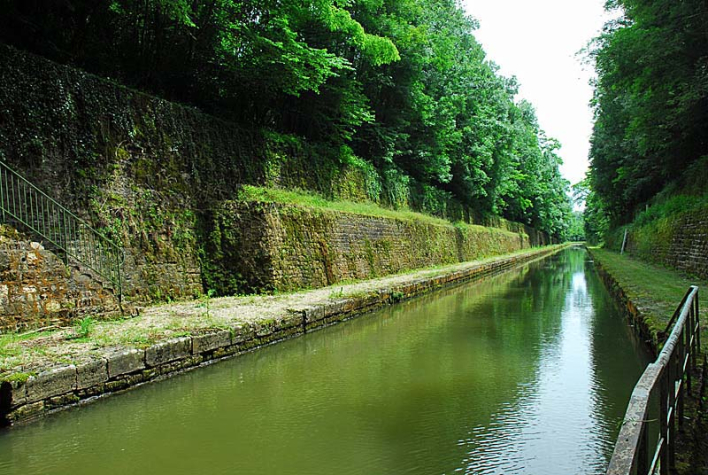
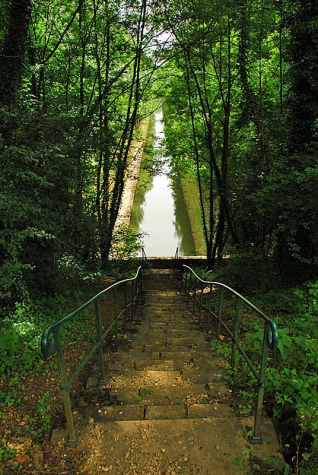
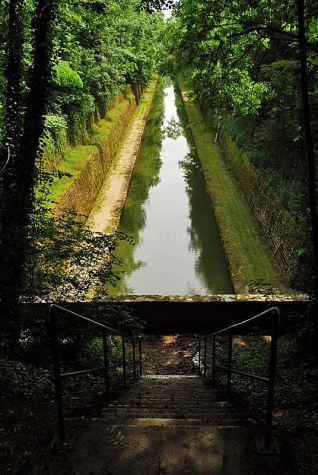
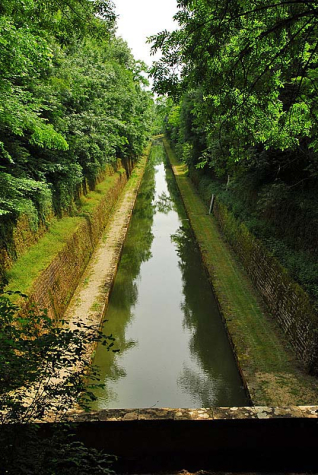
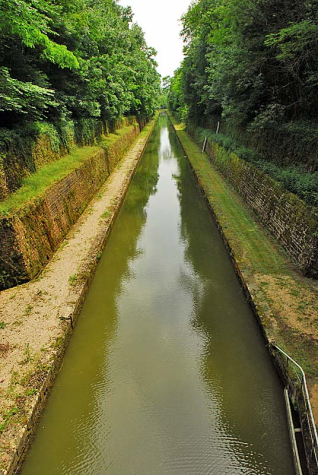
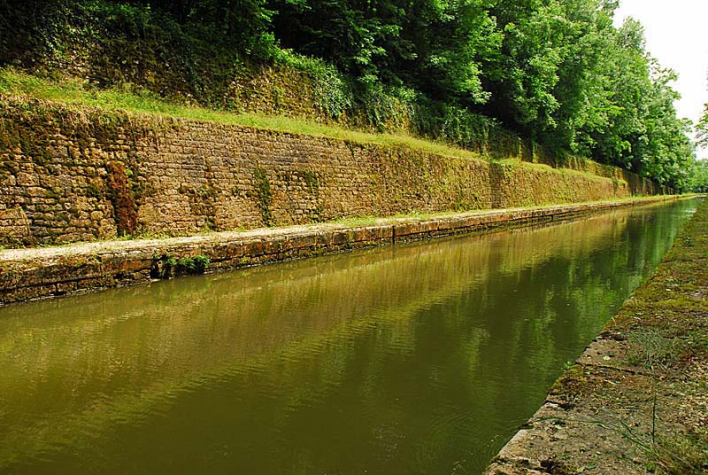
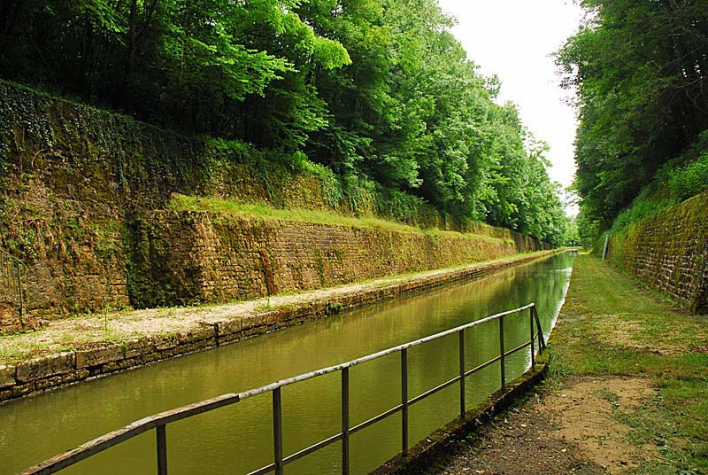
The Balesmes tunnel is a remarkable structure on the Champagne-Burgundy canal, built between 1880 and 1883. It is both the canal's watershed, i.e. its highest point, and also crosses the watershed between the Mediterranean, the English Channel and the North Sea.
A technical feat for its time
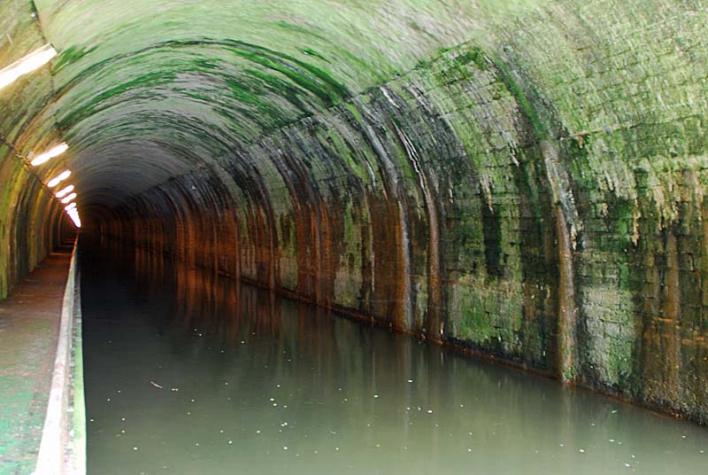
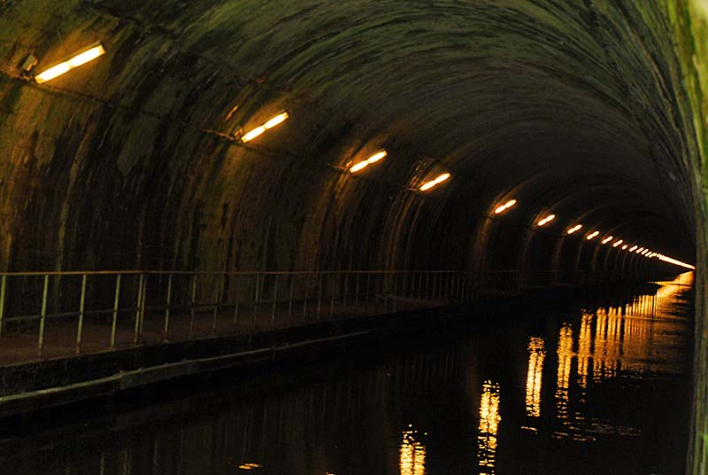
With a length of 4,820 m, a width of 8 m and a headroom of 10 m, the Balesmes tunnel is considered to be the fourth longest river tunnel in France, considerably reducing the number of locks on the waterway. The square in front of the church at Balesmes and the river Marne pass over the tunnel.
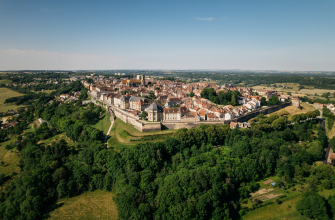
The height of the tunnel was the subject of intense reflection, since it influences its length and potential low-water problems (the lower the tunnel, the less it has to worry about maintaining normal water levels, but the longer it will be, and therefore the more expensive it will be). The tunnel was therefore dug in the Langres plateau, at an altitude of 340 m.
Construction of the tunnel
Tunnelling was carried out by two teams, who attacked each end until they met in the middle with a 10 cm gap (whereas over a distance of 2.5 km, a deviation of 1 degree would result in a gap of 25 m). The digging work aroused the ire of the locals at the time, as, in addition to the use of pickaxes and shovels, only dynamite could be used to cut through the hardest rock.
The construction of the underground vault, whose stones came from nearby quarries (Cohons, Balesmes, etc.), required considerable masonry work: 200,000 m² of stone facing (i.e. 40 m² for each metre of tunnel) to support the gallery. All the work was carried out 24 hours a day, without interruption.
The tunnel was opened in 1888 and, in 1907, the first boat was able to link the Marne and Saône rivers.
Tunnel du canal entre Champagne et Bourgogne (Sud)