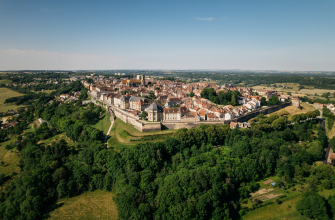
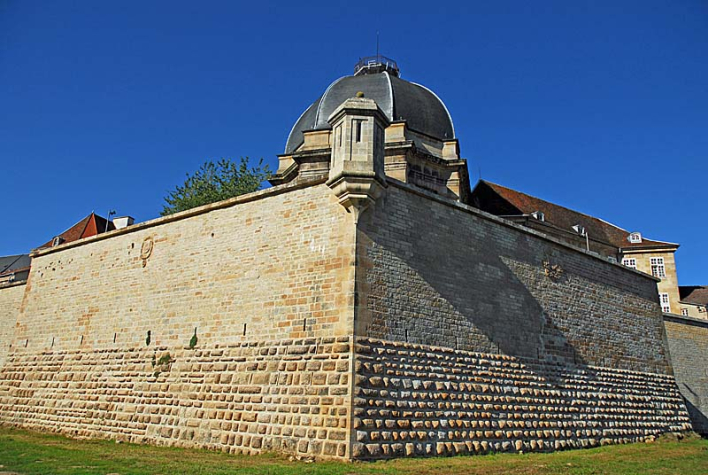
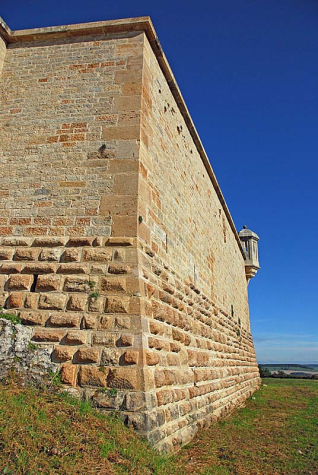
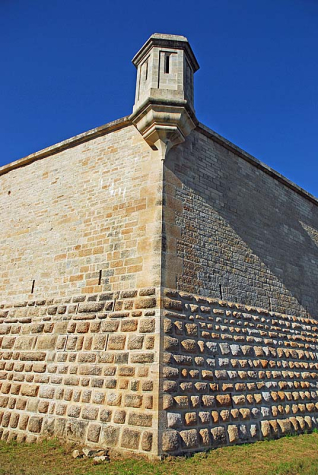
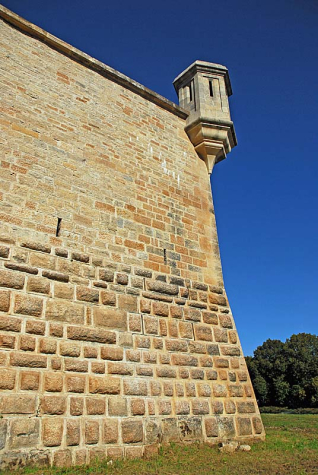
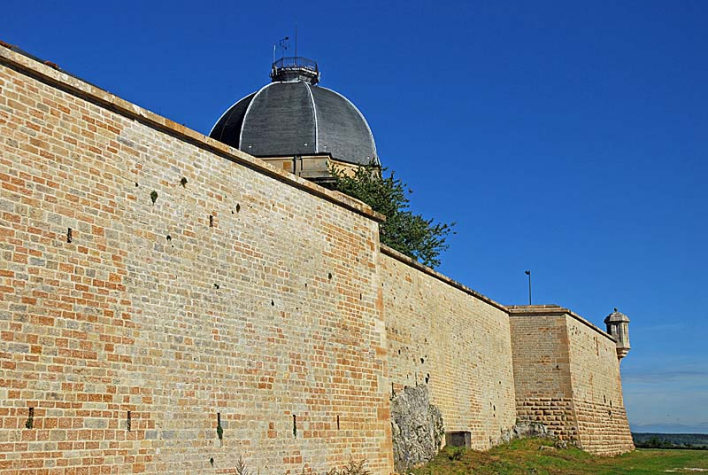
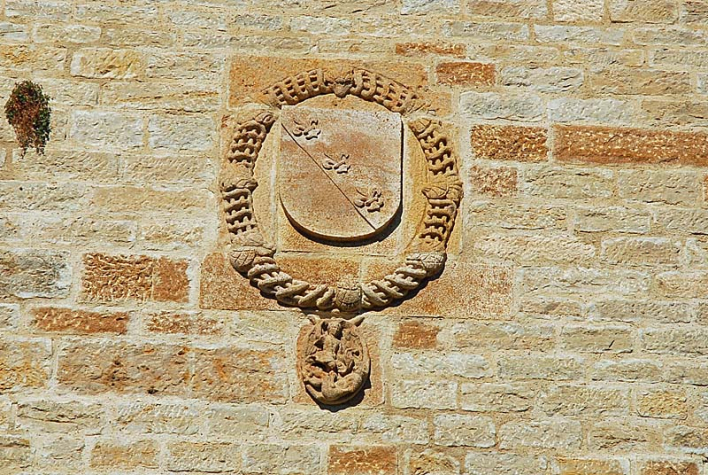
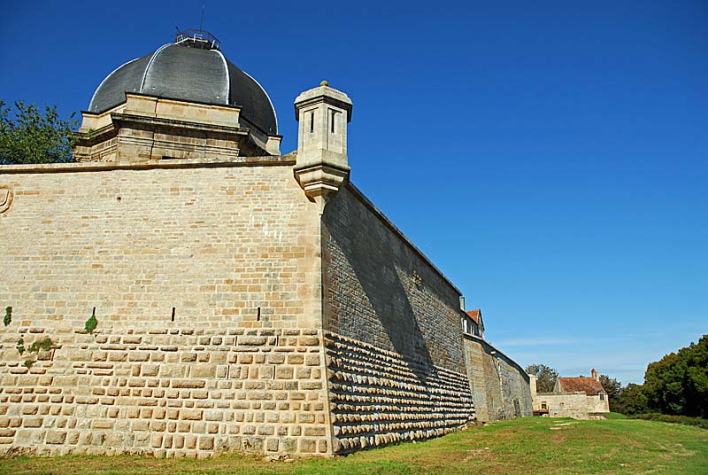
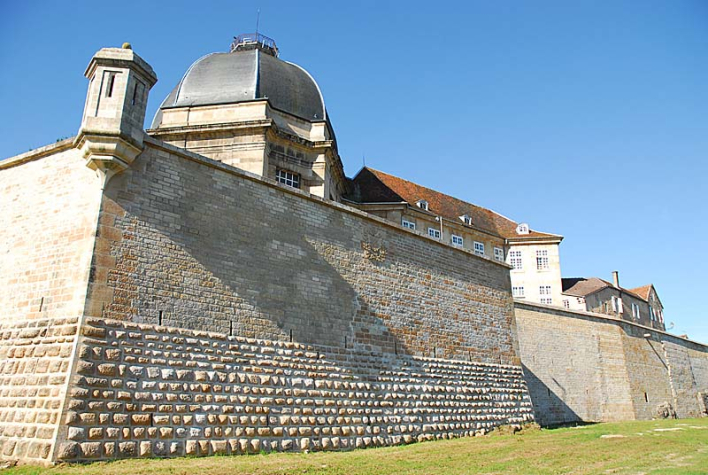
This unusual name is due to the polygonal shape of this bastion, the first to be built in Langres. Designed at the height of the War of Religion as a replacement for a medieval tower, the bastion was an innovation; artillery towers - such as the Tour Saint-Ferjeux - were now too costly to be effective. Around 1530, Italian engineers invented pentagonal structures which, filled with earth, were more economical and better able to absorb the impact of cannonballs. In the absence of vaulted rooms, which had become too fragile in the face of artillery, the cannons were now concentrated in the open air, at the top of the earthworks.
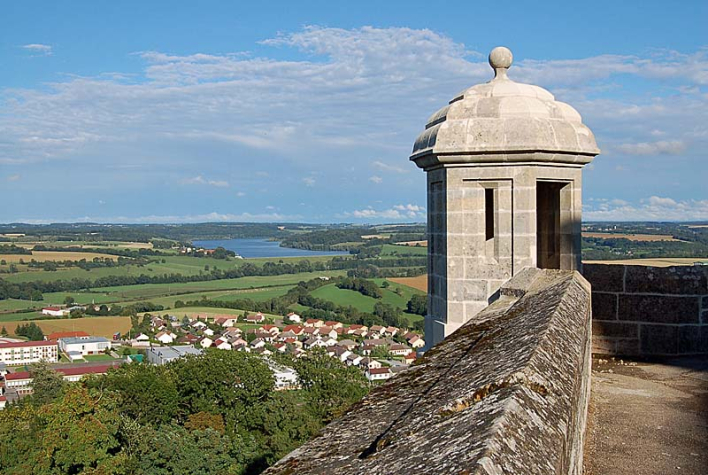
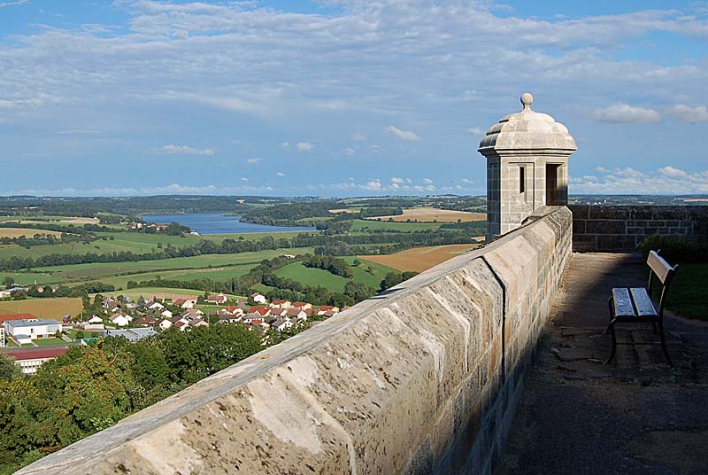
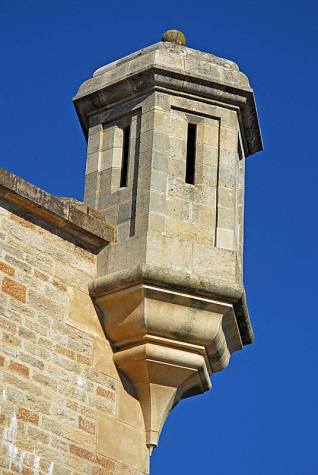
In 1850, the Military Engineers restored the watchtower that kept watch over the base of the structure.
A little background information:
In 1698, when the frontiers had retreated and external dangers had all but disappeared, the town granted Jean Noblot permission to use the watchtower to store his rope-making tools. He was also allowed to spin his ropes from the piquante tower to where the rack now stands.
Tour Piquante