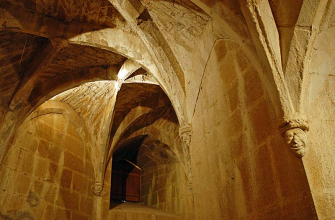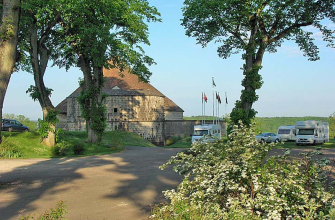
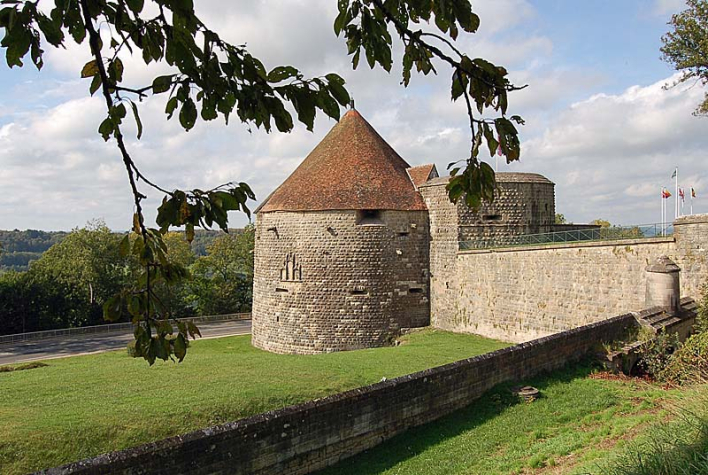
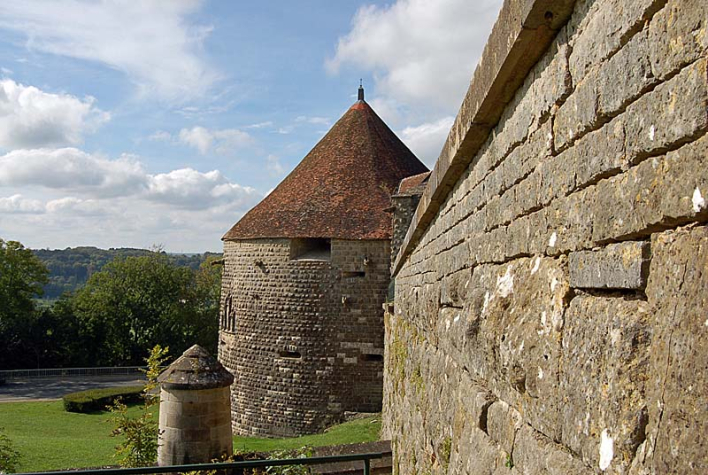
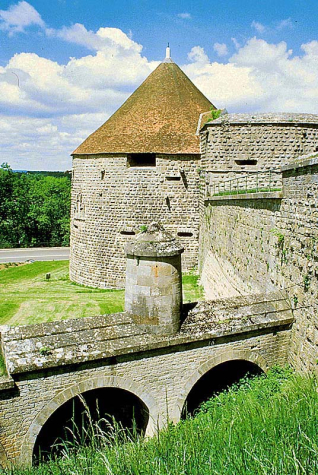
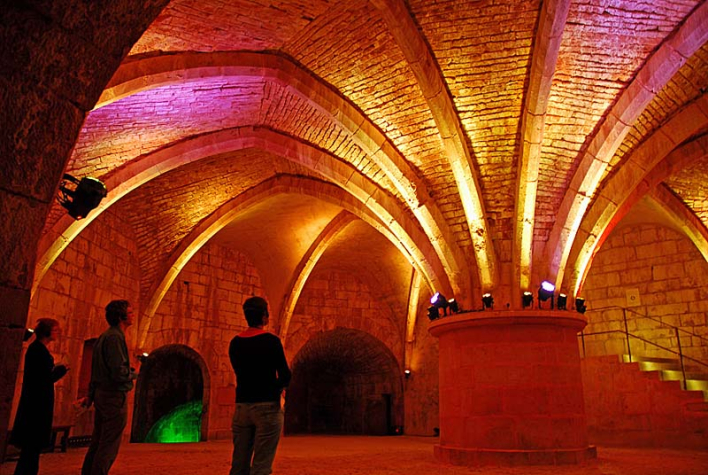
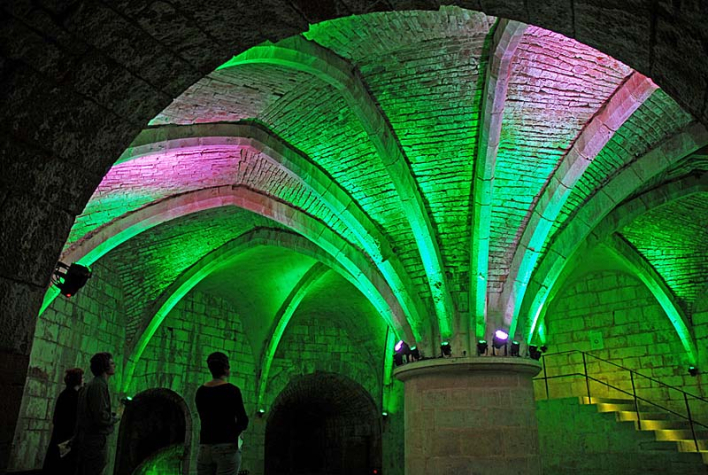
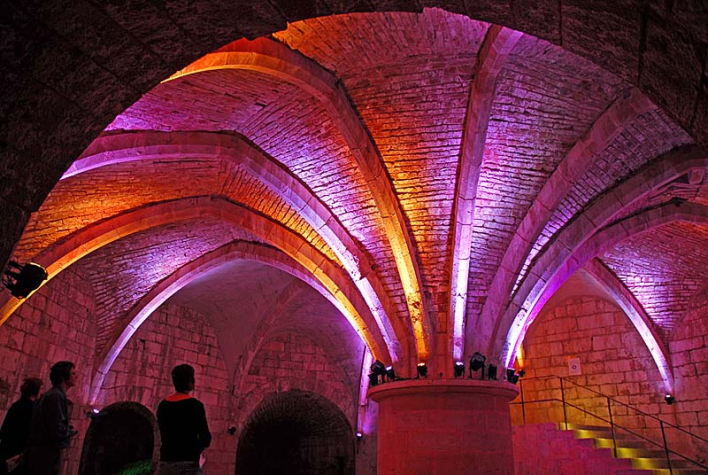
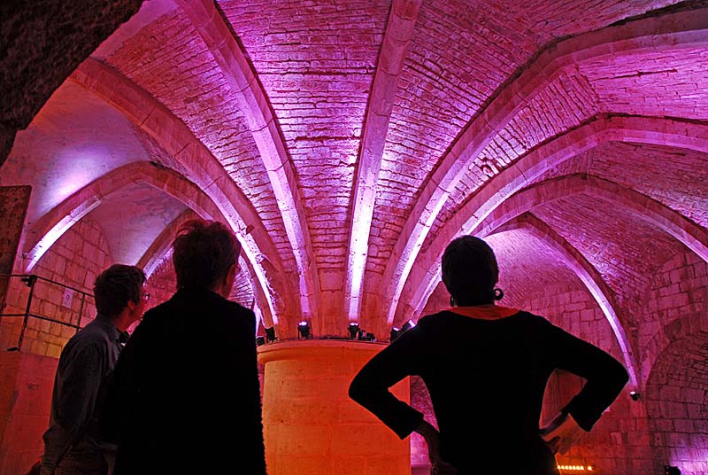
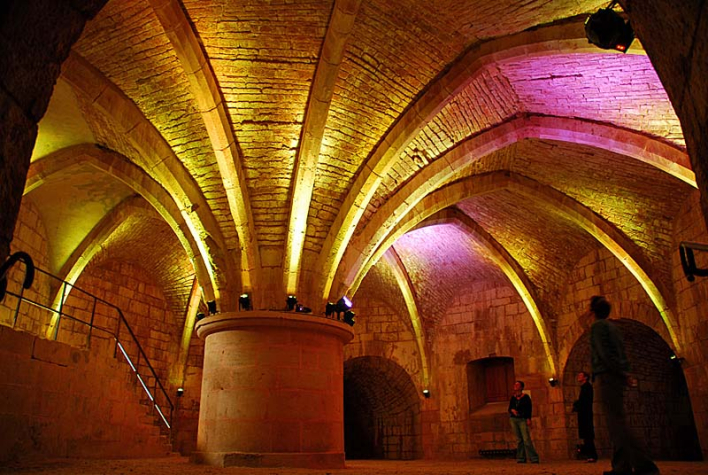
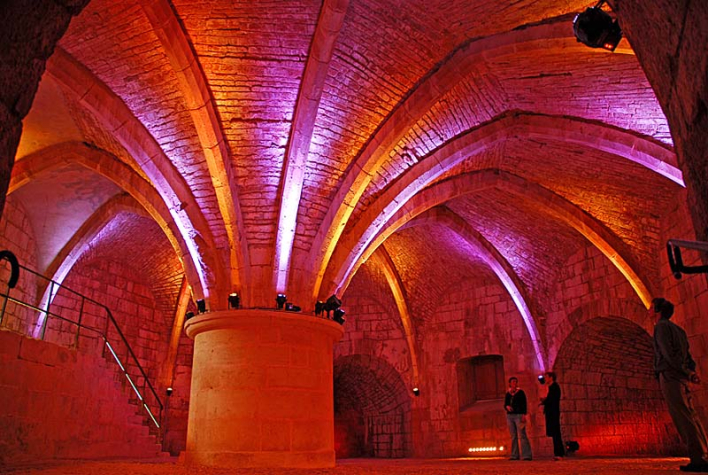
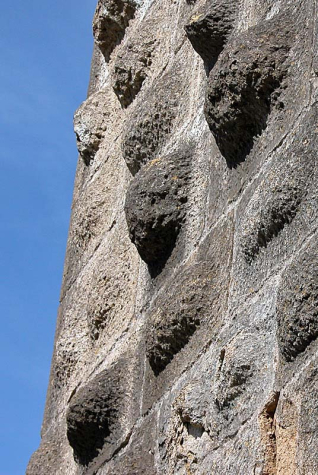
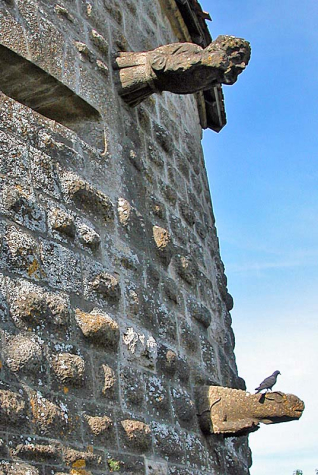
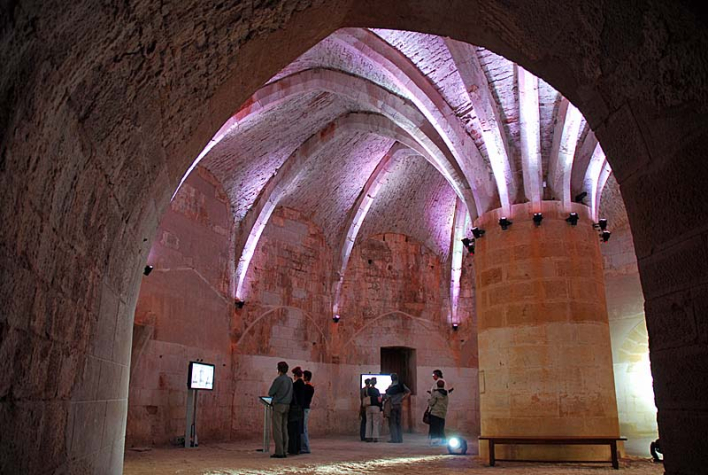
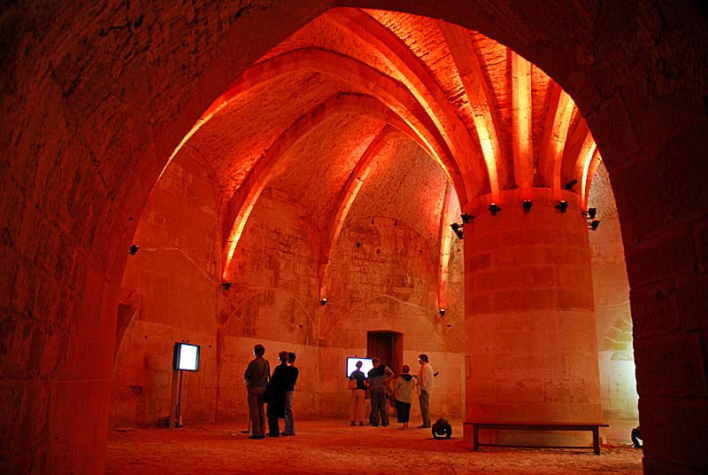
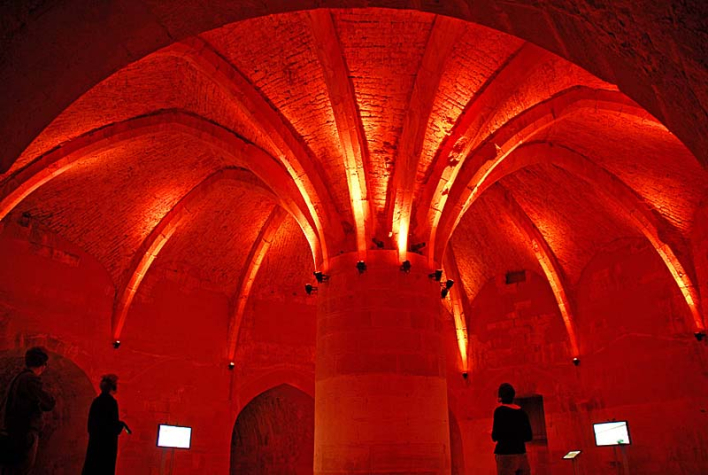
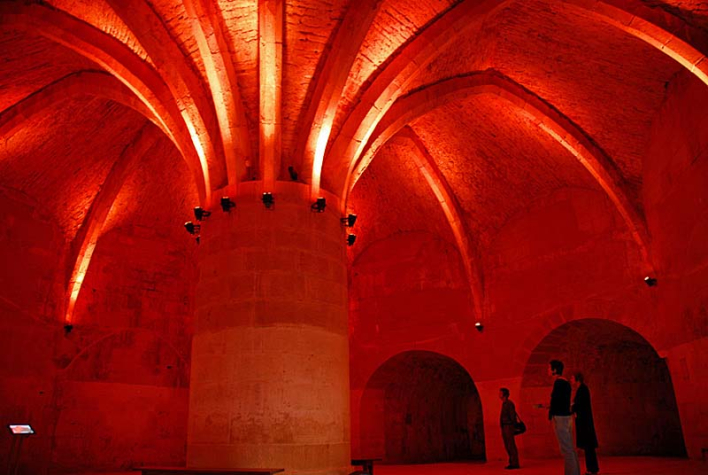
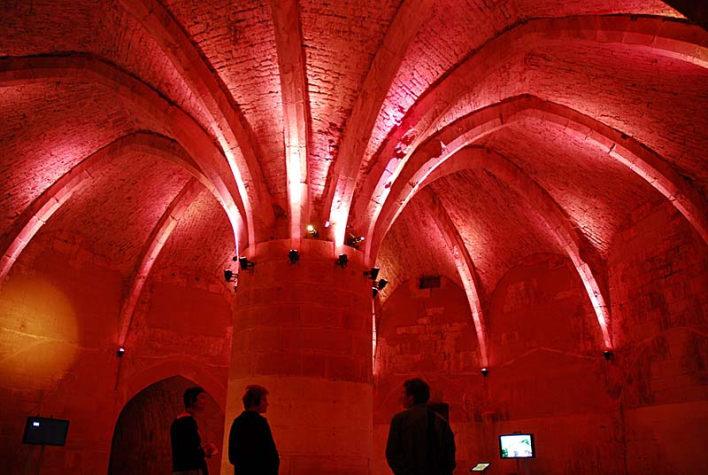
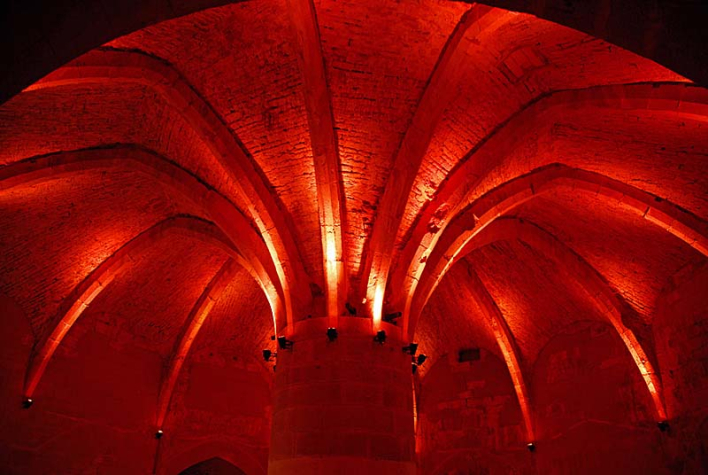
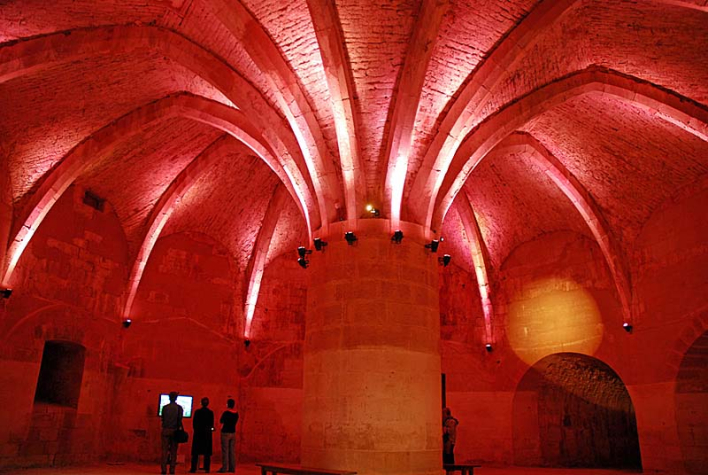
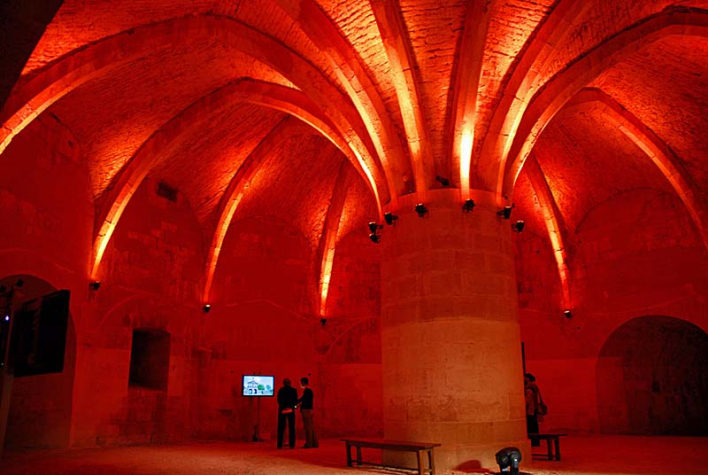
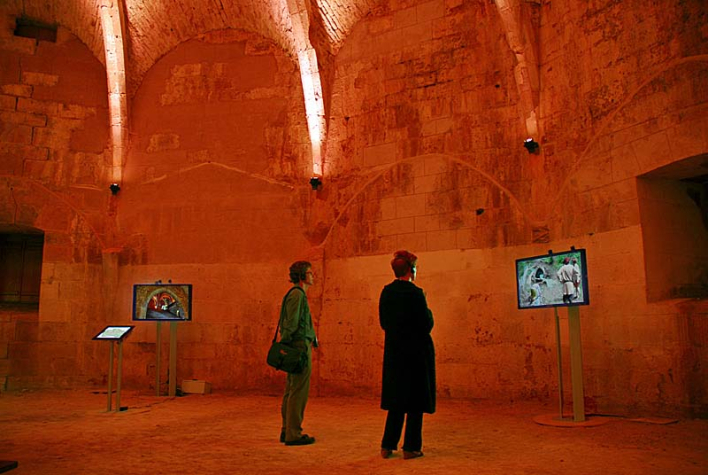
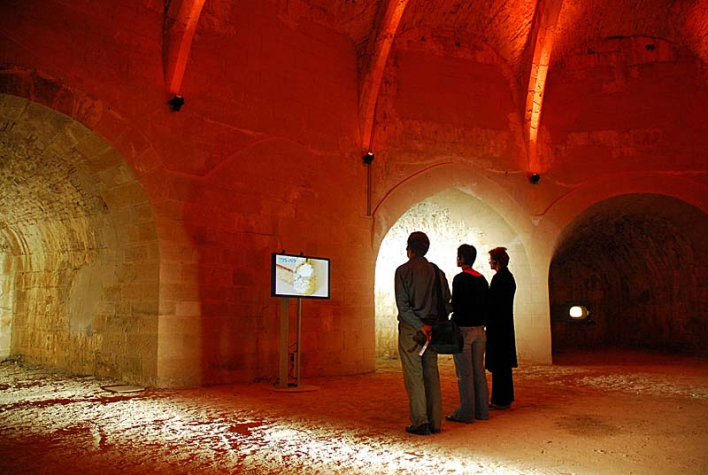
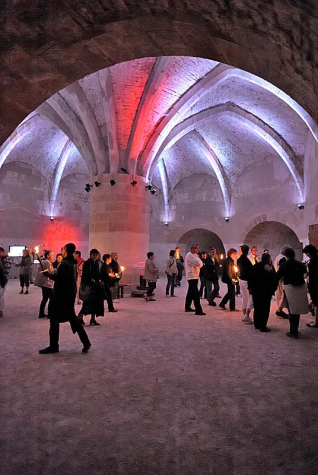
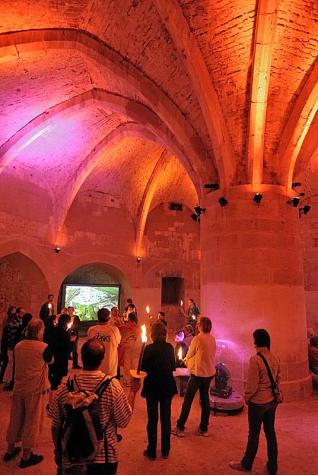
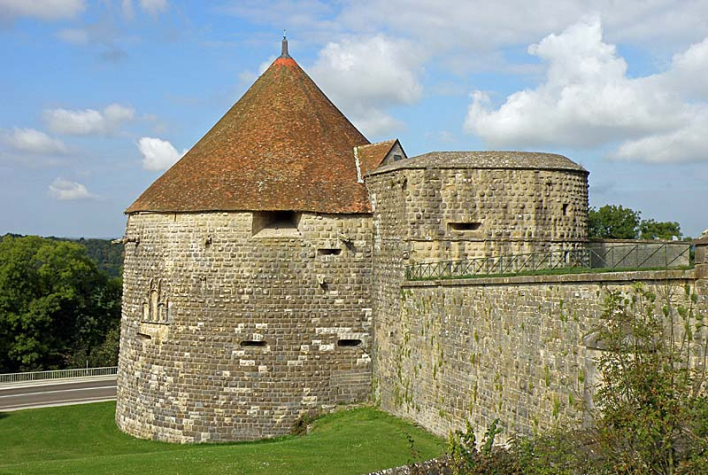
This structure is located on land that once belonged to the counts of Champagne, who were also kings of Navarre. It is the most monumental of the artillery towers, with a diameter of 28 metres, a height of 20 metres and around twenty firing embrasures spread over four levels, making it an extraordinary structure. Its 7-metre-thick walls protect two powerfully vaulted and casemated rooms.
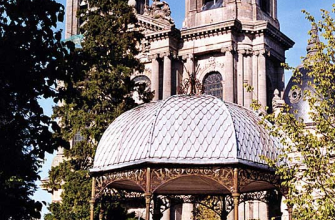
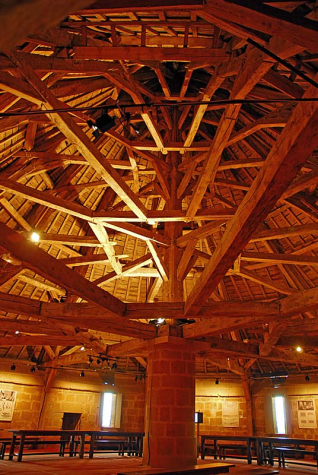
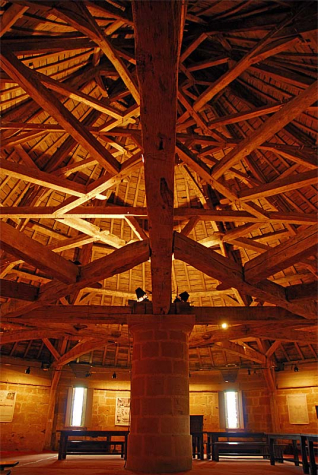
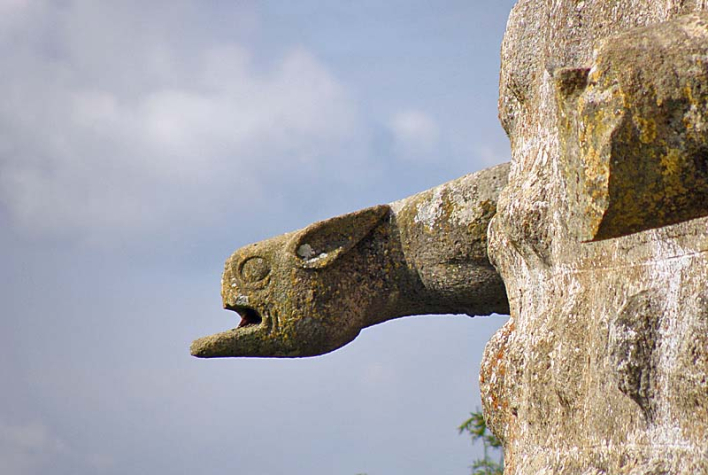
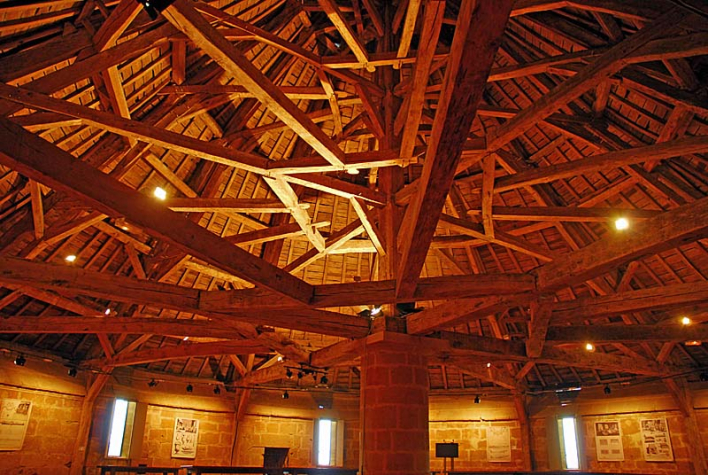
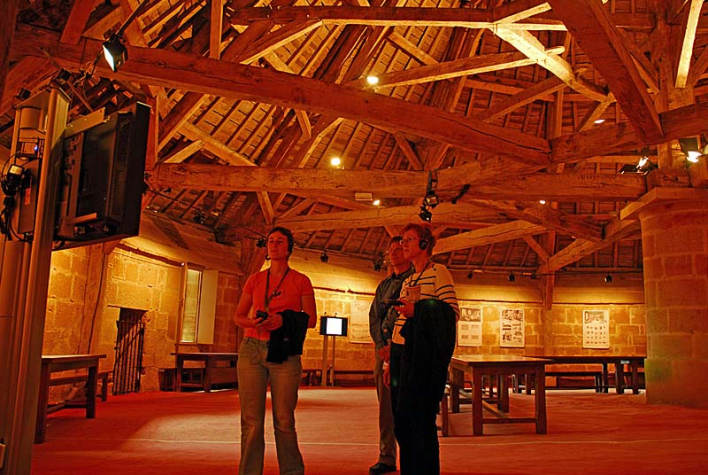
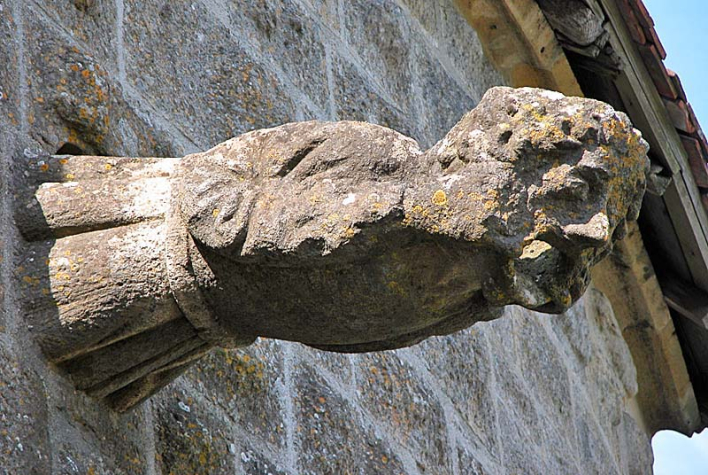
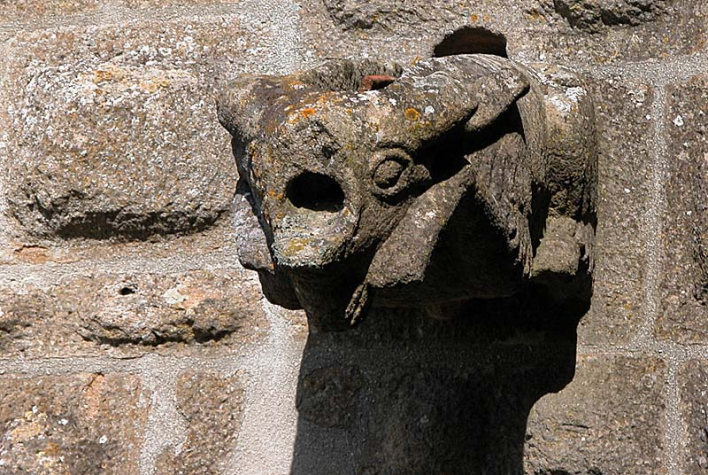
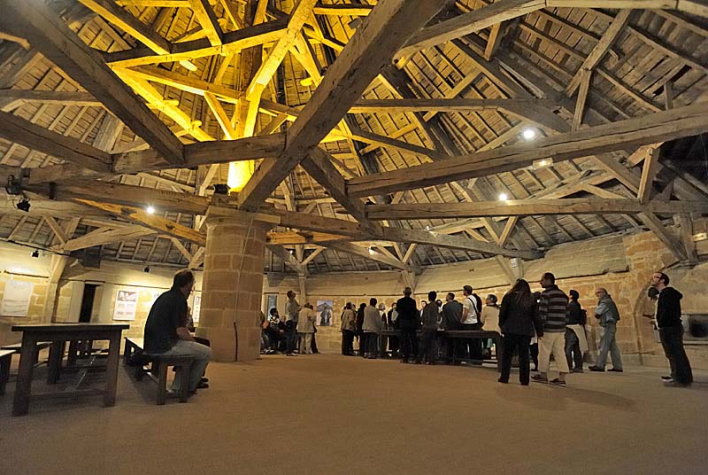
The artillery on its terrace was designed to protect the plateau in front of the Porte des Moulins. Almost completed in 1515 after only four years of work, it was raised by 2.5 metres to increase the range of the cannons installed on its terrace. This transformation during construction led to the installation of a second level of gargoyles and the construction of a new tower, the Tour d'Orval, protecting a spiral artillery ramp. This could carry the cannons to the top of the Tour de Navarre, sheltered from enemy fire. In 1825, the Military Engineers converted the tower into a powder magazine. A conical framework was then built to protect the lower rooms from seepage.
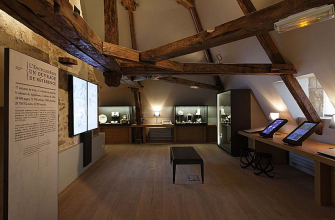
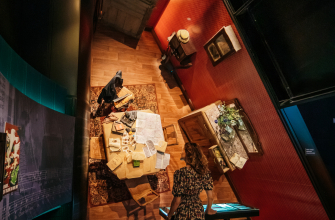
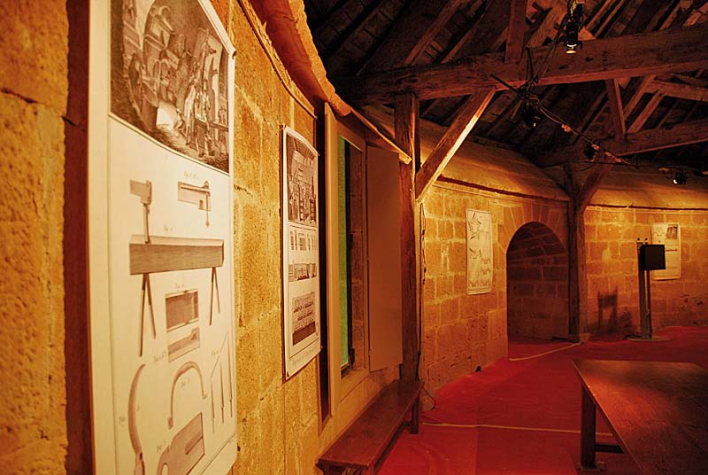
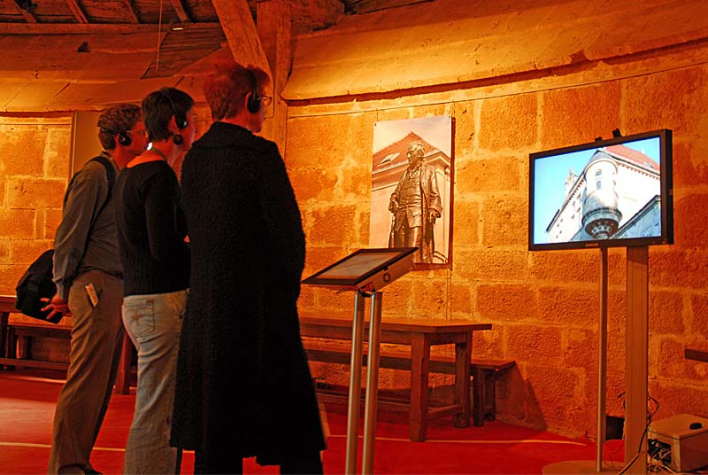
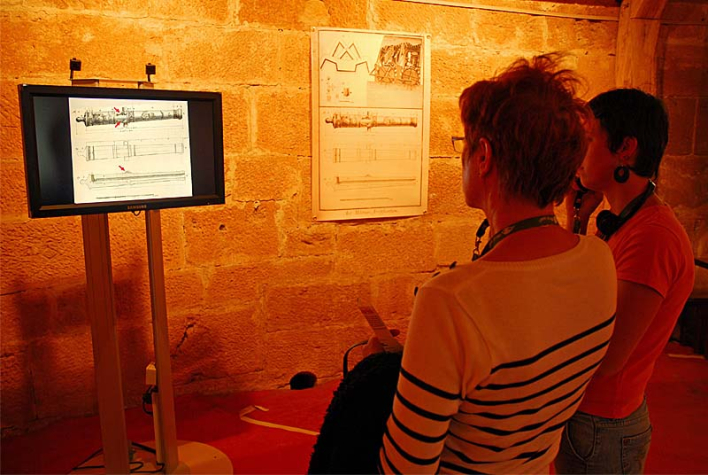
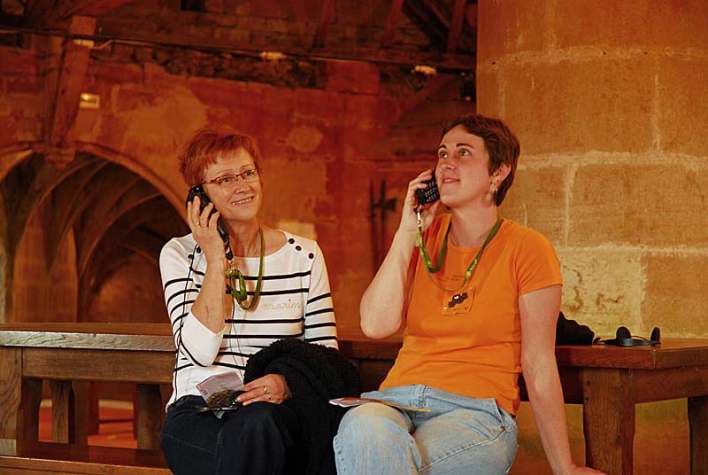
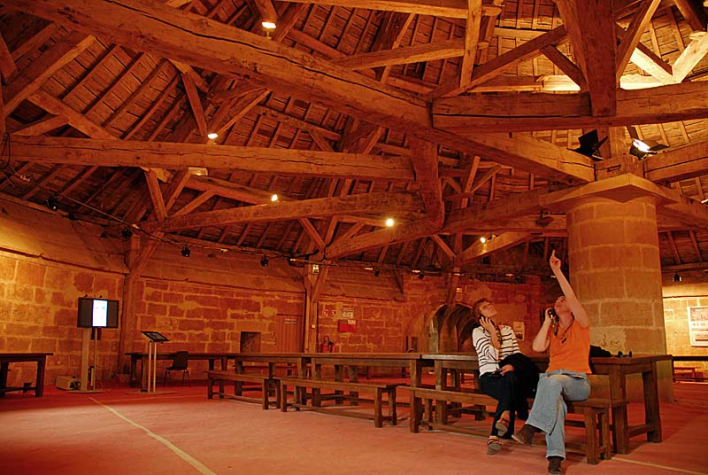
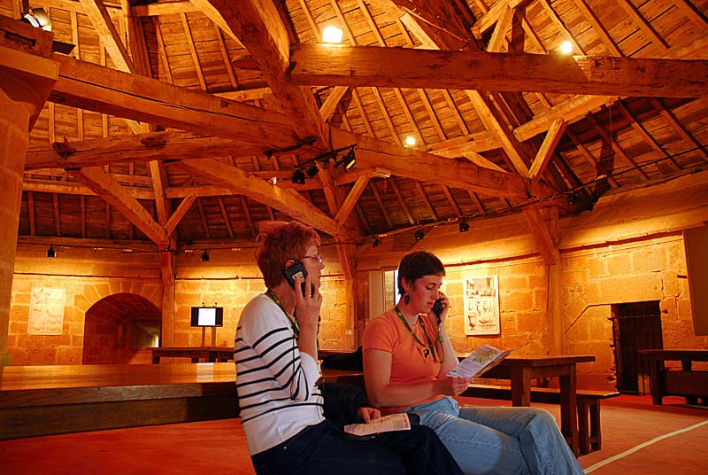
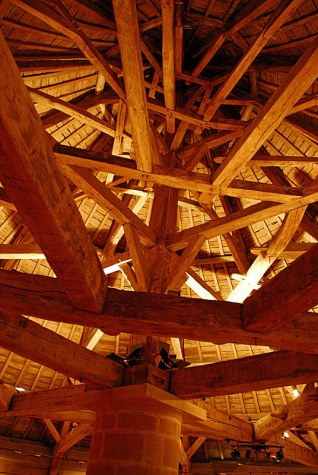
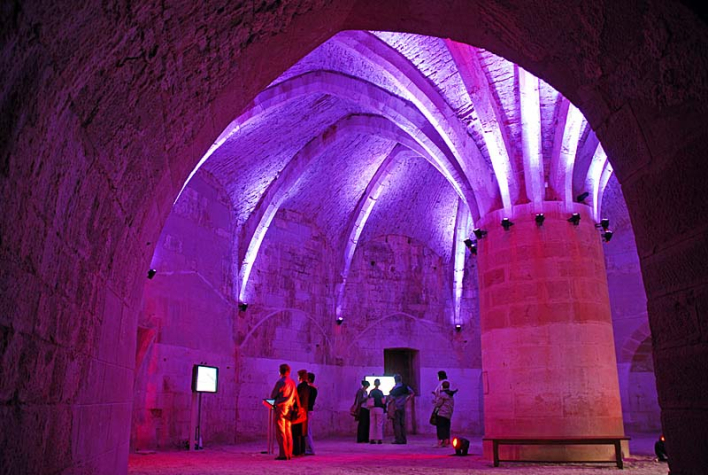
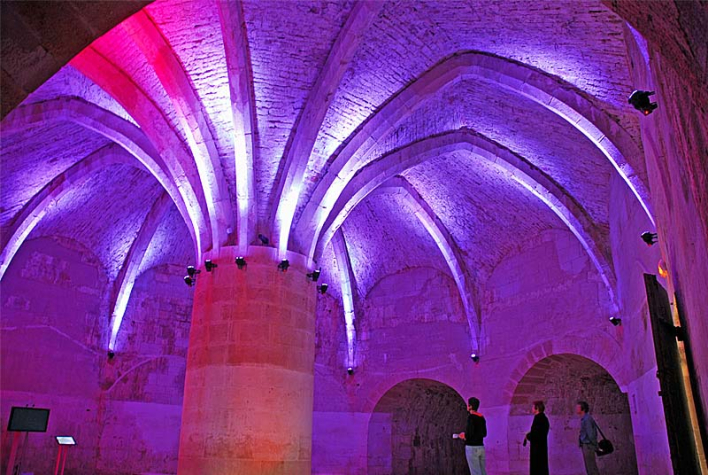
In its magnificent stone setting, with its vaulted and casemated rooms and its terrace covered by a monumental framework, the Tour de Navarre is now home to a fun and educational tour for young and old alike. Thanks to an audio guide, video screens and interactive terminals, you can discover this unique 16th-century defensive complex, inaugurated by François 1st in 1521.
The lights in the tower come to life to tell you about the legends of Langres, the history of its fortifications over the centuries and Denis Diderot's Encyclopédie.
An unusual journey to the heart of unforgettable architecture.
Group visits: All year round on request.
Fun and learning...
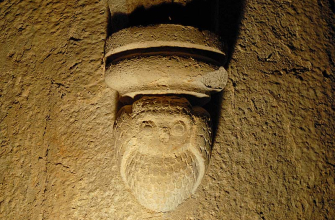
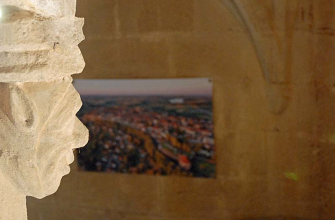
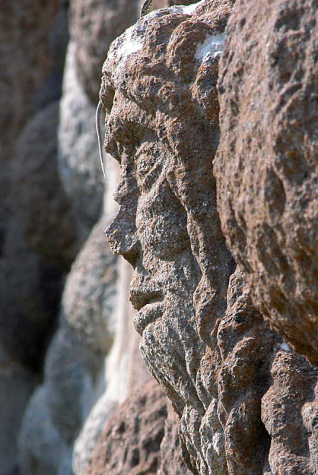
To arouse the curiosity of the youngest visitors, the imposing Tour de Navarre can now be discovered thanks to a treasure hunt. Depending on the age of the children - 6-9 or 9-12 - there is a choice of two sheets to help them have fun learning. Booklet in hand, children accompanied by their parents will have to explore the different levels of this artillery tower, to solve the riddles of Choupette the owl and Martin the imp. And if they keep their eyes peeled, they'll be able to spot the strange sculptures among the coats of arms, bats, acrobats and other inhabitants of the Tower. Following on from the "Sherlock the Little Detective" booklet, which allows children to explore the town in search of mysterious animals, the treasure hunt continues in the fortress city!
Leaflets available for €0.5 for families.
A little history:
On 9 June 1643, Sieur Demongeot, guard of the Tour de Navarre, fired its cannons eighteen times at enemies who had ventured near the town. To prepare for any new eventuality, he asked for gunpowder and cannonballs, as he had "used up everything in the said tower".
On 30 June 1809, Guillaume Guérinot obtained a nine-year lease to set up a sulphuric acid and iron sulphate factory in the tower.
Under the Ancien Régime, the Champ de Navarre (now the campsite) was the site of the "Arquebuse game". This shooting competition was organised by the "Chevaliers de l'Arquebuze", a sort of club for enthusiasts of this military sport.
The target (a metal bird) was displayed at the end of a stick at the top of the Orval tower.
The winner of the competition (the first person to shoot down the bird) was declared "King of Arquebuze"; shooting down the target three years in a row gave the right to the title of "Emperor". These honorary titles were accompanied by considerable privileges: exemptions from guard duty and from the wine tax.
Tour de Navarre