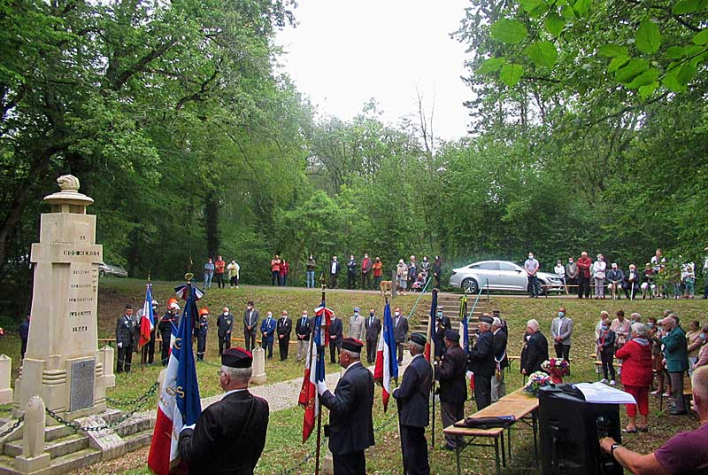
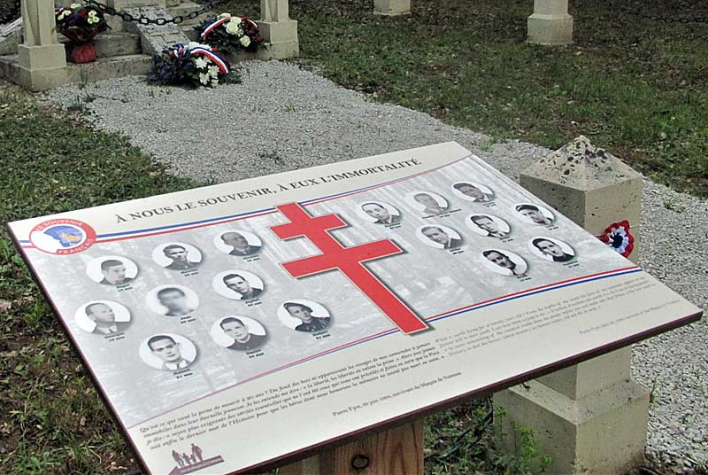
In June 1944, a maquis was created on the initiative of Hubert Aubry, a 21-year-old from the nearby village of Leffonds. Made up of nineteen young patriots from the area, the Yonne and Dijon, the Maquis de Voisines was one of six FFI (Forces Françaises de l'Intérieur) maquis in Haute-Marne. Pierre Brantus, head of the Côte-d'Or National Liberation Movement, wanted to turn it into a maquis of cadres and instructors, the nucleus of a mass maquis like in the Vercors or the Glières. The fighting that led to its destruction is one of the major events of the Resistance in Haute-Marne.
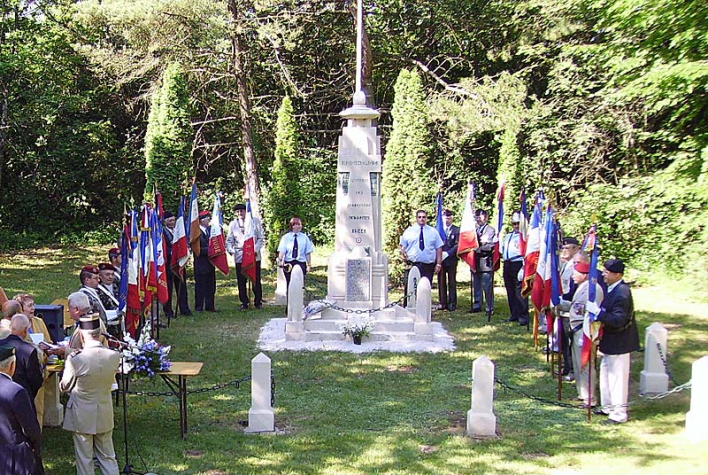
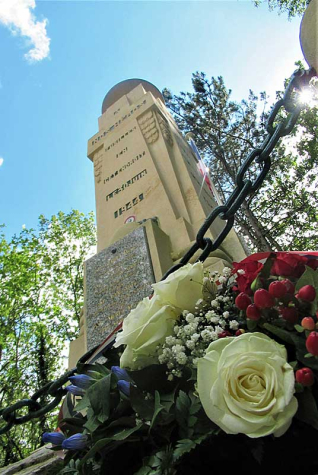
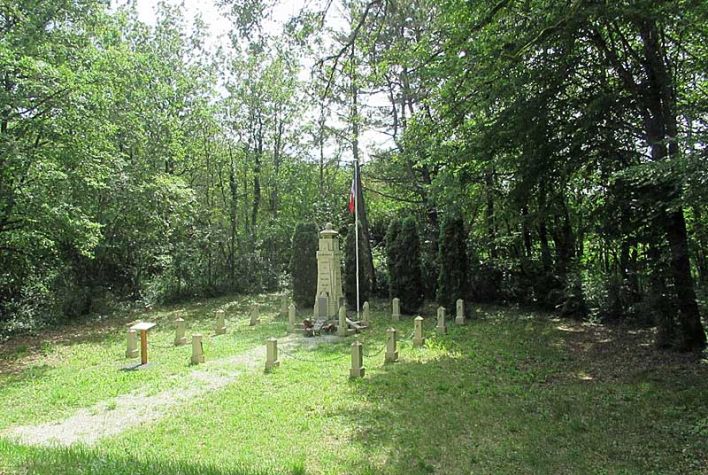
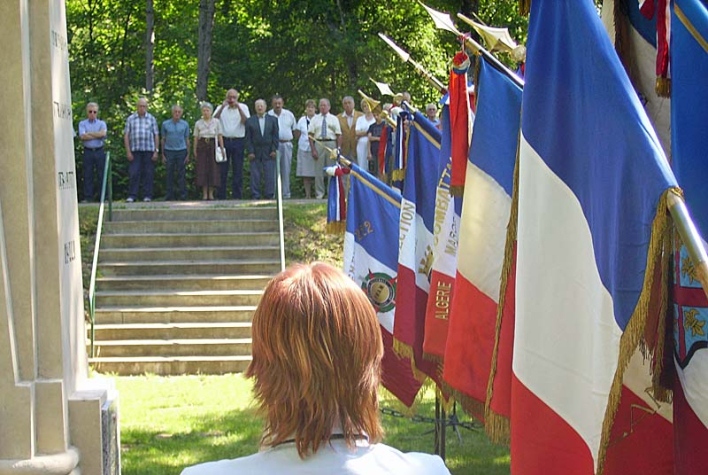
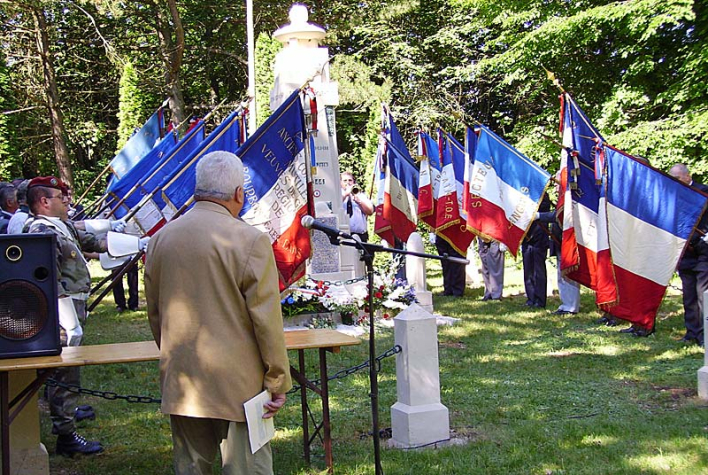
One morning in the summer of 1944, 800 soldiers from the occupying army took over four villages on the Langres plateau and surrounded more than 500 hectares of forest. A few hours later, fifteen Resistance fighters were killed in action or shot. Two managed to escape the massacre, while two others were taken prisoner and deported: only one would return from the concentration camps. All that remains of this tragedy is a stele in the forest and, in the Voisines cemetery, a little way off the beaten track, four graves packed close together. Every year, on 8 May and 30 June, the list of the victims of the summer of 1944 is added to that of the soldiers who died in the Second World War.
Site located on the road to Vauxbons.
Stèle du Maquis de Voisines