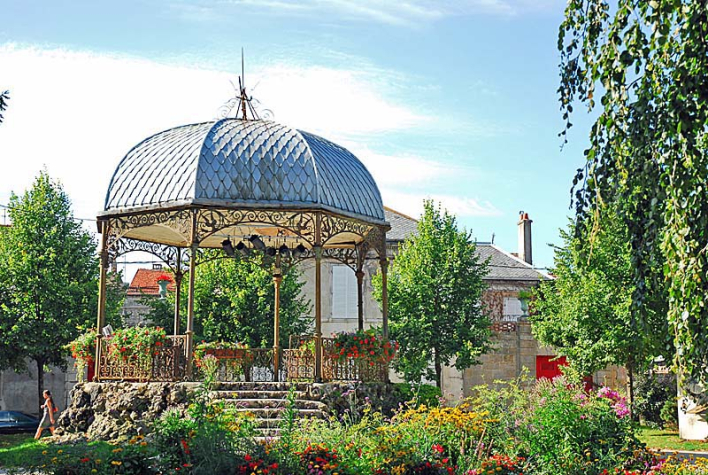
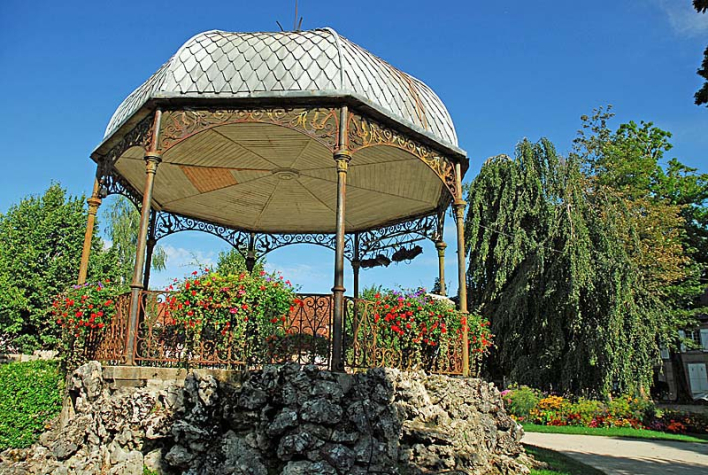
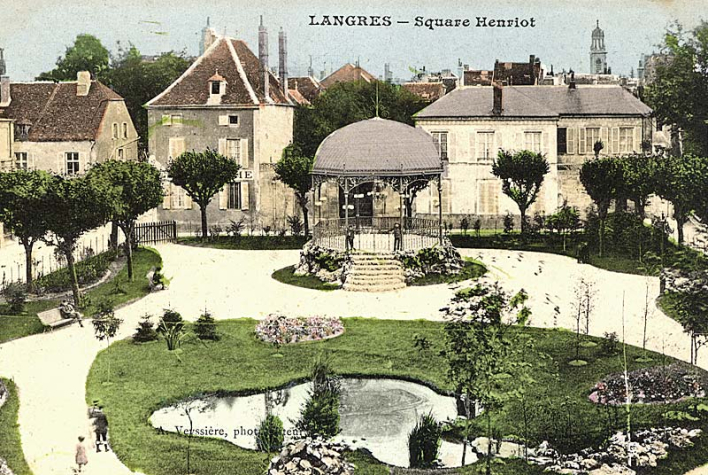
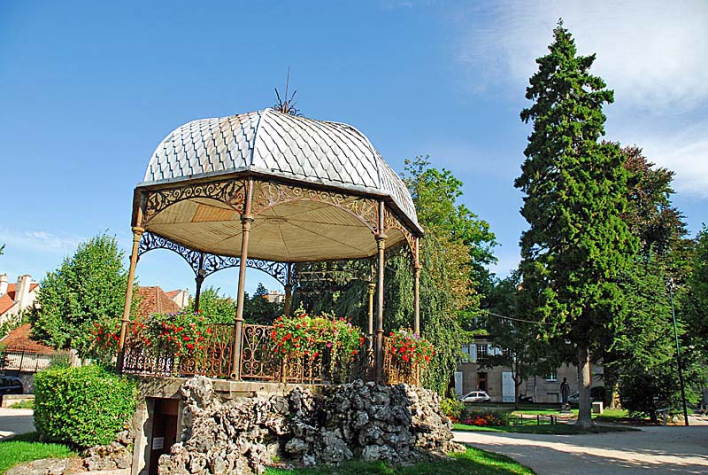
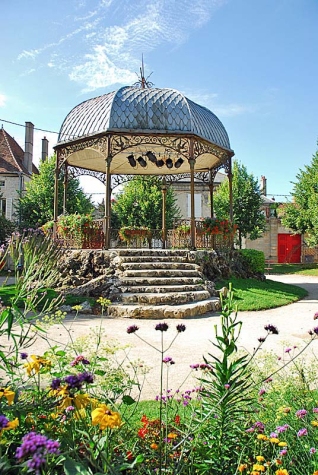
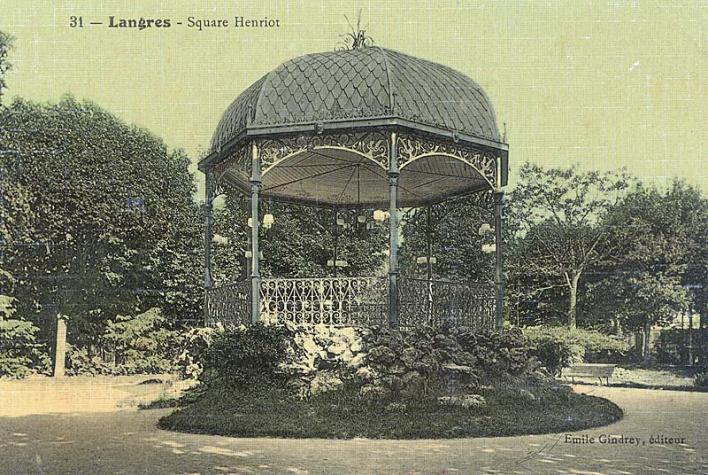
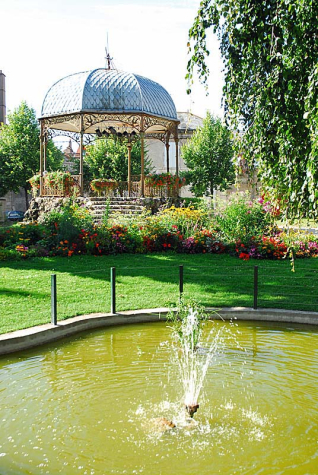
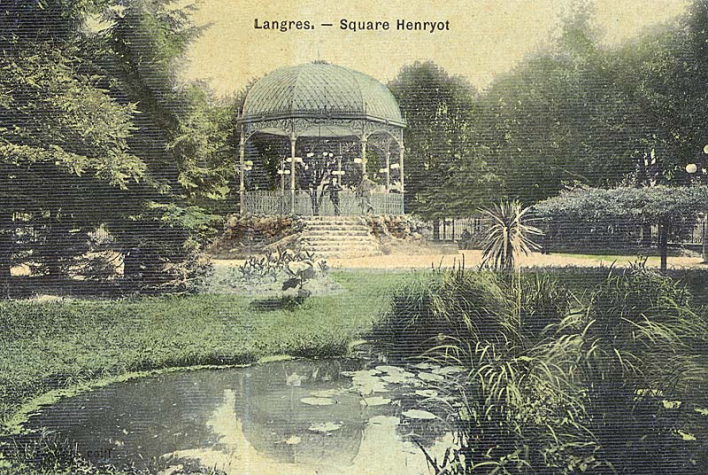
Square Henryot, named after the mayor of Langres who decided to build it, is the only public garden within the city. Built in 1889, the kiosk rests on an impressive rockwork base. Until the French Revolution, the parish church of Saint-Pierre et Saint-Paul stood opposite the cathedral. It was in this church that two illustrious children of Langres, Denis Diderot and Jeanne Mance, were baptised. A bell tower was attached to the front of the church, rising higher than the cathedral towers. It was reserved for the watchman responsible for sounding the tocsin in the event of fire or alarm. Following the destruction of the church, the south tower of the cathedral was used as a watchtower.
This square bears the name of a young nurse from Langre (1606-1673) who went on a mission to Canada and founded the Hôtel-Dieu de Montréal (1642). Her statue (by Jean Cardot) was unveiled on 5 May 1968. The square bears the name of the mayor of Langres between 1825 and 1831. The bandstand (1890) was used by the various Langres brass bands to give frequent concerts. Although welcoming and green, this square is not a "natural" place. It was laid out throughout the 19th century on the site of a parish church, a canon's house and a cemetery! Before being the heart of the "religious city", this area may have been the monumental centre of the Gallo-Roman city, at the junction of the major axes (carda and decumanus). The church of Saint-Pierre and Saint-Paul, built before 1231 and consecrated in 1245, stood in front of the cathedral, occupying the northern half of what is now the square. A parish church until the French Revolution, its façade was flanked by a bell tower that was taller than the cathedral's; it was reserved for the watchman in charge of sounding the tocsin in the event of fire or alarm. Jeanne Mance and Denis Diderot were baptised in this church. Destroyed in the early 19th century, along with a former canon's house that adjoined it (1828), the first forecourt was laid out in 1830.
Square Henryot