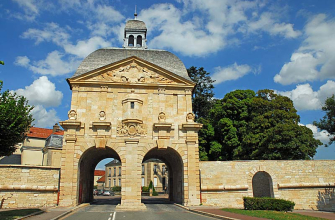
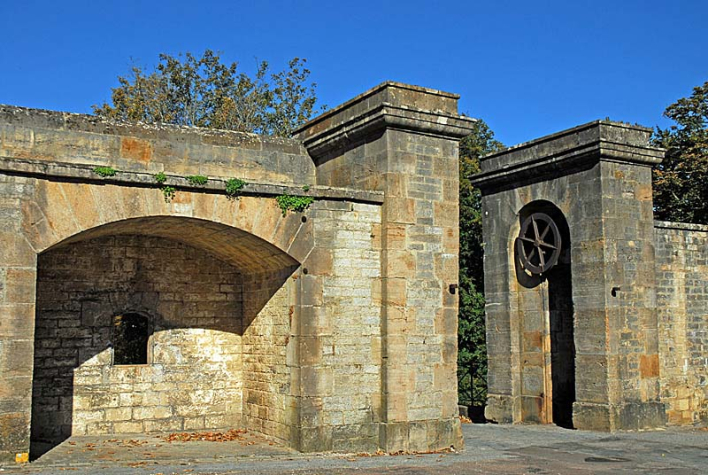
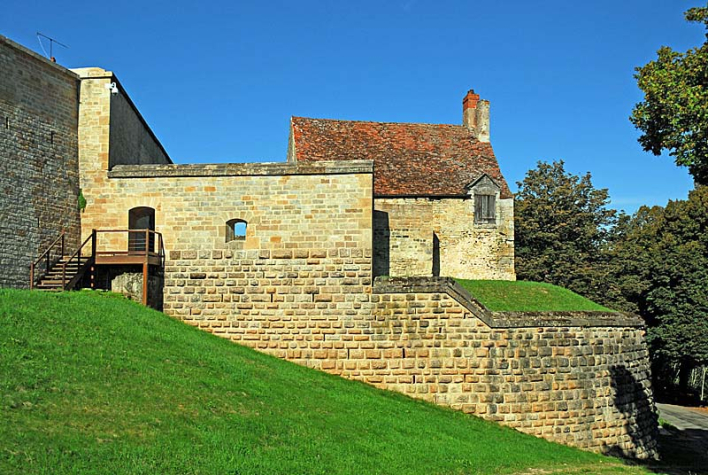
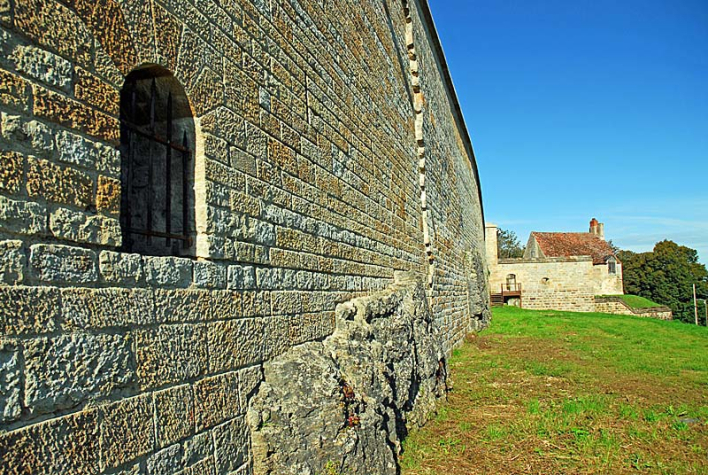
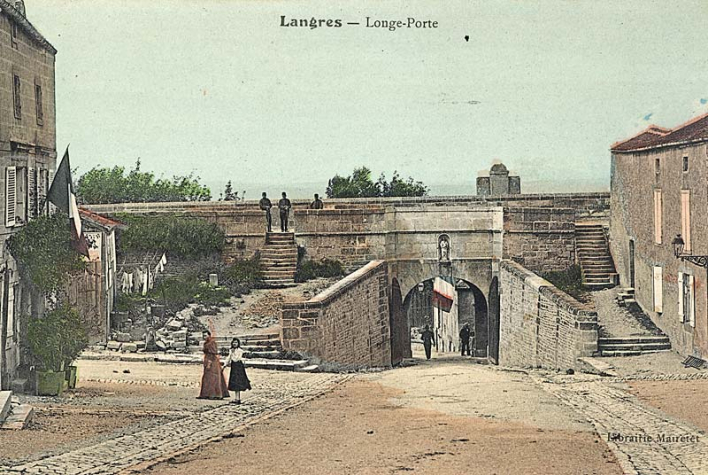
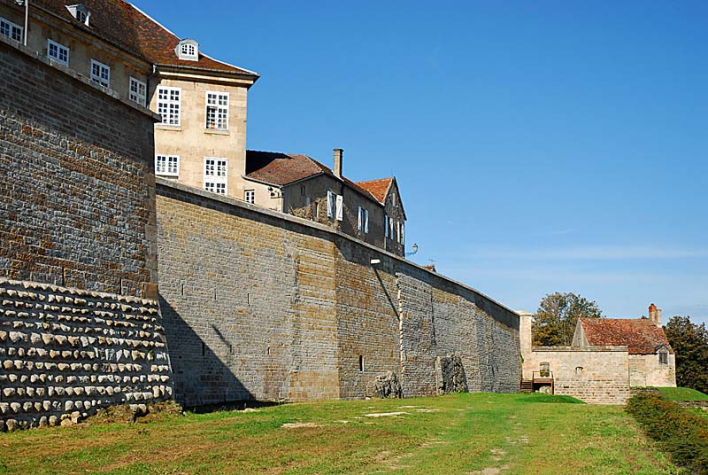
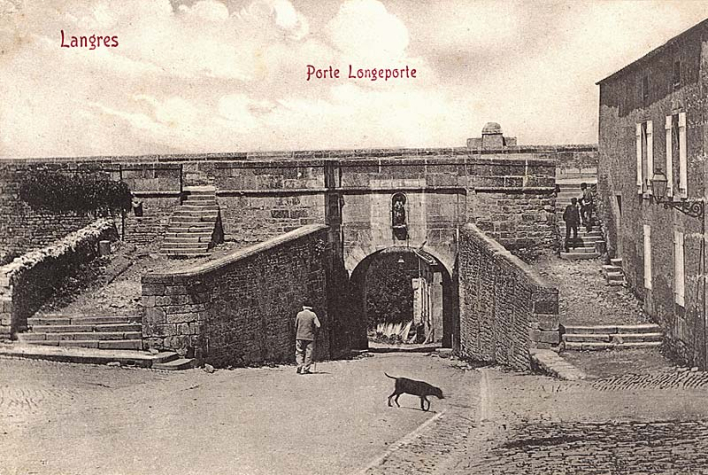
Until the mid-19th century, the remains of a Gallo-Roman arch marking the northern boundary of the town were still visible. Having become a gateway after being incorporated into the fortifications at the end of the 3rd century, this structure owes its name either to its length or to a legendary king named Longo, whose effigy stood on a bracket on the town side.
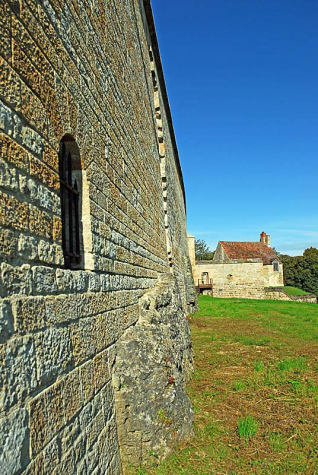
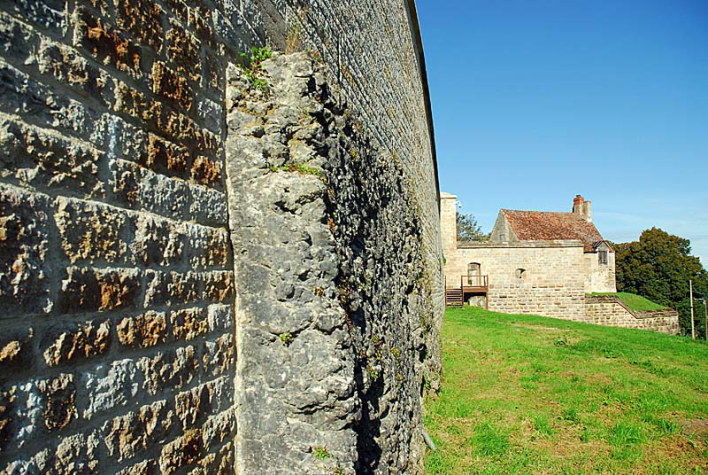
Around 1538, a barbican was built in front of the gate to prevent a frontal attack and to deploy artillery intended to flank the northern wall. Designed as a sort of chicane-shaped lock, this structure had a first gate equipped with a drawbridge. A new guardhouse was added in 1619.
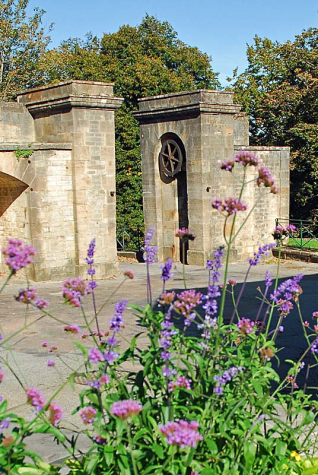
In 1851, the Military Engineers removed all ancient remains, lowered the parapet of the barbican and installed a new drawbridge, the workings of which are still visible.
A little background information:
On 29 March 1597, the Longe-Porte gate was walled up in anticipation of unrest; it was only dismantled a year later at the request of local residents!
Traces of three coats of arms, hammered out during the Revolution and representing the arms of the king, the town and the governor of Champagne, can still be seen on the façade of the gatehouse.
Porte Longe-Porte