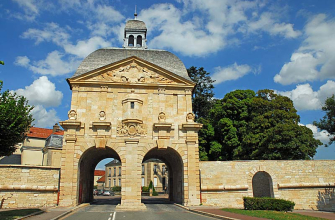
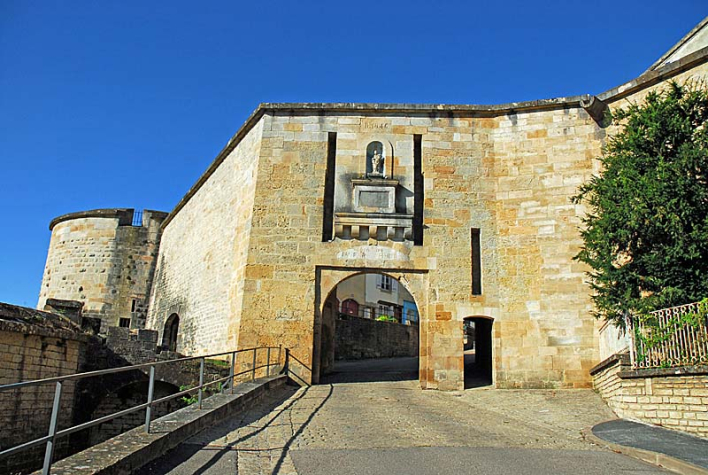
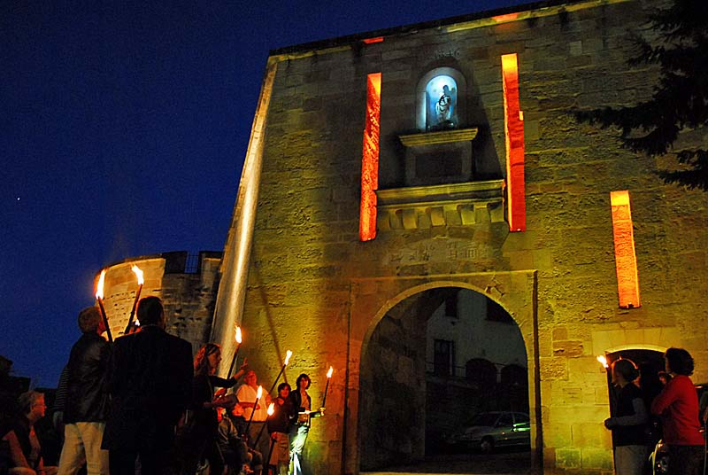
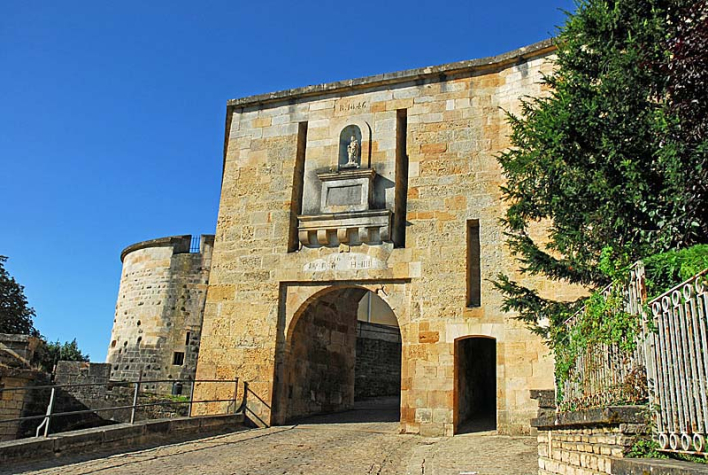
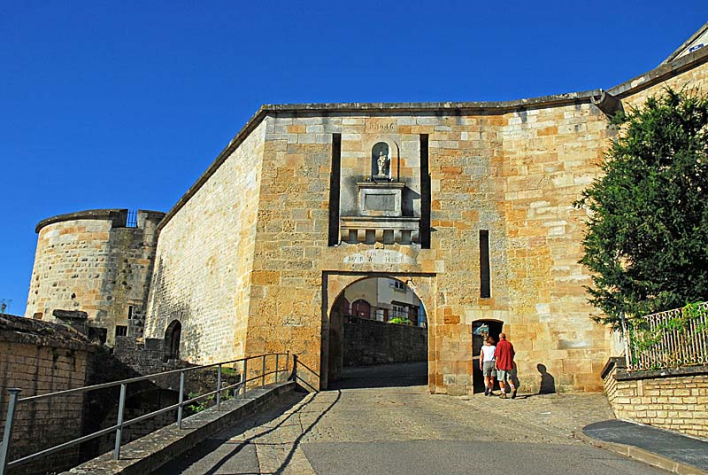
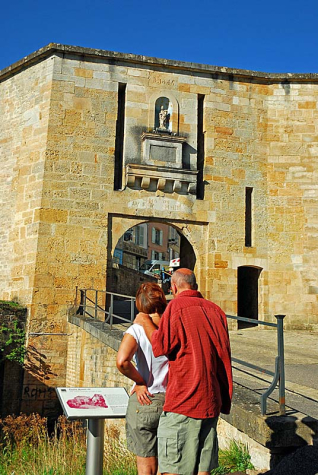
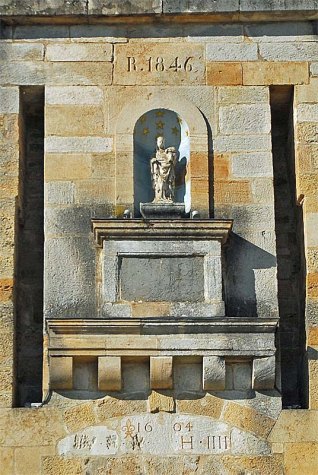
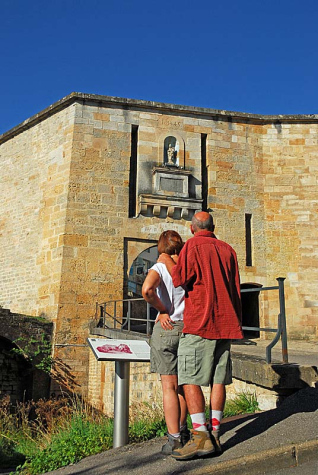
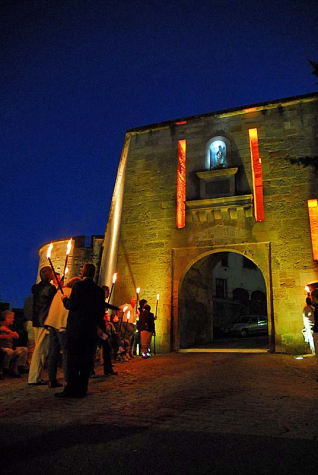
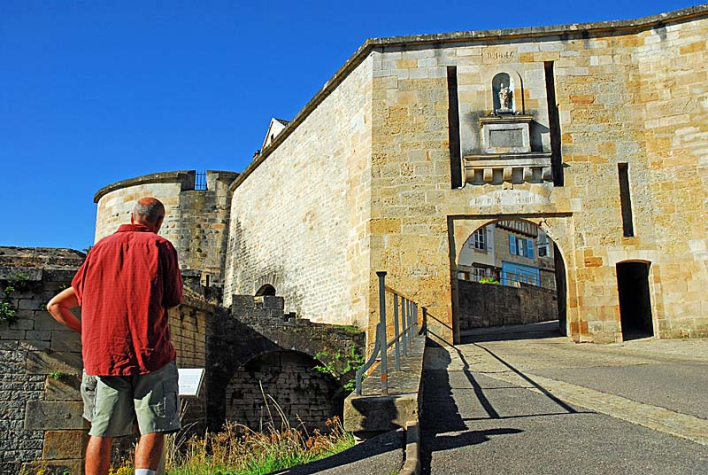
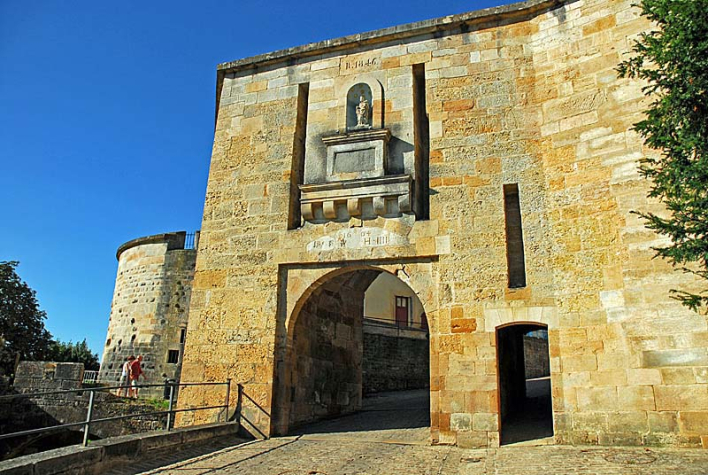
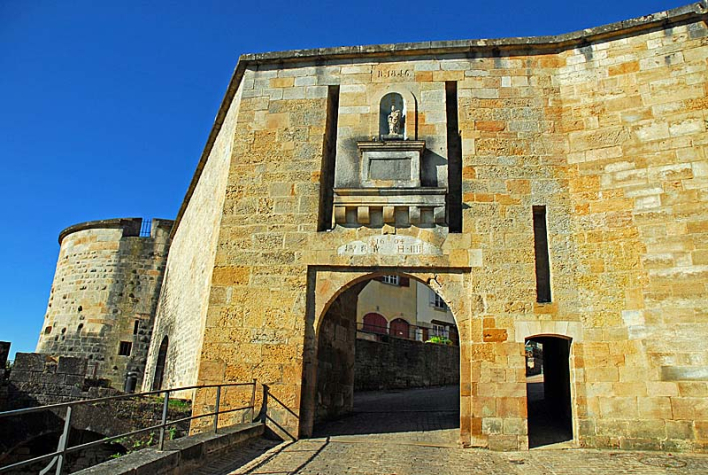
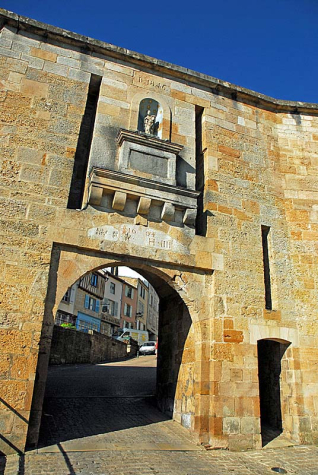
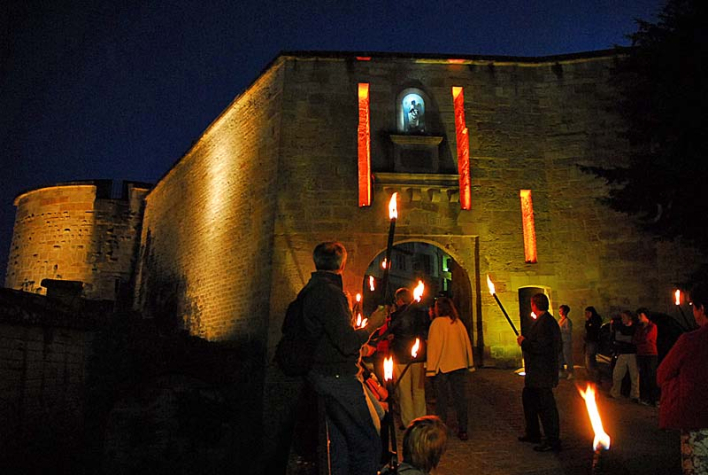
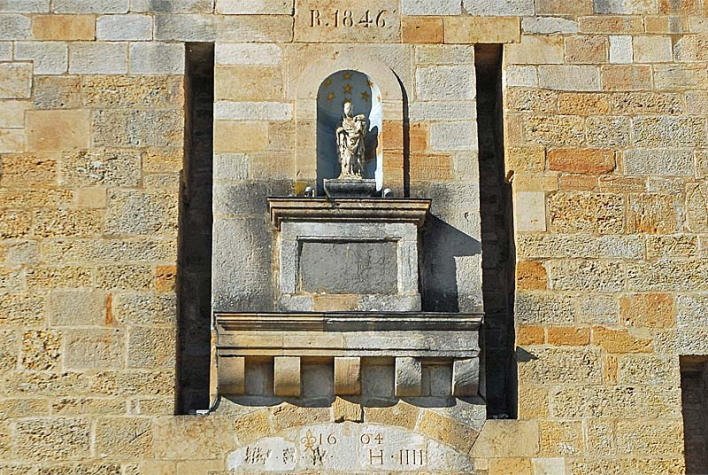
This gateway leads to the Sous-Murs district, which has been used since the 13th century for tanning hides. It is the only eastern entrance to the town and also the steepest. Its openings, one for carts and the other for pedestrians, were both equipped with a moat and a drawbridge, of which the housings of the beams - the arrows - used to operate them remain. A double-leaf gate and a portcullis completed the defences. Until the French Revolution, a statue of Henri IV riding Pegasus - the mythological winged horse - decorated the gateway. A niche housing a Virgin and Child seems to ensure the city's integrity against potential attackers. In 1846, the Military Engineers improved the defence of the gateway and the area around it by building a defensive retreat in front of the Virot tower.
A little background information:
In the 17th century, the keys to this gate and the portcullis were entrusted to "faithful and careful" residents living near this structure; by law, the gate was open from 4am to 9pm in summer and from 6am to 7pm in winter.
In 1646, the gatekeepers were dressed in a skirt bearing the town's colours; on 16 May of the same year, "the receivers stationed at the gates to collect grain duty notes asked for a similar skirt without getting one".
Porte Henri IV