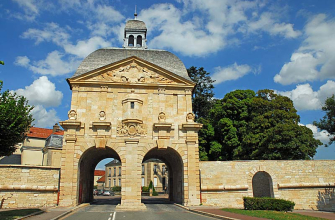
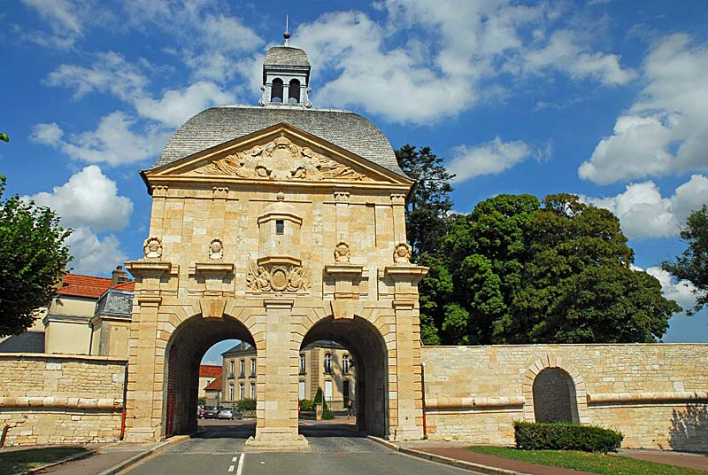
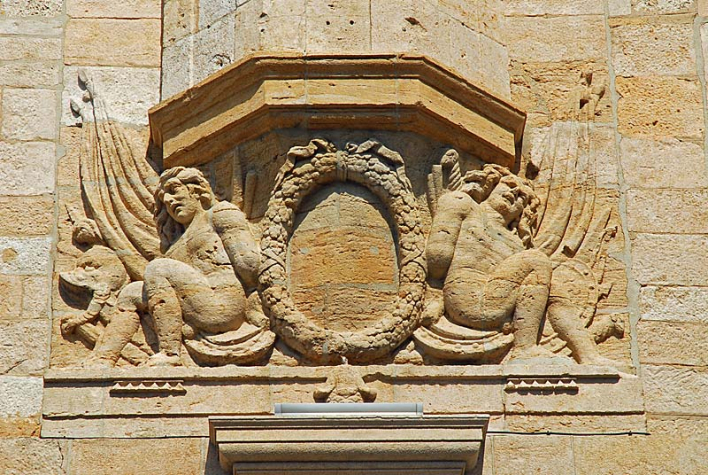
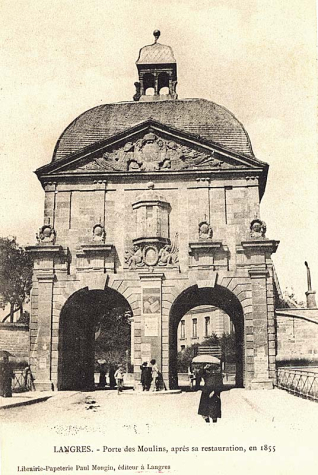
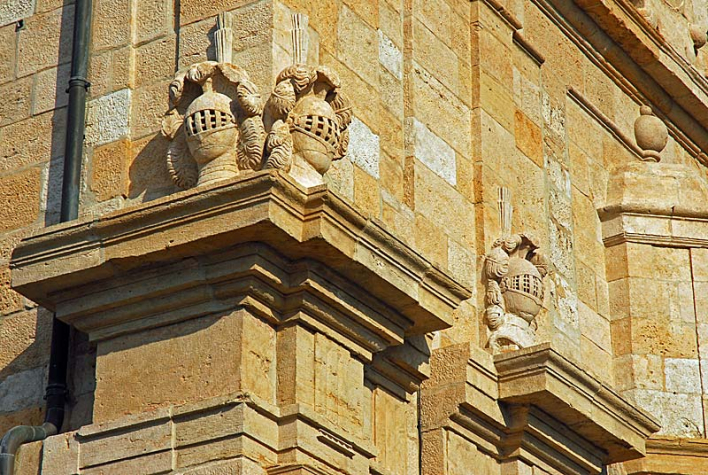
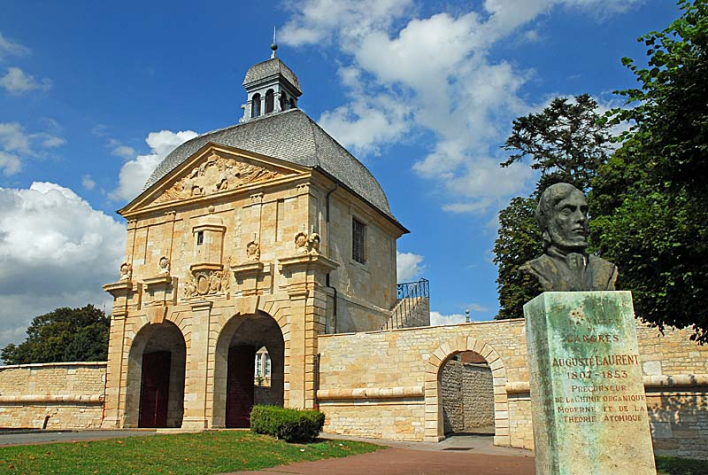
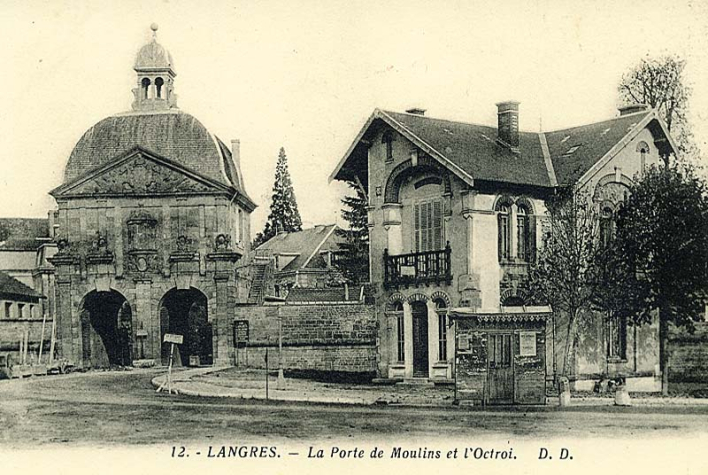
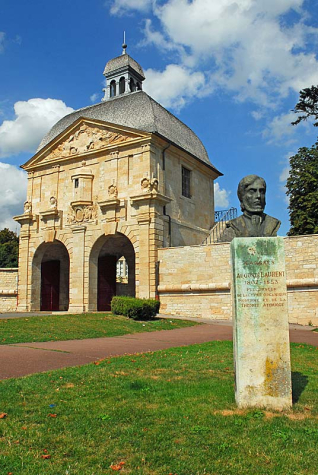
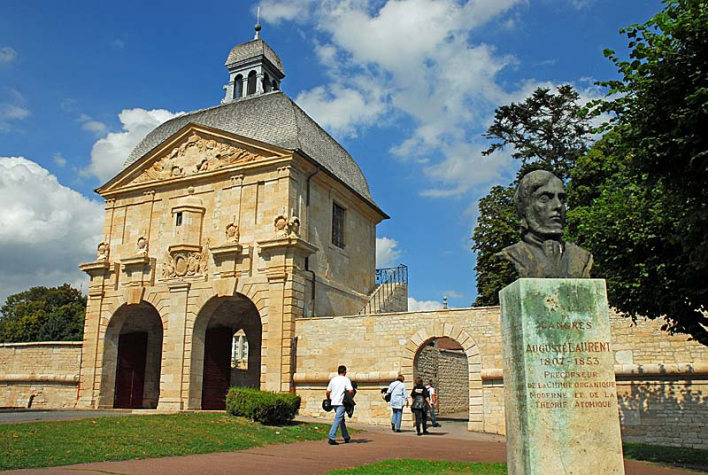
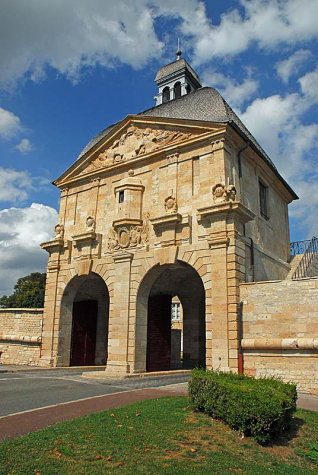
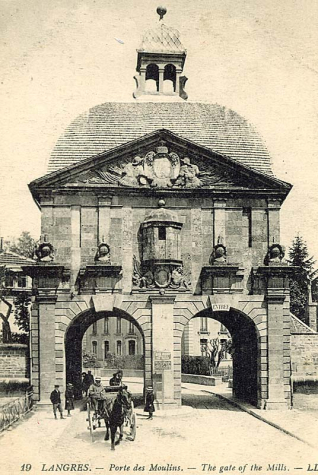
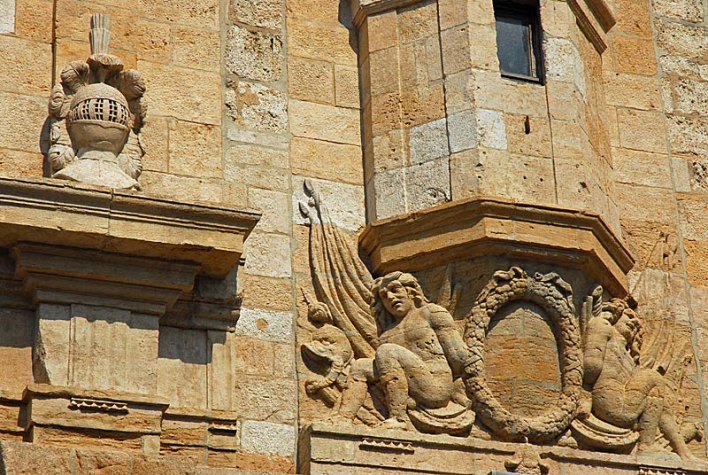
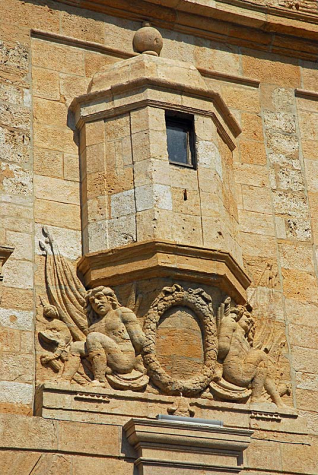
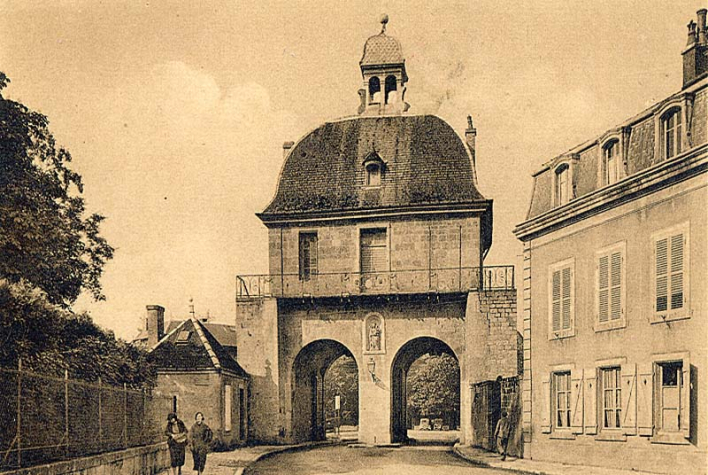
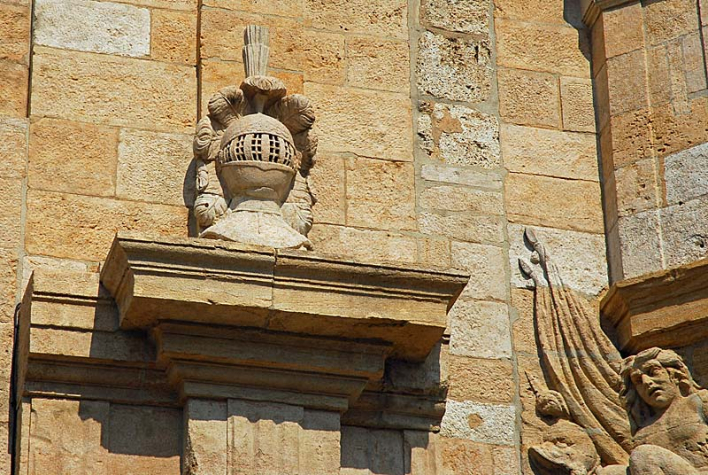
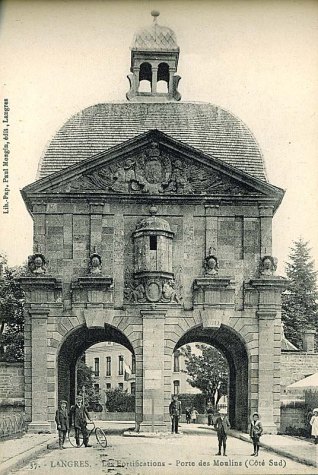
This gate owes its name to the old mills that stood outside the fortifications to take advantage of the wind (the "bel'air" that gave the square its name). It is part of the bastioned fortifications built between 1642 and 1647 to the south of the city walls. The warlike décor evokes the victorious outcome of the Thirty Years' War between France and Spain. Trophies of arms, emblazoned helmets and chained enemies make this gateway a monument to the glory of the victories of royalty, a sort of triumphal gateway reminiscent of the distant Roman triumphal arches. The sovereign's coat of arms was hammered out during the Revolution and placed in the centre of the pediment.
Originally a carriage gate flanked by two pedestrian entrances, it was transformed in 1855 by the Military Engineers, who substituted two carriageways and removed the drawbridges.
Former Porte des Moulins (entrance on rue Diderot)
Destroyed
Built in the mid-14th century as the main gateway to the southern wall, the so-called "Windmill Gate" existed until it was demolished in 1857. For three centuries, it coexisted with the current Porte des Moulins, built further south in 1647. In the form of a quadrangular tower with a pointed arch opening and a guardhouse, it opened onto the ancient cardo maximus of the Gallo-Roman city (now rue Diderot). This north-south axis has been Langres' main thoroughfare ever since. It is mainly lined with 17th- and 18th-century mansions, most of which have commercial premises on the ground floor.
Porte des Moulins