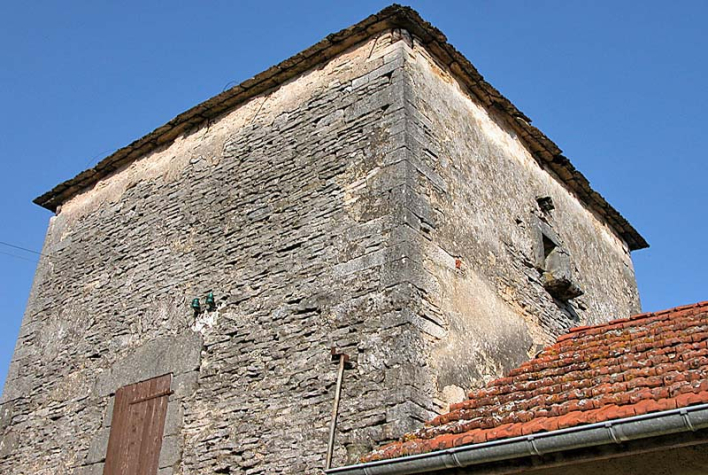
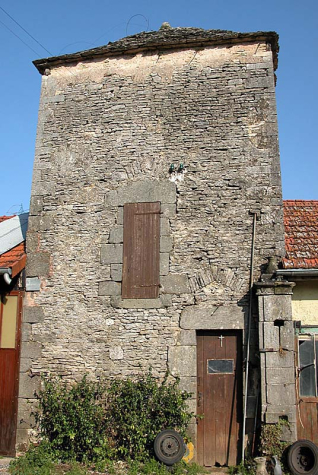
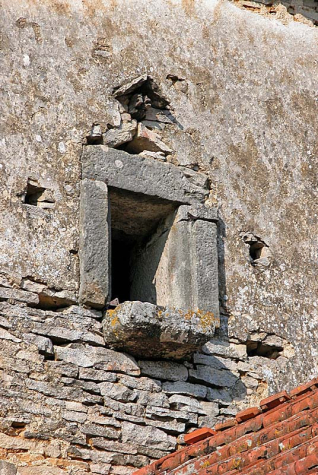
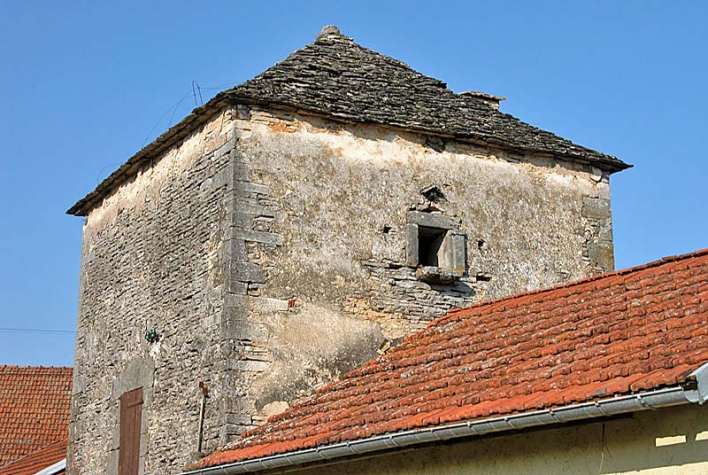
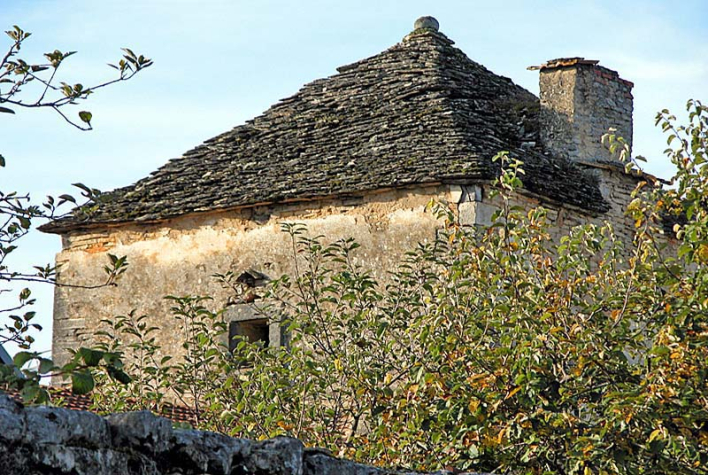
In the centre of the village, a bourgeois house includes a square dovecote in its outbuildings. Still covered in stone, this building is topped by a stone keel and retains its stone bolts inside.| The interest of the dovecotes that populate our countryside lay in the harvesting of pigeon droppings, which until the 19th century was the most effective fertiliser used. It was therefore a significant source of income for its owner. A right reserved for lords under the Ancien Régime, pigeon lofts became accessible to everyone after 1789. Dovecotes sprang up on all farms, as in Dommarien, where a fine example can be seen in the centre of the village. This square dovecote, one of the outbuildings of a bourgeois house, has a squat shape. Still covered in lava, its roof is surmounted by a stone keel acting as a finial. This ornament covers the last stones, providing a watertight seal. The interior contains ashlar bolts, each of which provides a home for a pair of pigeons.
Not open to the public: this private site can only be viewed from the outside.
Pigeonnier de ferme de Dommarien