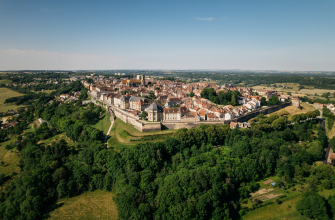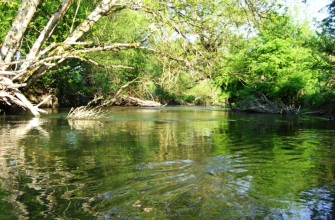
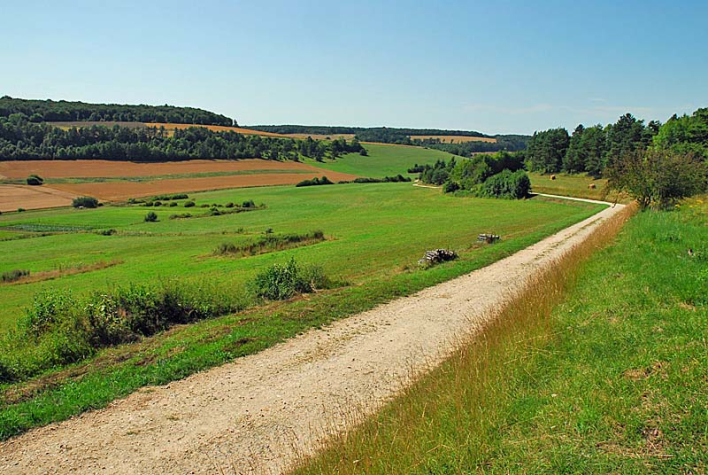
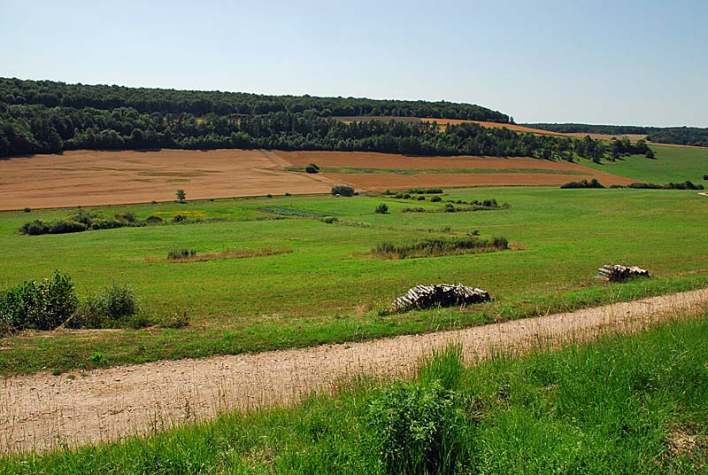
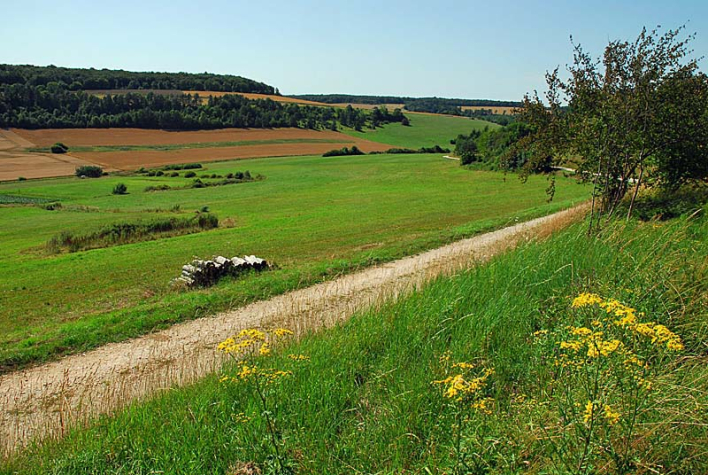
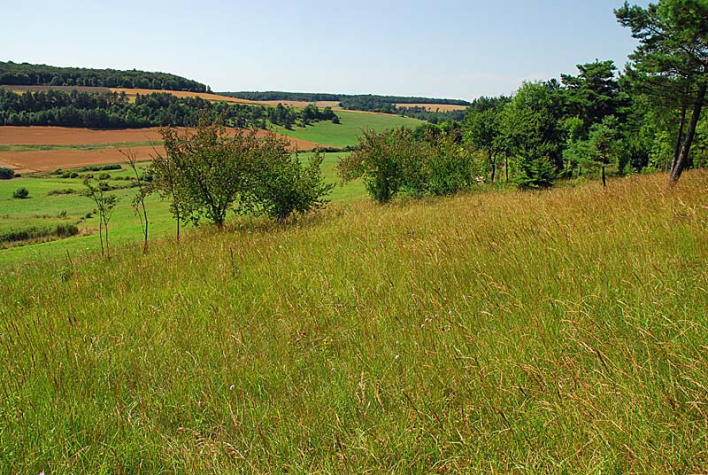
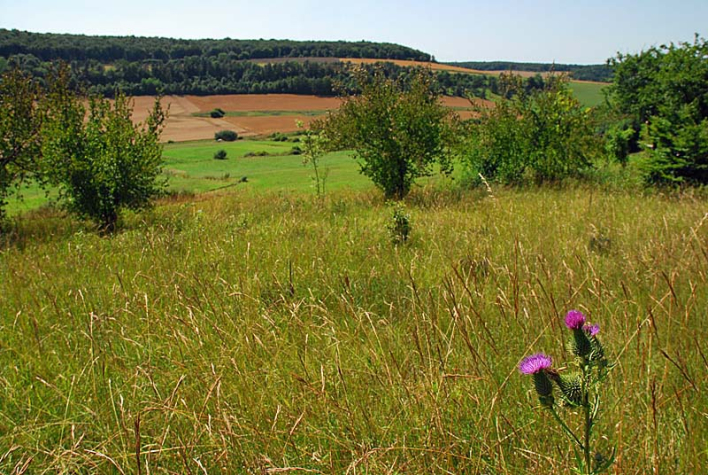
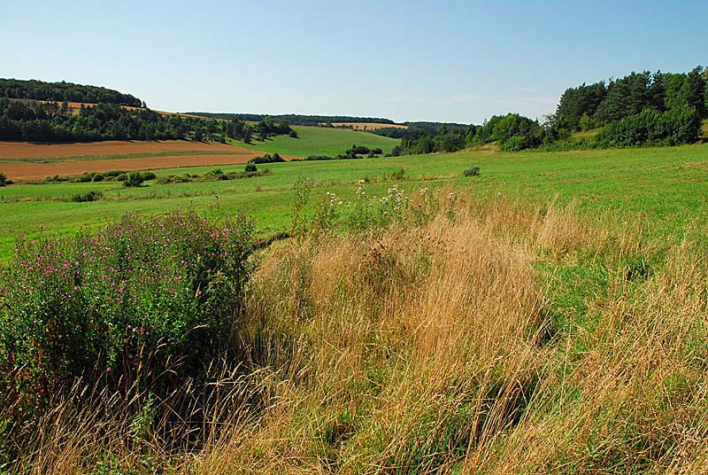
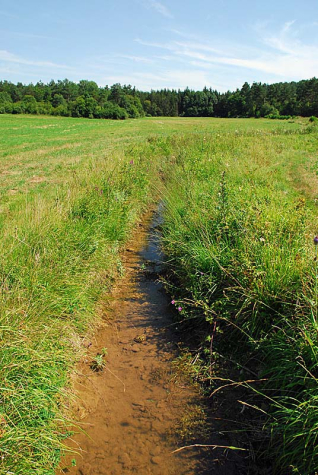
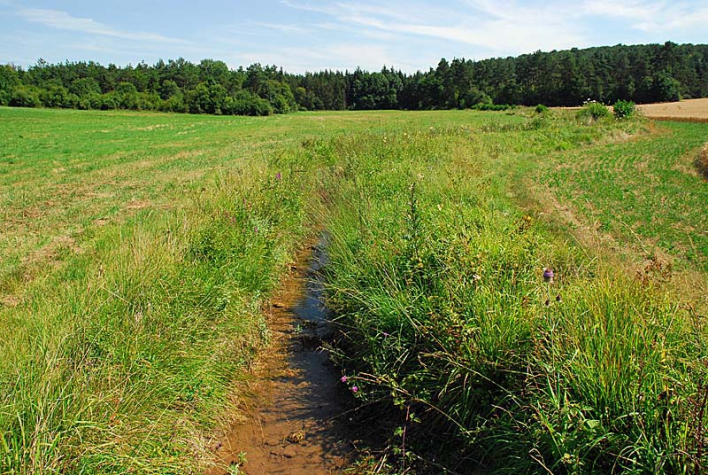
The Combe Courteau and Chanet woods, grasslands and marshes ZNIEFF is located to the east of the Praslay commune, not far from Auberive, in the Langres plateau natural region. Covering an area of around 50 hectares, it includes thermophilous forests (calcicolous beech forests and Scots pine plantations) associated with groups of margins and grasslands, an alkaline low marsh at the "Combe Courteau", scrub (recolonisation fruticées and border willow groves), grazed meadows, crops as well as some fallow land and, more locally, limestone rock vegetation with ferns.
For nature specialists :
The calcicole beech grove (on the edge of the Auberive national forest), established on well-exposed slopes, is typical: the herbaceous carpet includes white sedge, perennial mercurialia and a species of sub-Mediterranean origin, the aborted-leaved limodore, which is on the red list of endangered plants in Champagne-Ardenne, as well as the mountain hound's-tongue.
The thermophilous margins are characterised by the presence of creeping phalangrass and aster amelle, both of which are nationally protected. The slopes and forest clearings are home to brome grass, with two species on the regional red list, humble sedge and glaucous woodruff (one of only two known in Haute-Marne and at the limit of its main range). They are accompanied by German gentian, pulsatilla anemone, Haller's sedge, globewort, cross-leaved gentian, large-flowered brunelle and mountain germander. Numerous orchids can be seen here: hornet orchid, bee orchid and fly orchid, hangman's milkwort, military orchid, pyramidal orchid, midge orchid, purple orchid and two-leaved orchid.
Some of the rocks on the mid-slope are home to unusual vegetation rich in mosses and ferns, including a station of spearwort, an Alpine species that is rare on the plains (very far from its main range here) and is on the regional red list.
The Combe Courteau alkaline marsh is fairly well developed: covering an area of around 2.5 hectares, it is a linear sloping marsh with little tufa, facing west. It includes a typical black choin schoenaie, with numerous species characteristic of this type of environment, including Davall's sedge (very common in the marshes of the Langres plateau), scaly sedge, monkshood (protected in Champagne-Ardenne), marsh epipactis, marsh horsetail, tuberous cirse, meadow succulent, aquatic mint, false panic sedge, etc. At the edges, there is a molinia rich in blue mullein, accompanied by tomentose sedge, square-pod trefoil, obtuse-leaved rush, pulmonary gentian, northern bedstraw, tormentil, medicinal sanguisorbs, glaucous sedge, etc. It has a slight tendency to become overgrown. It has a slight tendency to become overgrown (especially on its margins) with the establishment of purple willow, ashy willow and borage.
The banks of the Rossin stream, which runs through the Combe Courteau, are colonised by meadowsweet, monkshood, valerian, angelica, lysimachia vulgaris, water mint and other species. The fallow land on the site is home to a number of annual or messicolous species that have found refuge there, such as field sherardia, lady's-thumb, red odontitis, spurge and coltsfoot.
Undeveloped site
Access reserved for an informed and respectful public
Pelouses, bois et marais de la combe Courteau et du Chanet