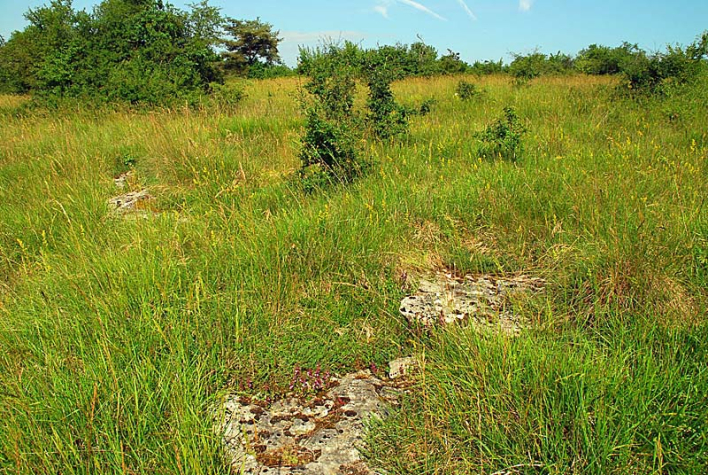
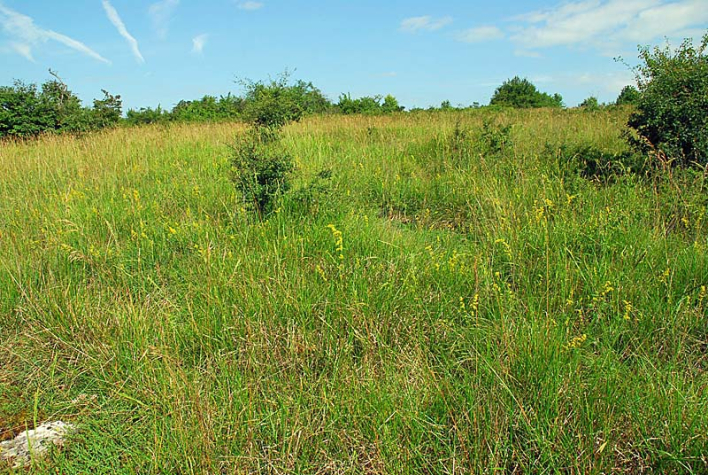
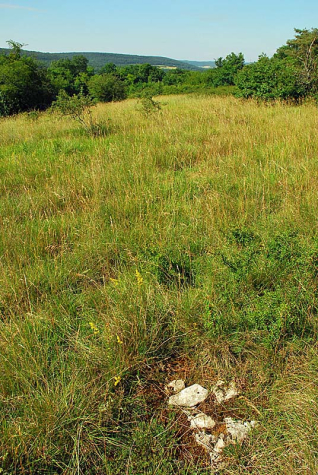
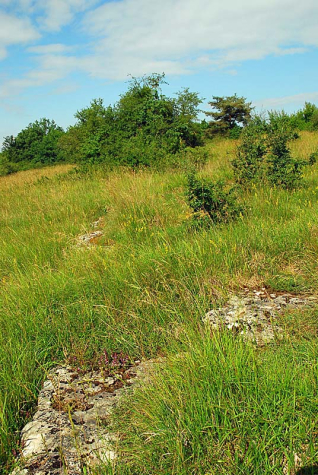
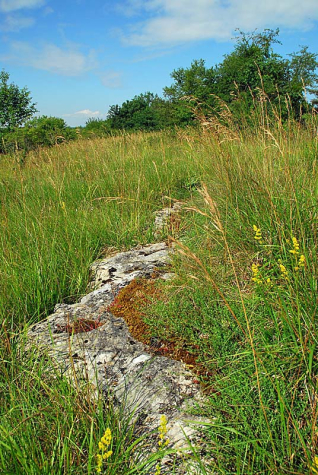
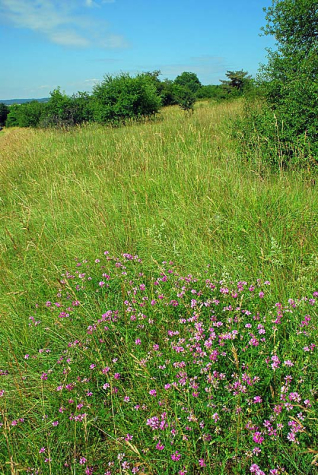
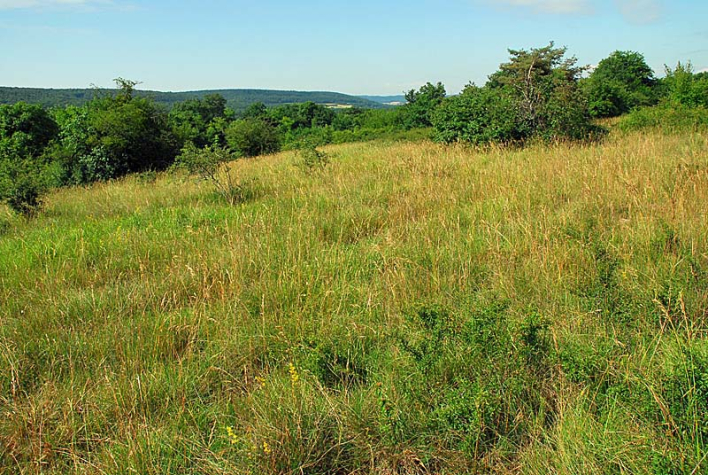
The ZNIEFF of the grasslands to the north of Grenant is an area split into two parts very close together. They occupy an exceptional position, on the gently sloping surface of a limestone plateau, and are characterised by large outcropping slabs with characteristic vegetation. Locally, former surface quarries can be seen.
Undeveloped site
Access reserved for an informed and respectful public
For nature lovers :
This is one of the finest surviving examples of horizontal grassland in Haute-Marne, with a typical flora and four rare species, including one protected species at regional level: houndstooth andropogon, of southern origin, very rare north of Paris and essentially localised, for the Champagne region, in the southern end of Haute-Marne. It is on the red list of endangered plants in Champagne-Ardenne, along with dwarf alfalfa, slab clover and thyme broomrape, which are rare in Haute-Marne. An end-of-range fescue (Festuca burgundiana) can also be found here. A variety of orchids can be seen here (hanged man's orchid, pyramidal orchid, fly orchid, military orchid, bee ophrys, hornet ophrys, fly ophrys...), as well as the typical Mesobromion grassland assemblages (Leman fescue, crested koeleria, upright brome, intermediate briar, pedunculate cytise, globular cytise, nummular helleborine, spring potentilla, small oak germander, caryophyllic sedge, mountain sesli, etc.).
Fauna:
The entomofauna is characterised by the presence of southern species such as the praying mantis, the ascalaphe (Ascalaphus longicornis), and by various locusts and grasshoppers, four of which are on the regional red list (Italian cricket, white-spotted platyceis, verrucivore dectic, etc.).
This is a very favourable area for reptiles, particularly the green and yellow snake and the green lizard, listed in Annex IV of the Habitats Directive, and the asp viper.
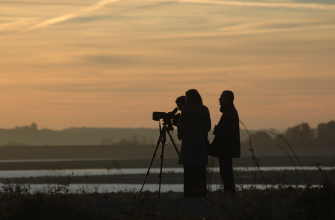
The site is frequented by many birds, including the woodlark, a fairly rare breeder in Champagne-Ardenne and on the regional red list.
The grasslands are also of interest for hunting and landscaping. They are in a generally good state of conservation, but are tending to become overgrown; they are also threatened by more or less localised deposits of rubbish and rubble.
Pelouse sèche de la combe du bas de la forêt