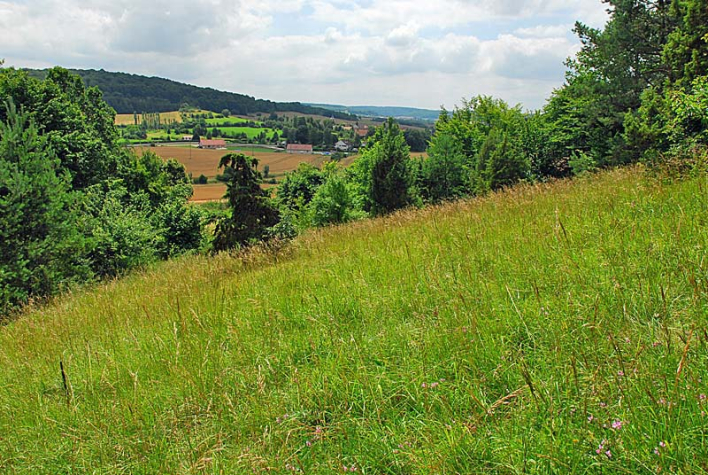
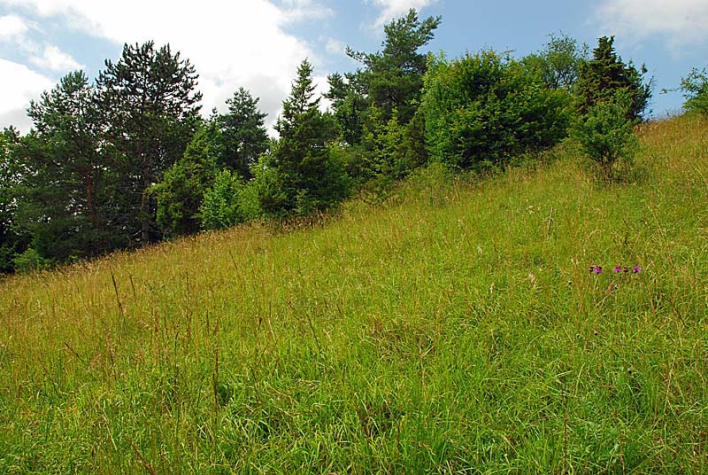
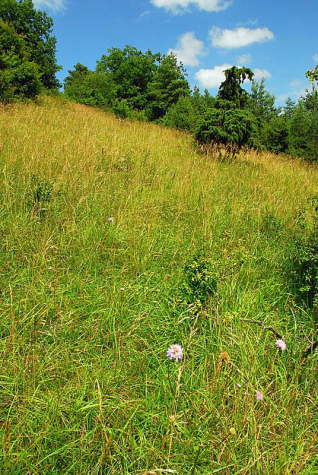
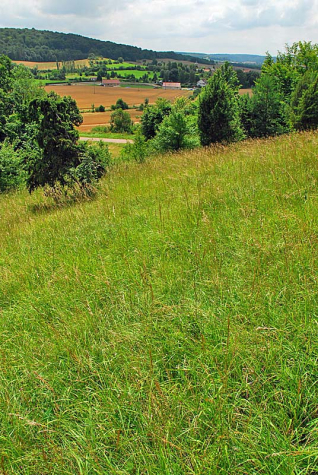
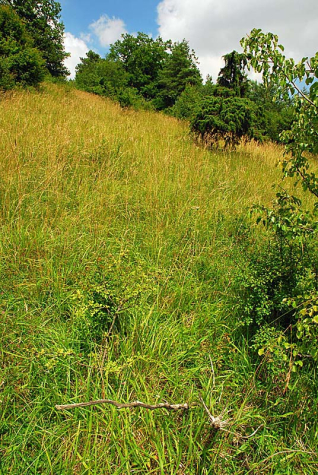
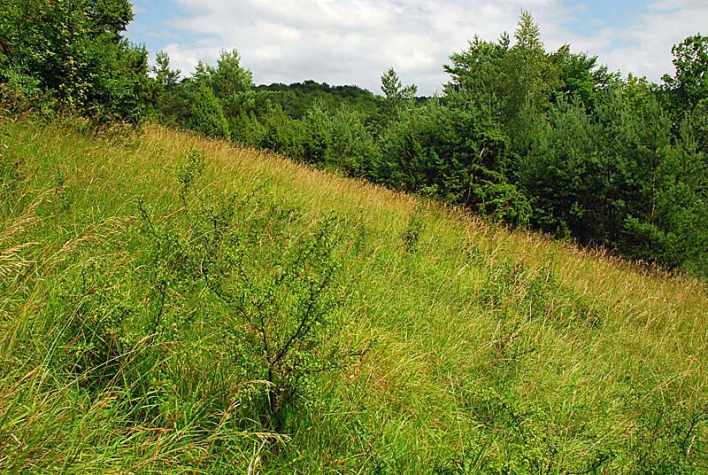
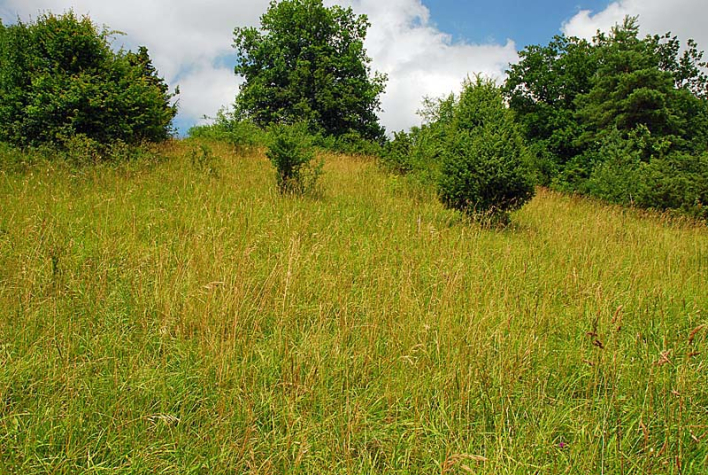
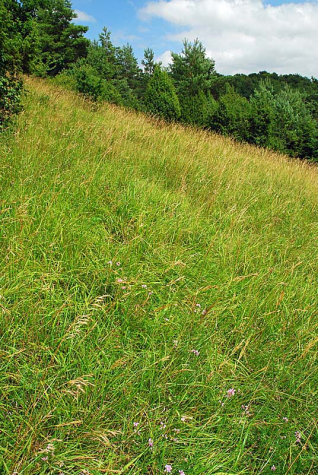
The Côte aux Cannes ZNIEFF is located in a wide, south-facing valley, occupied by a tufa marsh at the bottom of the slope and valley floor, partly within the forest (mainly in contact with fairly recent accrues), as well as an adjacent slope grassland.
For nature lovers :
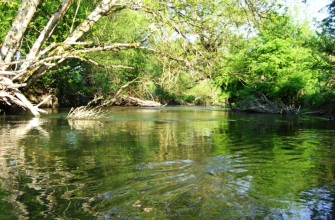
The small tufa marsh at the bottom of the slope is fed by several lateral springs and by a large spring (La Bouie) located immediately upstream of the marsh, with crusts and small pools. The marsh continues downstream into a valley-bottom marsh, which is in the process of becoming completely overgrown following the re-grading of the stream in the early 1980s. Another small sloping marsh is located near the small ponds of the residence known as the Moulin.
Vegetation:
The vegetation of the sloping marsh is dominated by the classic blackish oak schoenae and the schoenae-jonçaie, while that of the marsh at the bottom of the valley is of the dry molinia type, evolving towards filipendula and invaded by thorny fruticées (beautiful barberry scrub) and willows.
The edge of the marsh is made up of a fringe of willow, aspen and pedunculate oak. The grassland, some of which is grazed, features the classic vegetation of this type of environment (pulsatilla vulgaris, mountain germander, small oak germander, globular, small-leaved flax, etc.).
The vegetation, which is highly characteristic, is very well adapted to the particular conditions of the tufa marshes: in particular, there is the narrow-segmented buttercup, which is regionally protected, and the marsh parnassia, which is on the red list of plants in Champagne-Ardenne.
Fauna:
The entomofauna, and more specifically the dragonflies and damselflies, have the same biogeographical tonality as some of the fauna and include the agrion de Mercure, on the national red list of vulnerable species, protected in France and Europe (Bern Convention), the cordulégastre bidenté, a mountain species that is rare throughout France, and the no less rare ringed cordulégastre, all three of which are on the red list of insects in Champagne-Ardenne.
The site has been protected by an arrêté de protection de biotope (approximately 5 hectares) since 1992, and is in a good state of repair following the management work carried out thanks to the Fondation de France: this rehabilitation work has enabled certain parts of the marsh to be cleared of undergrowth and some of the drains to be filled in. The steeply sloping grassland is currently well preserved thanks to low-intensity grazing.
Undeveloped site
Access reserved for an informed and respectful public
Marais et pelouses de la Côte aux Cannes