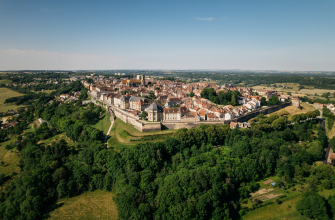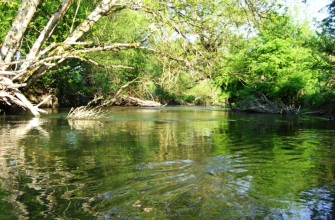
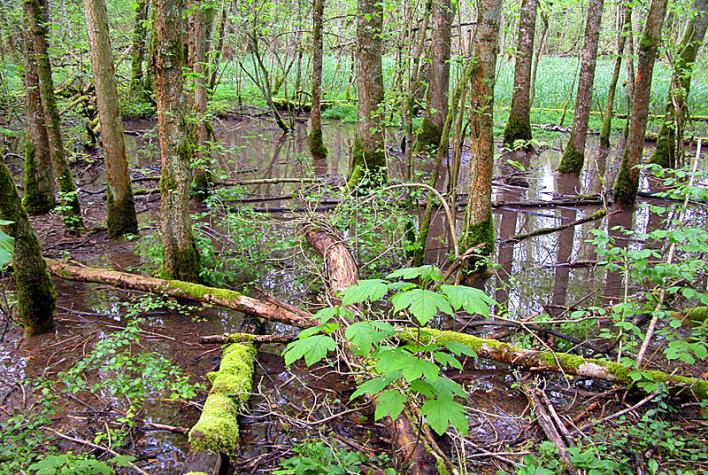
The ZNIEFF covering the Pré Vacher marsh and the Val Saint-Martin wood that follows it is located to the south-east of the village of Colmier-le-Haut, not far from Auberive, in the Montagne Chatillonnaise natural region. The marsh, which is quite large (3 to 4 hectares), belongs almost entirely to the municipality, apart from the downstream end, which is privately owned and has been turned into a pond.
Undeveloped site
Access reserved for an informed and respectful public
For nature lovers :
Vegetation:
The vegetation is very characteristic and well adapted to the particular conditions of this environment (schoenaie, jonçaie, magnocariçaie, molinia in less humid areas, etc.). A small schoena, containing the three choins (blackish, ferruginous and their hybrids) and a tufa marsh with Davall's sedge dominate in mosaic with magnocariçaies with stiff sedge. These environments are home to a number of species that are rare or endangered in Champagne-Ardenne, in particular the choin ferrugineux, which is very rare and protected in France (only found in the east of the country), and the swertie pérenne, which is very rare on the plains and protected in Champagne-Ardenne, both of which (along with other localities on the Langres plateau and in the Côte d'Or) form an island far outside the range of these species. Scaly sedge, gentian pneumonanthe, yellow sedge, obtuse rush, etc. can also be found here. At the edge of the marsh, there is a more or less degraded and overgrown molinia, with six-petalled filipendula (on the Champagne-Ardenne red list of plants), narrow-segmented buttercup (protected at regional level), Fuchs' orchid, northern bedstraw, marsh cirse, gentian pneumonanthe and le sanguisorbe officinale. Common buttercup, water-pennywort and narrow-leaved cottongrass (not yet recorded) were found in a small sedge meadow that was destroyed during work to "rehabilitate" the pond. On the edge of the marsh and the forest at the bottom of the slope, a few feet of Lobaria pulmonaria, a rare foliaceous lichen found in cool forests with high atmospheric humidity, can be seen on a few rare oaks and maples. The woodlands on the slopes depend on the exposure of the slope and their topographical position.
There are two main types:
- On north-facing slopes, there is a cold beech-oak woodland with hornbeam, whitebeam, blackbeam and field maple, enriched with lime, plane and sycamore maples on coarse scree. The herbaceous carpet is made up of mountain sedge, European barley, campanula, round-leaved pyrole, uniflora meadowlark, sweet woodruff, mountain chickweed, etc.
- On the west and south-facing slopes, there is a dry to thermoxerophilous beech-oak forest, with sessile oak, downy oak (rare) and their hybrids, beech and whitebeech, and their hybrids (abundant), corm-tree (very rare on the edge of the plateau at the western end of the ZNIEFF), juniper (scattered), male dogwood and glossy buckthorn. The herbaceous layer includes long-leaved cephalanthera (protected at regional level), white sedge (locally abundant), purple-blue ruffe, leaning meliconia, sesleria, lemon balm, broad-leaved epipactis, germander scorodonium... Beneath the pine and spruce plantations, on a thick carpet of mosses, you can still find penned brachypodus, little cypress spurge, shaggy St John's wort, wood violet, bristly violet, vernal potentilla, sweet woodruff and betony officinalis.
Along paths, on embankments, at the edge of certain wooded areas and in small clearings, thermophilous border vegetation grows, including two nationally protected species, the aster amelle, and the regionally protected species, the great yellow gentian, common in the mountains but fairly rare on the plains (the stations in Champagne-Ardenne and Burgundy are the only ones known for the French plains), accompanied by Beneken's brome, the sedge, the creeping phalangra, the little pigamon, the pulsatilla anemone, the rough brome, the little oak germander, the hairy broom and the hairy gentian.
The marsh is in generally good condition, despite the canalisation of the stream and creeks. The molinia is being increasingly altered by the growth of conifers and scrub, which is threatening the most sensitive species, such as six-stalked filipendula, narrow-segmented buttercup and northern bedstraw. Edge species are also threatened by vegetation dynamics and the shade of large conifers. The woodlands are in a generally good state of conservation.
Marais de Pré Vacher et bois du Val Saint-Martin