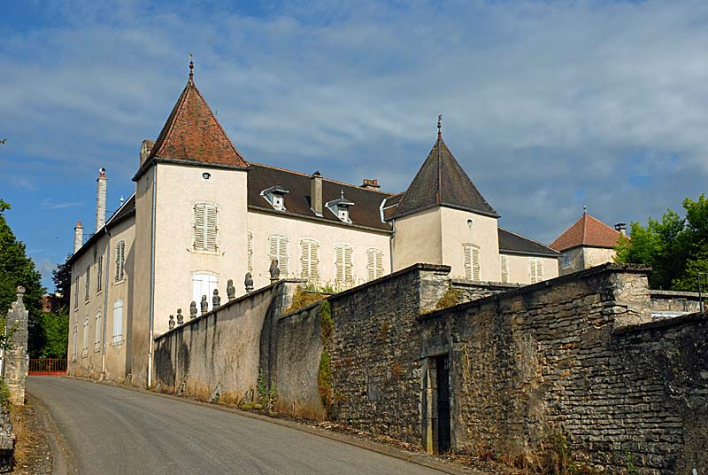
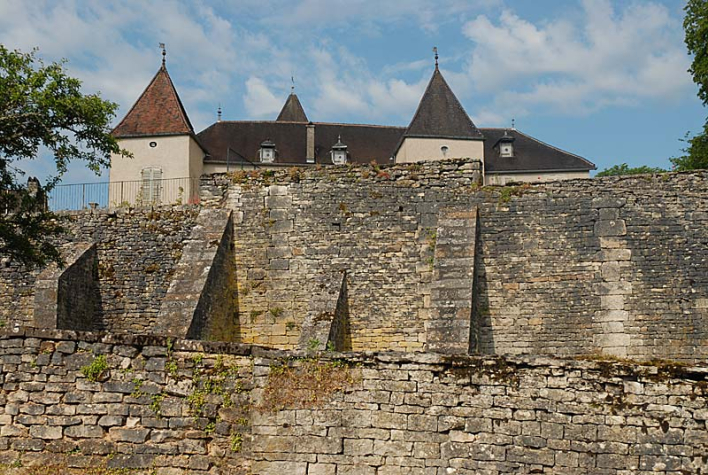
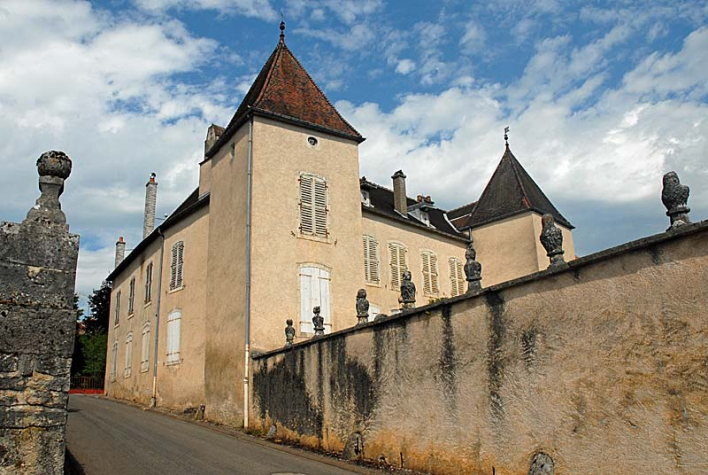
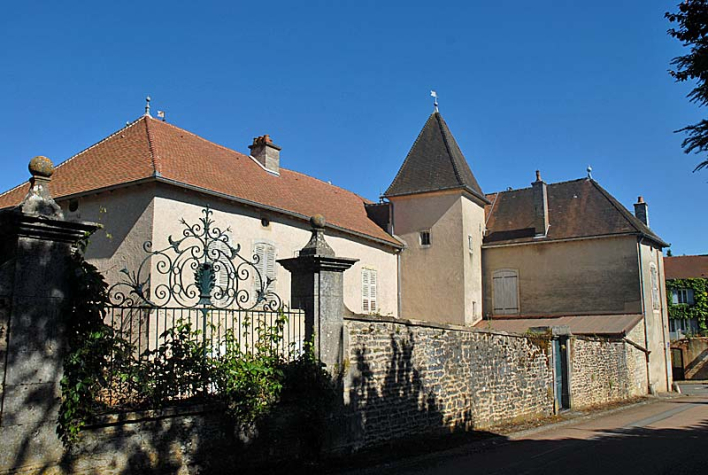
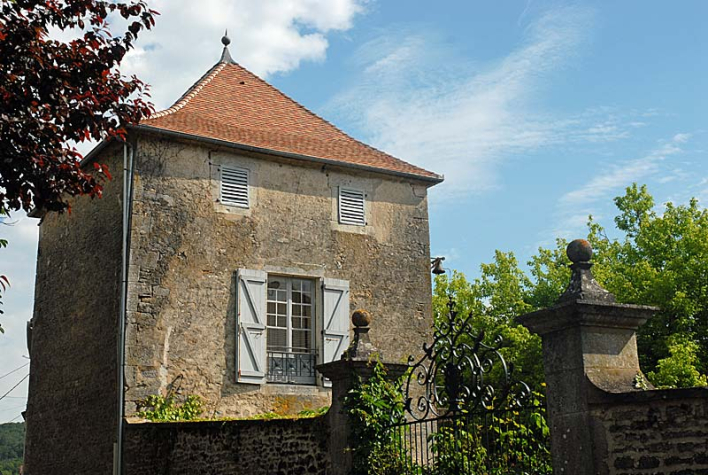
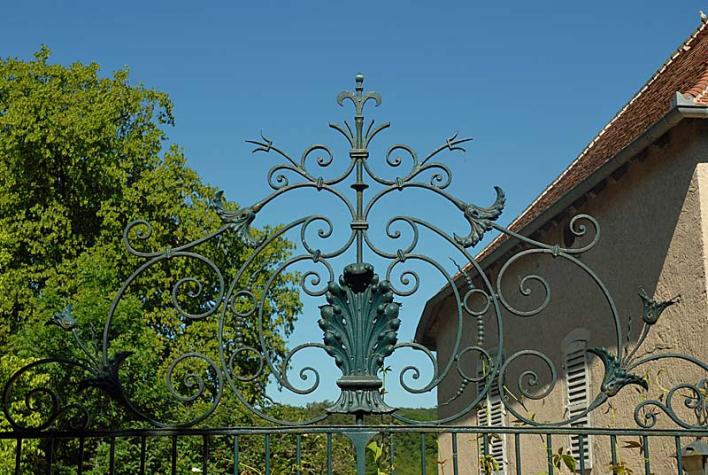
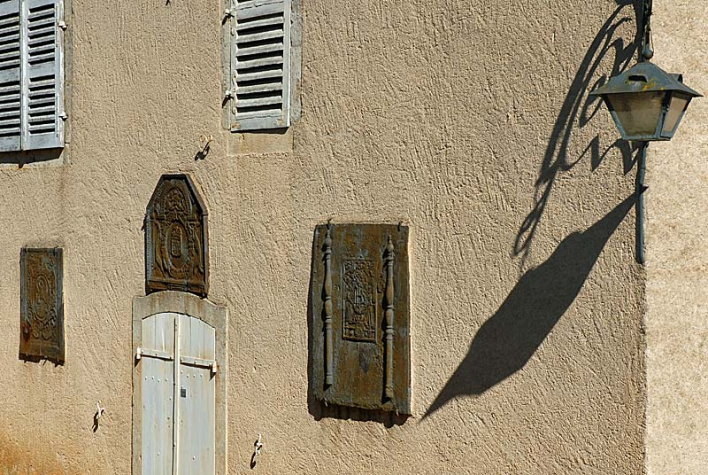
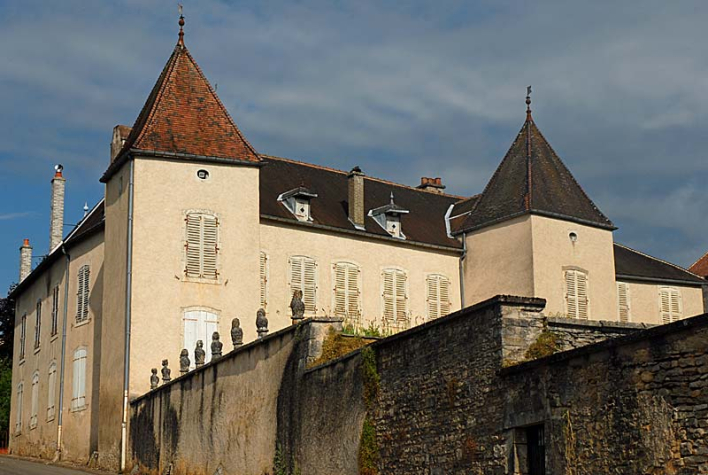
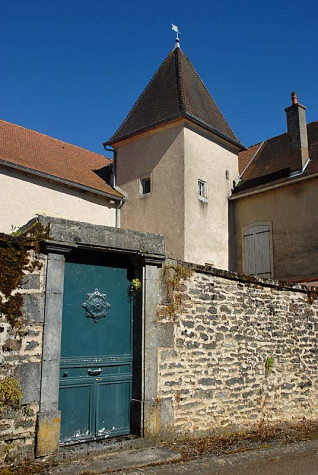
This former stronghold, a symbol of the secular fiefdom of the "de Rivière" family, once commanded the crossroads of the Vallon de Lavaux road (Vallon de la Coulange) and the old Chatoillenot to Boussenois road. Its ditches joined the cemetery surrounding the church. Outside, note the railings from Girault de Prangey's estate at Villa des Tuaires in Courcelles-Val-d'Esnoms, brought here in the early 20th century. A watchtower with loopholes still standing and an internal spiral staircase defended the château and overlooked the terraces. From its now transformed platform, the lookout overlooked the entire valley and a vast horizon. A second tower, known as the "slate tower" on the edge of the main square, contained a vaulted guard room with very thick walls (early 16th century?). The former seigniorial chapel was removed at an unknown time, and the statue of the Virgin, in white Carrara marble (Italian school), of unconventional workmanship, was transferred to the nearby church.
Let's move on to the crossroads. This fortified house had a perennial, very deep well, which also served as a common well supplying the villagers with drinking water (it was blocked when the fountains were connected in 1833, and then when the village was supplied with drinking water in 1953). The remains of this well can be seen at the crossroads, under the window of the château, where the inscription "Ce puits à M. de Byver" can still be seen.
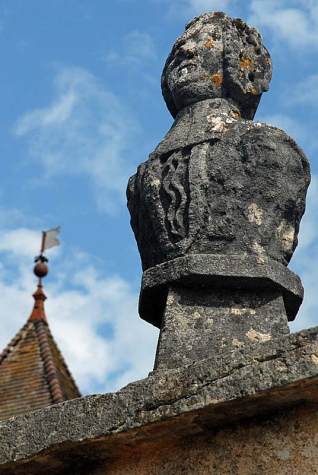
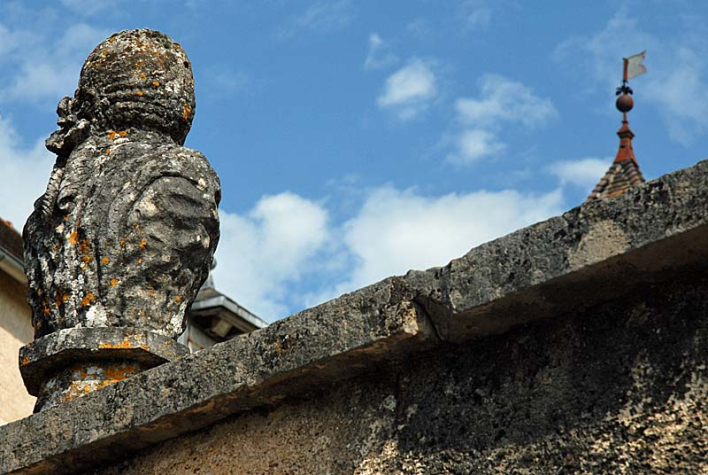
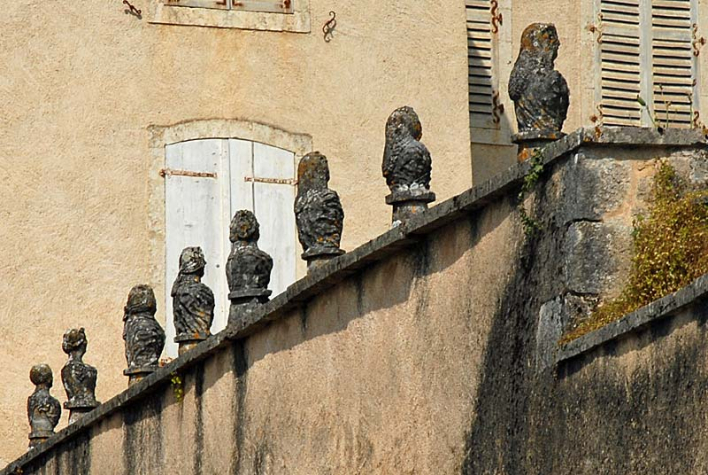
Walk down the Rue Neuve to the underside of the château terrace. During the 18th century, one of the occupants of the property transformed this fortified house, which was no longer of any use, into a château for pleasure: the moats were filled in and terraces built, affording a magnificent view over the valley. During the French Revolution, its owner, Baron de Blanchelande, governor of the Leeward Islands (now Saint-Domingue) and a staunch royalist, was brought before the Revolutionary Court and guillotined. His property, confiscated as national property, was put up for sale for a long time before being bought by Mr De Bivert-Barrois when Bonaparte, then First Consul, came to power. Through successive marriages, the château passed from the De Bivert family to the Simony family in the 20th century, before falling to the De La Taille and then De La Taille Tretinville families, who still occupy it today. The exterior features railings from the Girault de Prangey estate at the Villa des Tuaires in Courcelles-Val-d'Esnoms, and a collection of eight stone busts (one with a double face) lining a terrace overlooking the street, which were brought from Marcilly-sur-Tille in the early 20th century by Antonin de Simony following his marriage to Delle Caroline Nicolas, a native of Marcilly-sur-Tille. Listed on the French MH Inventory on 5 May 1972 and supplemented on 26 May 1989 are: the facades and roofs of the château, including the "troubadour gallery", the interior spiral staircase, the grand salon and dining room on the ground floor with their decor (French-style ceiling with moulded beams, framed tapestries on the walls).
No tour: private site only visible from the outside.
Maison forte de Rivière-les-Fosses