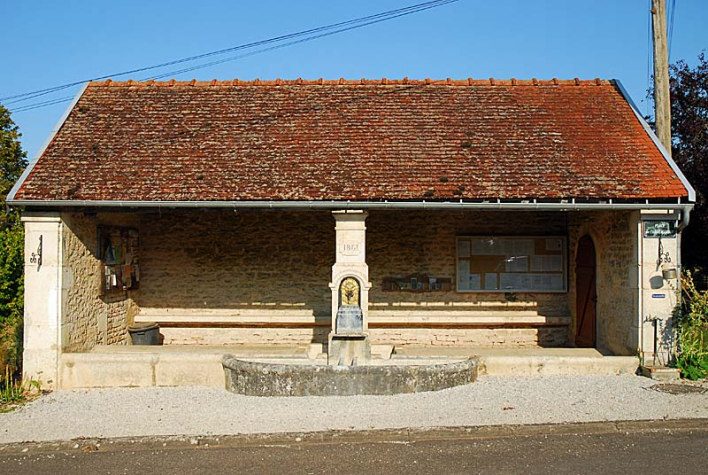
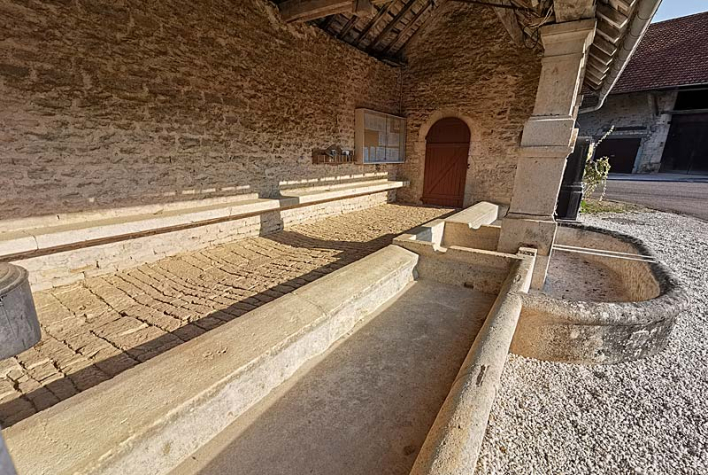
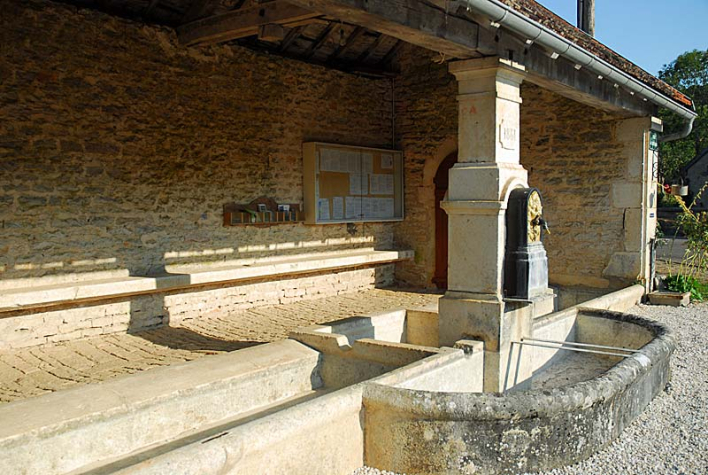
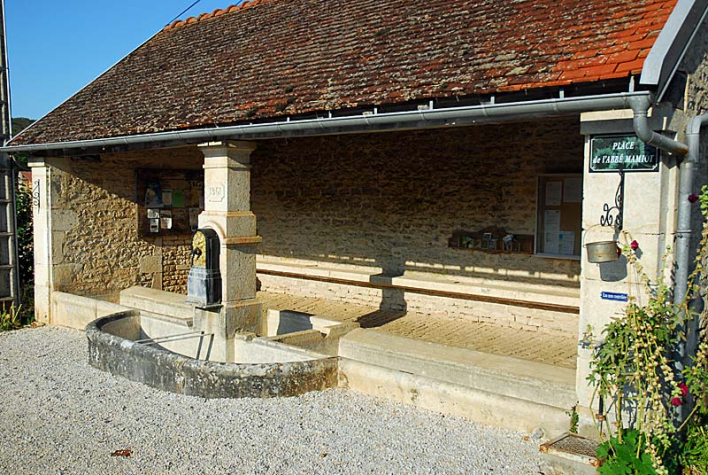
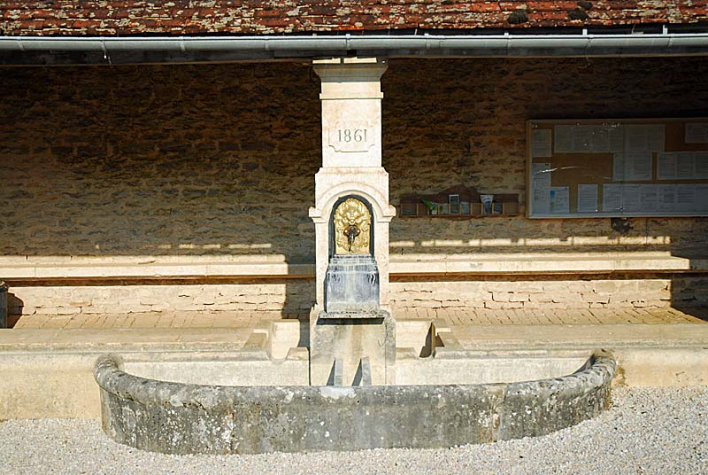
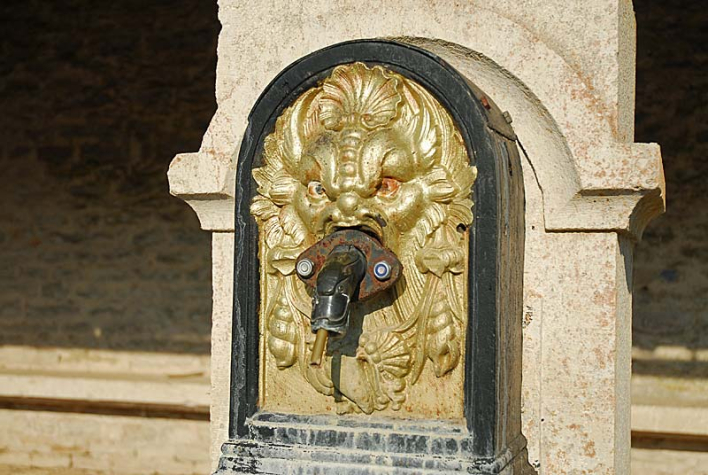
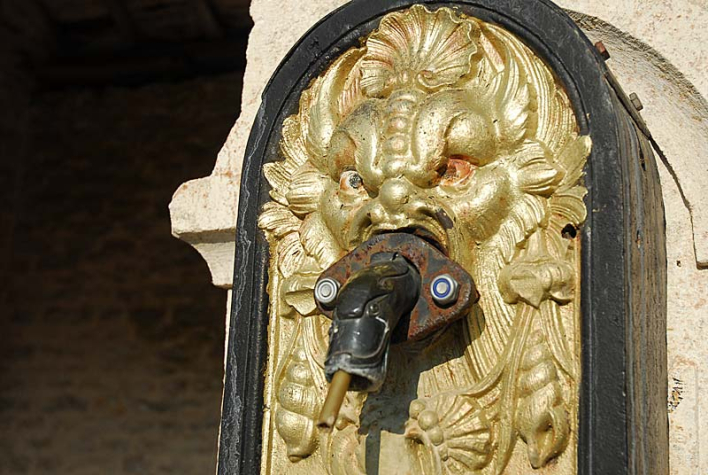
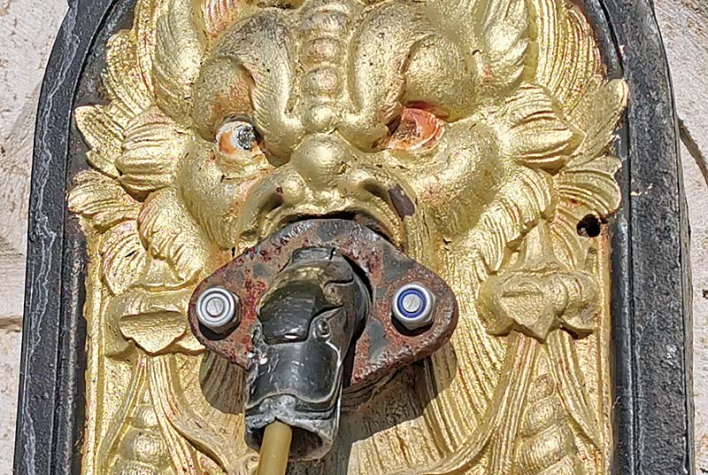
A rustic wash-house with three stone-cut washing basins, now used for flower beds. This washhouse is striking for its vast proportions and the rich aquatic motifs adorning the fountain. Made from cast iron, it is decorated with a spout that bears witness to a decorative trend common to many of the surrounding villages, though not identical to each other. In the same year, the church was built in a neo-Gothic style, giving it its slender appearance, and the building stands out as if the village served as a showcase for this little architectural gem. Originally, this washhouse was requested by the female population. The architect Dupuis in Chaumont drew up the plans in 1859, for an estimate of 4,582 francs, which included a washhouse, a drinking trough and the construction of the water supply pipe. The work was not completed until 1861, after a few modifications, as confirmed by the cartouche visible on the central pillar of the washhouse. It is an ingenious structure with double water circulation from a central hydrant, both to the small, half-moon-shaped outside trough for the livestock and to the inside basins for the washerwomen. As at Musseau and Chalmessin, the water spout on the outside is in the shape of a dragon's head. A hydrant taken from the village was later placed on top of the spout, partially concealing it and creating a very unattractive effect.
Lavoir de Lamargelle-aux-Bois