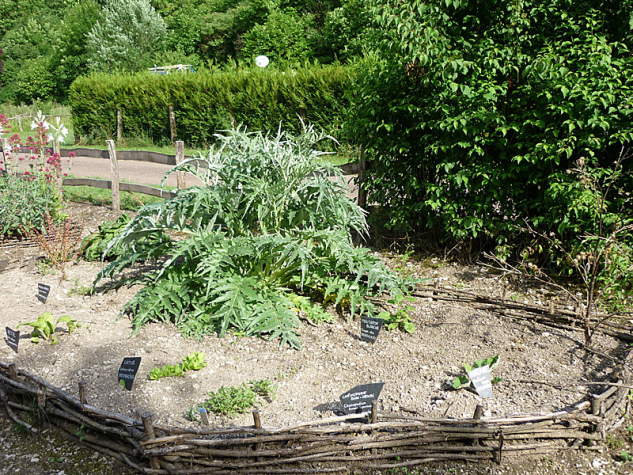
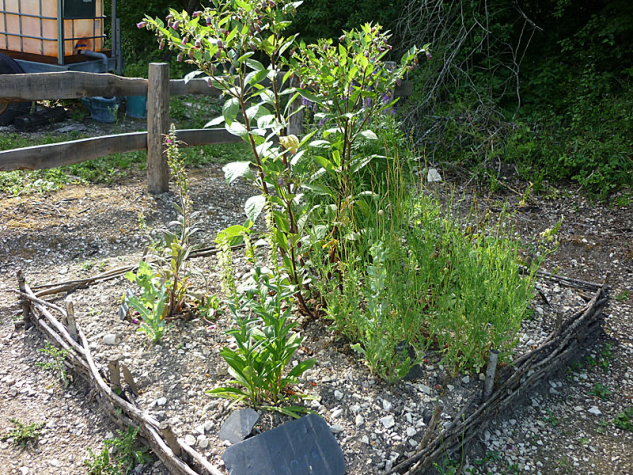
In the spirit of 12th-century monastic gardens, this 2-hectare community garden features around a hundred plants, some with well-known virtues, others forgotten.
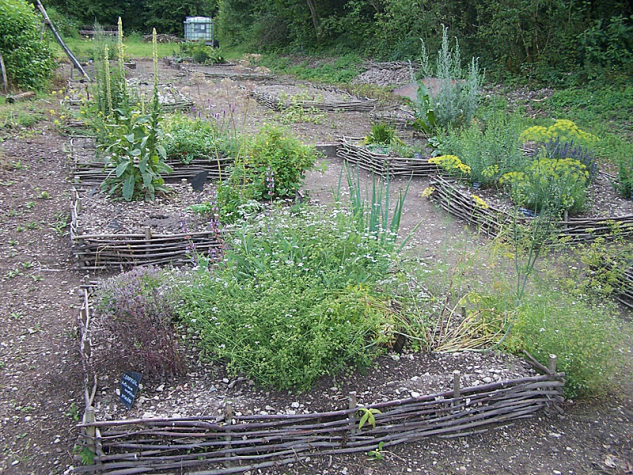
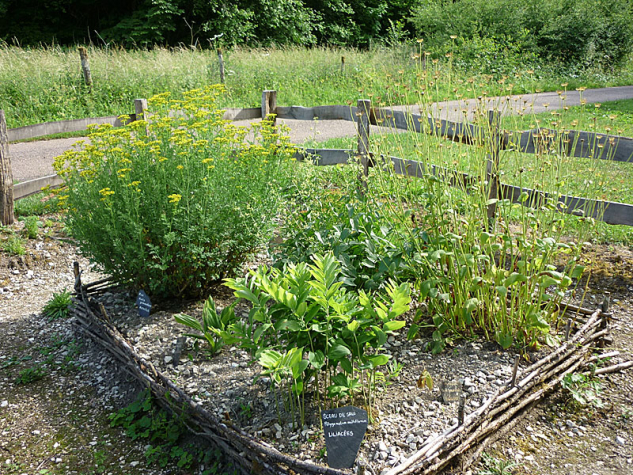
The vegetable garden (or Hortus), planted in squares surrounded by oak planks, allows visitors to discover ancient vegetables and condiments, while the garden of simple plants (or Herbularius) brings together medicinal plants (tansy), condiments (lemon balm, savory, lovage, oregano, thyme, sage, etc.), toxic and poisonous plants (rue), most of which are wild and local.
The raised beds lined with woven wood are called plessés and are arranged symmetrically around a central well.
Jardin d'inspiration médiévale