THE GARDEN
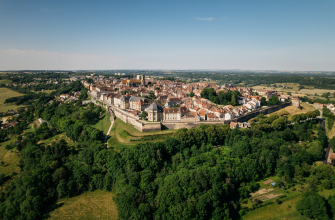
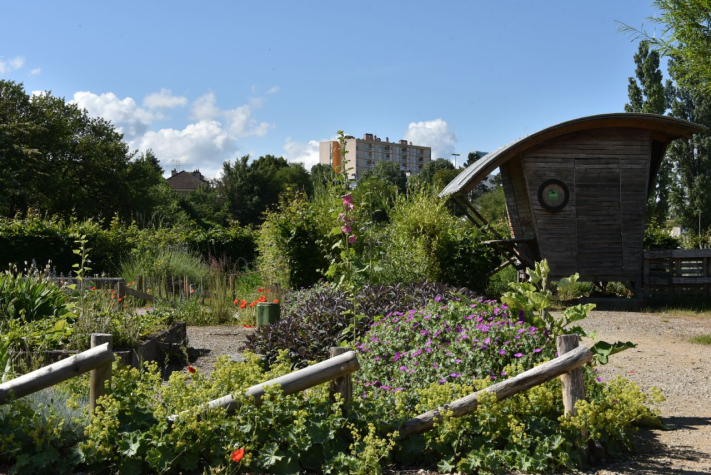
The former quarry and the wooded area are the two main components of the Jardin Agathe-Roullot. This is a first for the town, which has never before created such a large green space within its walls.
Located on the edge of the 'old' town centre and the 'new' districts (Cavalier and La Rochotte), the garden acts as a link between these two areas, encouraging residents to 'migrate'. Hence the importance attached by landscape architect Pascale Jacotot to the entrance gates, designed as an invitation to discover a "magnified" site. The site where the JAR is taking place is not a small Switzerland. However, the presence of the "hole" in the former quarry provides an opportunity to design a terraced garden.
"A garden is rooted in the present, evolving with the seasons. A garden also tells the story of the past, because it's part of our heritage. Pascale Jacotot has designed two features to remind visitors of this. The "rail gardens", with their oak sleepers, evoke the "memory of the place" and its relationship with the construction of the viaduct. The same approach is taken with the "stelae garden". The stone sculptures refer to the work of the quarrymen, but also to the biodiversity of the site, symbolised by various animals.
A MEMORY ETCHED IN STONE
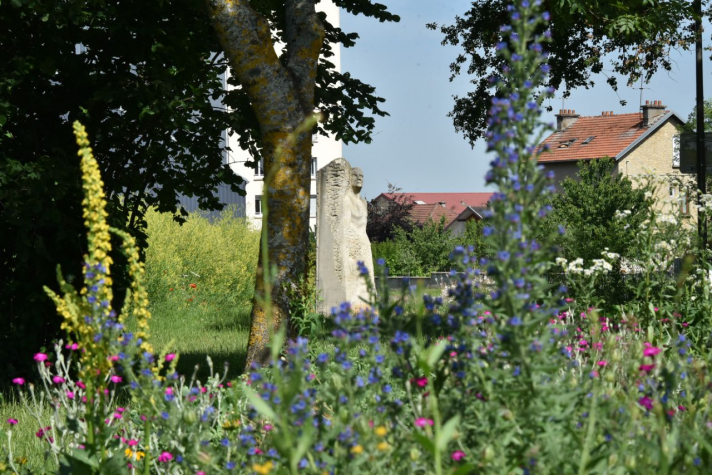
As a reminder of the former Cavalier quarry, a path of steles evoking the work of the quarrymen and the diversity of animals winds its way through the heart of the Agathe Roullot Garden (JAR). The project was entrusted to sculptor Guillaume Duc.
22 stone sculptures representing the animals of the garden line the main pathway of the JAR, providing a fun way to raise awareness of biodiversity not only among children, but also among the general public and all visitors. To "make the entrances visible", and to honour the history of the former quarry from which the stones for the viaduct were extracted, four steles have also been installed.
BIODIVERSITY AND KNOW-HOW
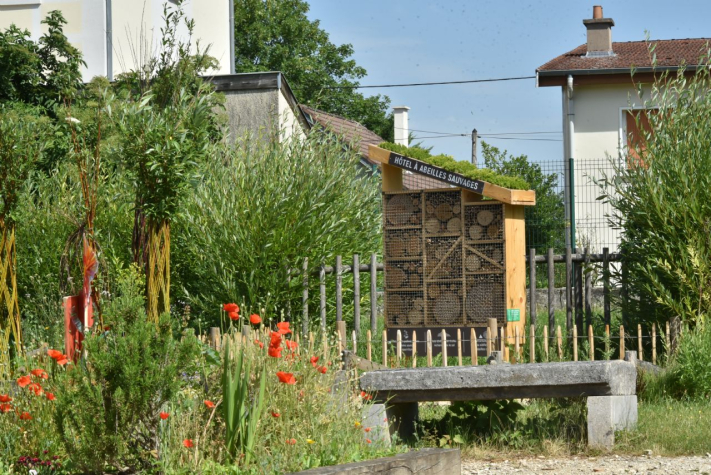
Envisaged as an "ecological restoration", the Jardin Agathe Roullot focuses on biodiversity while taking advantage of local know-how to enhance the site.
While the Jardin Agathe Roullot project aims to bring residents together in a convivial atmosphere - with play areas, relaxation areas and shared gardens - it also aims to repair and enrich the site's ecosystems.
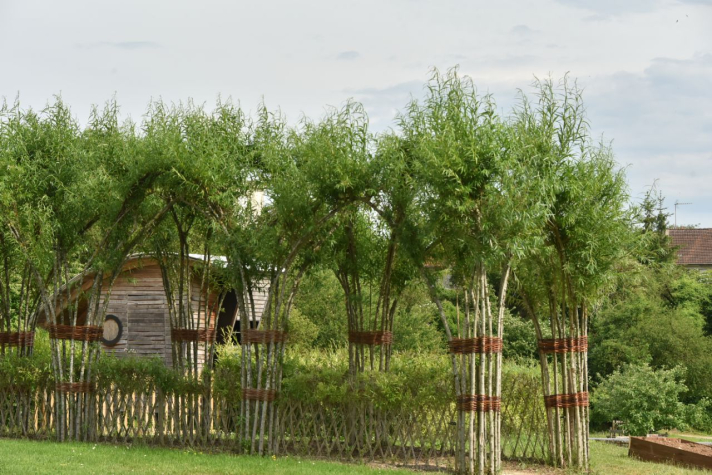
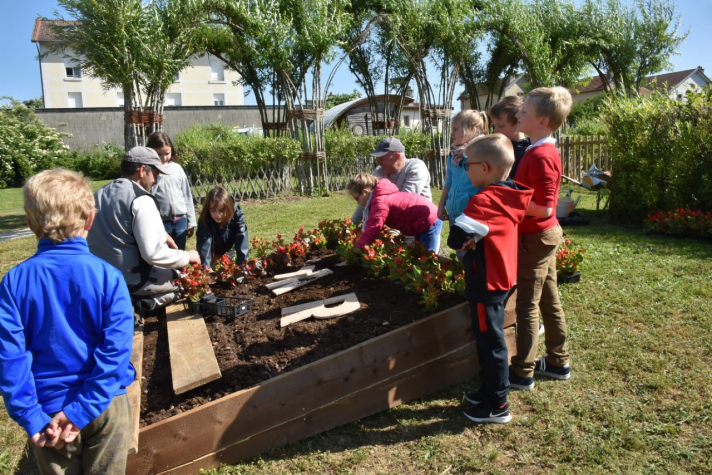
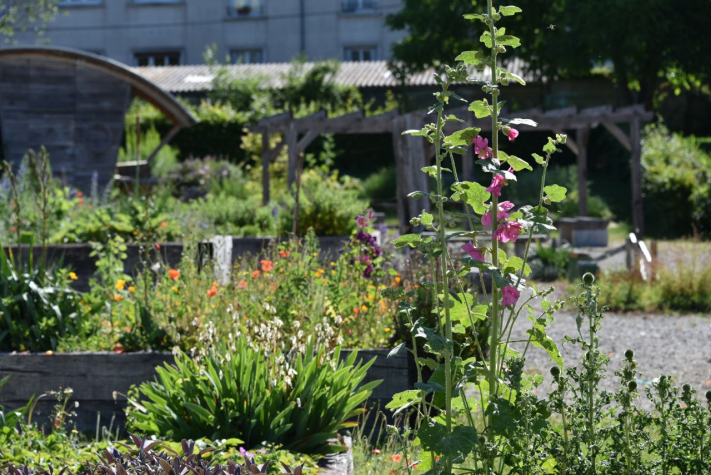
The wooded area on the edge of the park has been preserved. Around sixty varieties have been planted to add to the living organisms already present. In the orchard, old and even forgotten species such as corm, quince and medlar have been planted alongside apple and pear trees. Selected fruit trees, shrubs, plants and flowers help to restore biodiversity. All the plants chosen are adapted to our weather conditions - in fact, to preserve our resources, only rainwater is used. All around the shared gardens, a cross hedge of living wicker was created by the horticultural college and the CFPPA, the national school of wickerwork and basketry in Fayl-Billot.
People with reduced mobility, mothers with pushchairs and the elderly were not forgotten. A 50-metre ramp has been provided to make it easy to walk around the park and enjoy its various terraces. The vegetable patches - to be shared without moderation - are at different heights: close to the ground for toddlers and raised to fit a wheelchair and prevent the elderly from having to bend down.
JARDIN AGATHE ROULLOT