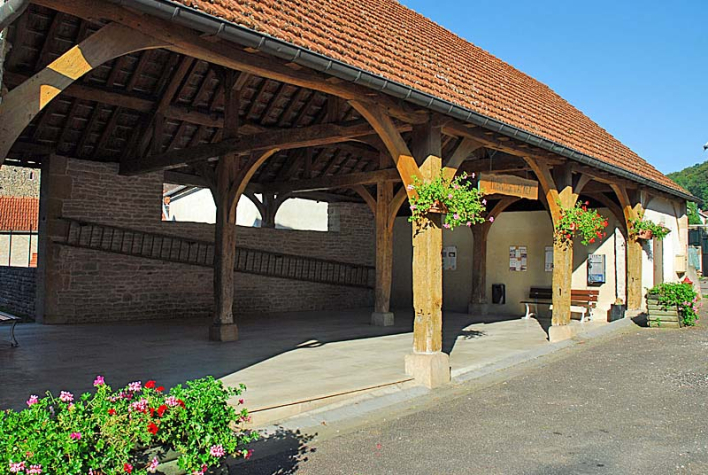
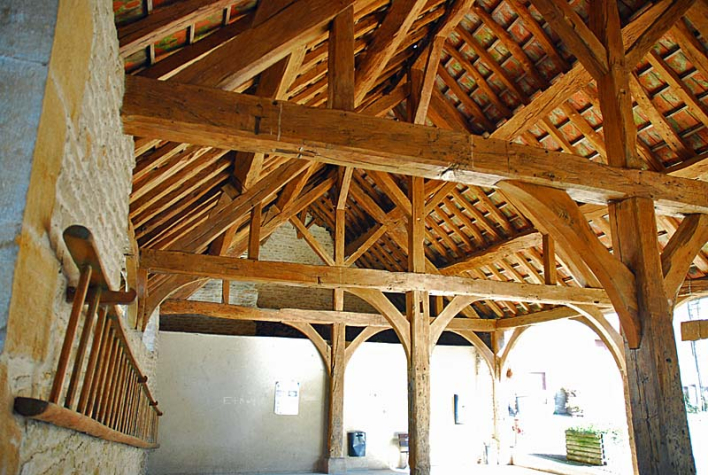
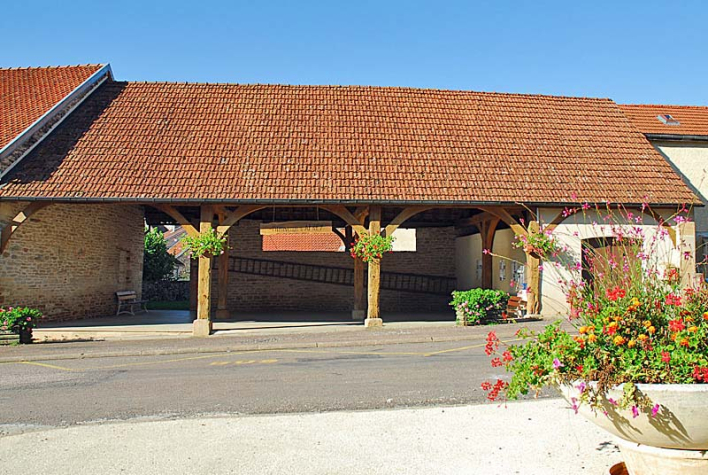
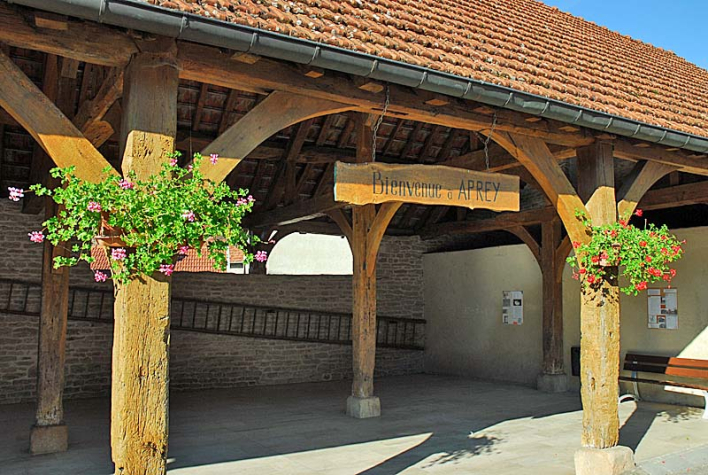
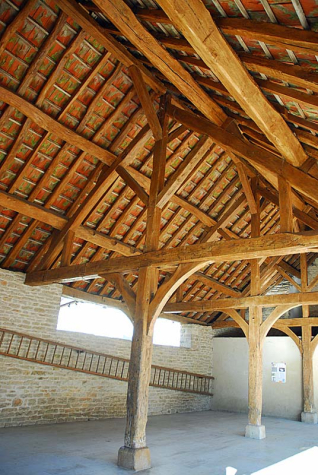
In 1528, François 1st granted Aprey the right to hold fairs. At that time, only Langres, Montsaugeon and Aprey were authorised by letters patent to hold fairs. This privilege was later confirmed by Charles IX in 1569. Today, only the halls at Montsaugeon and Aprey remain. From 1790, the halls were also used for public celebrations, such as the Fête de la Fédération on 14 July 1790, and for various decisions (ban des vendanges). In the 17th century, 6 fairs a year were organised under the halls at Aprey, attracting over 30,000 visitors for a population estimated at 596 by a deliberation in 1794. At the time, the village's earthenware factory was well known, as was its glassworks from 1764 to 1805. In 1838, the covered market was rebuilt as we see it today (with the exception of the roof, made of lava). Due to a lack of funding, the town council decided to reuse some of the old materials. The estimates and plans were drawn up by Mr Gaullet, an architect in Langres, and the construction work was entrusted to the Robelet firm in Buzon. In 1882, the roof was replaced with mechanical tiles from Aprey. Finally, in 1997, the town council decided to renovate the covered market once again as part of the "Pierres et Terroir" programme run by ADECAPLAN (Association de développement du canton d'Auberive).
Halles d'Aprey