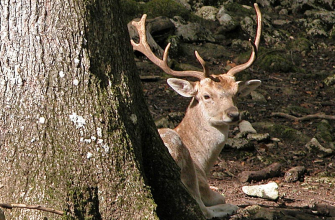
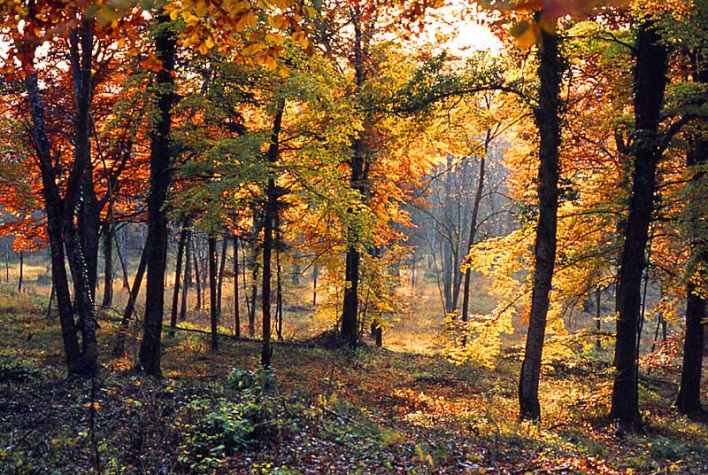
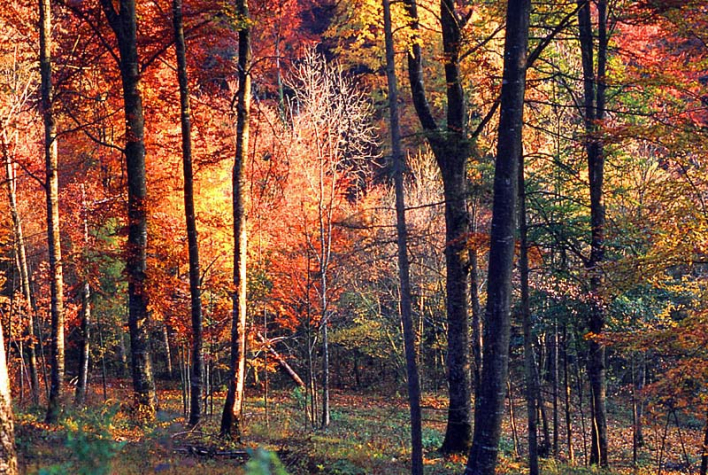
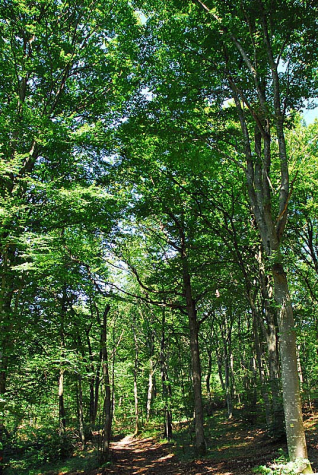
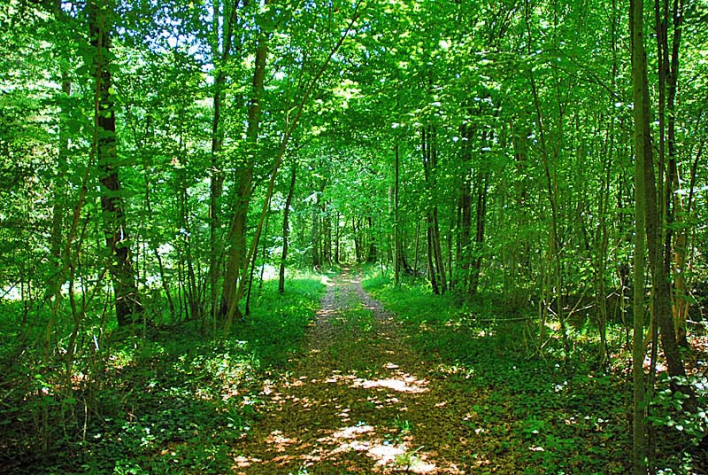
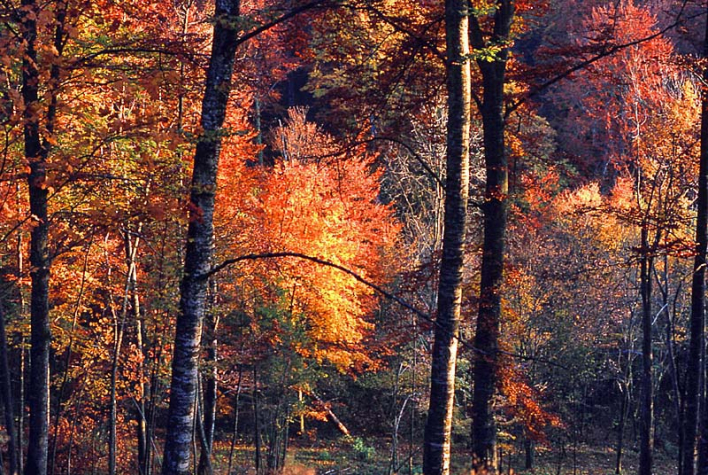
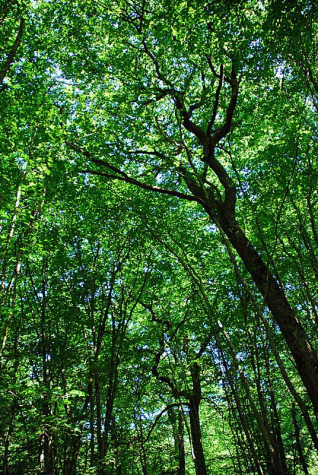
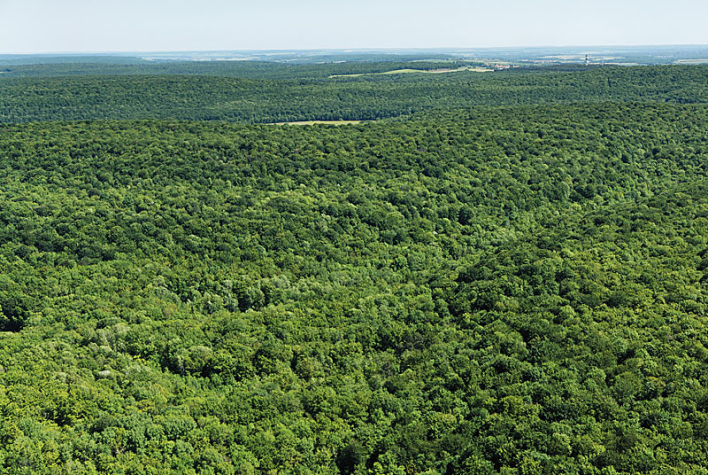
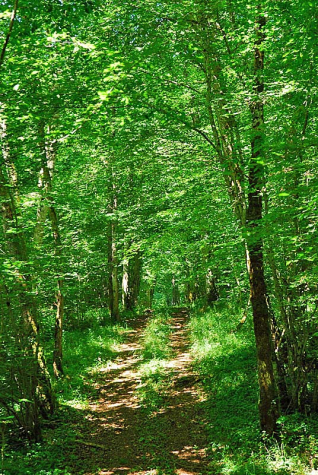
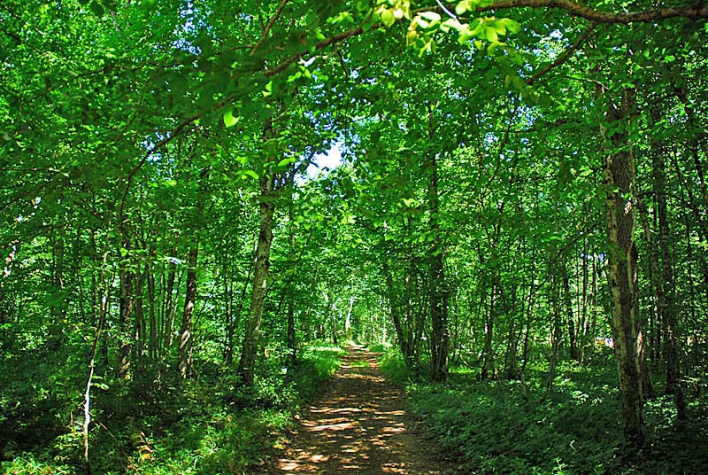
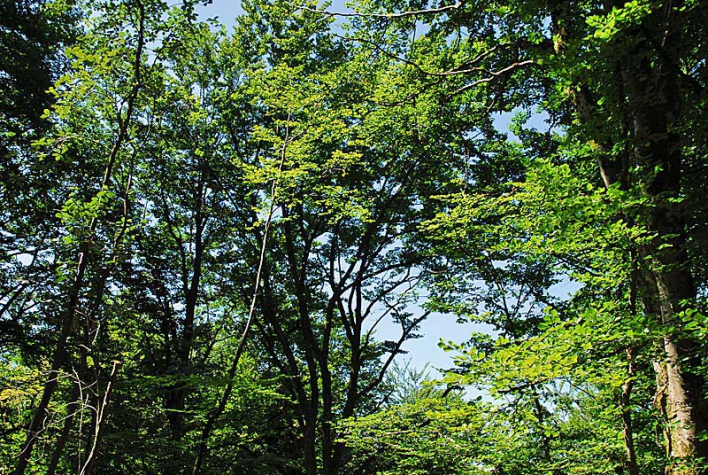
The Auberive state forest is made up of three massifs: Montgérand, Montaubert and Montavoir. It covers thousands of hectares and is home to colonies of deer, roe deer and wild boar, not to mention a wide variety of flora. The forest is open to the public, with the possibility of guided tours by the Auberive Nature Discovery Centre or Nature Haute-Marne. There is free access all year round via several hiking trails (except during the hunting season).
For nature lovers:
The Auberive forest is one of the most prestigious in the département. With its typical character and ecological wealth, this type II ZNIEFF, covering almost 300 hectares, is one of the major sites in Haute-Marne. Established on the hard limestone plateaux and marls of the south of the département, the Auberive massif includes both dry and wet areas.
The dominant forest types are very typical: calcicolous beech-oak-chamine grove on plateaux or gentle slopes, xerophilous calcicolous beech grove (on oolitic slopes), maple-oak-fir grove at the bottom of valleys, calcicolous cold beech grove (on north-facing slopes), maple-oak grove on scree and lapiaz, etc.
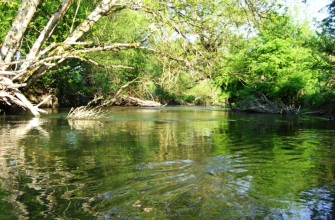
The originality of this massif also lies in its marshy glades and valleys (which are the subject of a type I ZNIEFF), with numerous groups characteristic of this type of environment: blackish oak, ferruginous oak and obtusive rush schoenas, magnocariçaies, reedbeds and filipendulaies in the very wet areas at the bottom of the valleys, molinia and mesobromaies (very locally) in the less wet areas. A discontinuous herbaceous hem often borders the marshes and, depending on the location, runs alongside the willow grove or riparian swamp forest.
Vegetation :
A large number of plant species are protected and/or in decline in the region, in line with the diversity of environments represented here. In total, 26 species are concerned: dry beech forests with three orchids (red and long-leaved cephalanthera (protected), epipactis leptochile) and the three-lobed liverwort, which is extremely rare in Haute-Marne; marshy woods with marsh thelypteris; coomb bottom woods with honeysuckle (protected); for molinia, narrow-segmented buttercup (protected regionally) and ophioglossa vulgaris (red list of plants); lawns with whitish helianthemum, of sub-Mediterranean origin, bird's-foot sedge, of pre-Alpine origin, rock violet, of North Eurasian origin (all protected) and burnt orchid; for thermophilous margins, great gentian and filipendula vulgaris; for the more mesophilous margins, the mountain cynoglossus; for marshes, two orchids (the incarnate orchid and Traunsteiner's orchid), the ferruginous choin (protected in France and whose populations in the Champagne region constitute an island very far to the west in relation to the species' range), the broad-leaved cottongrass, which is in very serious decline on the plains, the marsh parnassia and the perennial swertie, which is rare or very rare in the limestone mountains and very localised on the plains; for marshy formations with tall herbs, aconite and creeping willow; for sedge meadows, menyanthe water clover; for rocky areas, small-flowered potentilla. These are all on the red list of plants in Champagne-Ardenne, and many are also protected in the region.
Fauna:
The entomofauna (Odonata, Orthoptera and Lepidoptera) is well represented and of the 92 species inventoried, around twenty are on the red lists (national or regional). These include dragonflies such as the agrion de Mercure, protected in France and Europe (Bern Convention) and included on the French and regional red lists as a rare species threatened with extinction in the north-east quarter of France, the ringed cordulégastre and the bidentate cordulégastre, both rare and of mountain origin, the great aeschne, the metallic cordulie, the gomphe vulgaire, the agrion gracieux, etc. Song locusts (mountain cricket, bloody locust, small-winged locust, etc.), grasshoppers (reed flycatcher, small-winged grasshopper) and butterflies (sanguisorbe peacock butterfly, little silver-necked butterfly, bacchante, protected in Europe under the Bern Convention, on the national red list of threatened fauna, in the endangered category) are abundant. The stag beetle and the small mountain cicada can also be found here.
More than twenty different molluscs can be found in the area, including a species that is rare in France and found only in the United States. Numerous reptiles and a number of batacians and amphibians can also be seen here, including the stump-sided lizard, the wall lizard and the green and yellow snake (the former), the spotted salamander and the toad.
The avifauna is rich and diverse, with around a hundred species recorded. It is characterised by numerous passerines (skylark, skylark, grey flycatcher, proyer sparrow, whinchat, spotted locust, etc.), various woodpeckers and magpies, as well as a large number of birds of prey.), various woodpeckers and shrikes (green woodpecker, pileated woodpecker, black woodpecker, great spotted woodpecker, red-backed shrike, grey shrike), diurnal birds of prey that frequent the site in search of food (black and red kites, hen harrier, hobby falcon and kestrel, European sparrowhawk) and nocturnal birds of prey that nest in the area (little owl, barn owl, tawny owl, long-eared owl), as well as a number of species of hunting interest (turtle and collared doves, quail, various thrushes, woodcock, wood pigeon and wood pigeon). There are 12 species on the regional red list of endangered birds in Champagne-Artenne: the little owl, the white-fronted redstart (in serious decline throughout the region), the meadow pipit, the dipper (a rare regional breeder) in the streams, the hazel grouse (close to the limit of its range, Tengmalm's owl, pileated woodpecker, pigeon and, in open and scrubby areas, shrike, red-backed shrike and woodlark). The black stork has also been spotted on the site.
Bats are one of the great treasures of the Val Clavin (which is part of this ZNIEFF II) and include the common noctule, the great murine, Daubenton's murine, the moustached murine, the common serotine, the pipistrelle and the red-eared bat. The whole area is more of a hunting ground for these chiropterans, which find numerous insects.
The massif is also of geomorphological (lapiaz, dry valleys, cliffs, tuffières, etc.), landscape, educational (Auberive is home to the Centre d'Initiation à la Nature) and hunting interest (roe deer, red deer and wild boar). The area is covered by three biotope protection orders (Val Clavin and the Leucojum vernum station in the Vallon de l'Etang in 1991 and the Amorey marsh in 1992). The area is in good condition despite some deterioration.
Forêt domaniale d'Auberive