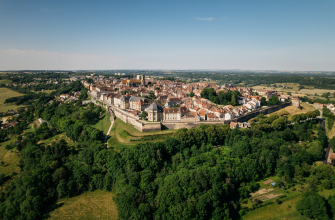
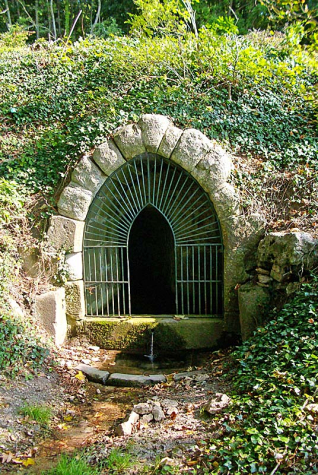
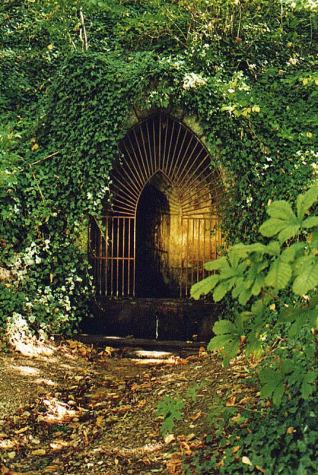
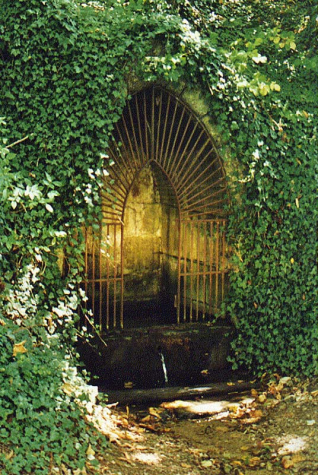
Located on the western slope of the plateau, around a hundred metres from the foot of the Navarre tower, the Fountain of the Fairies has been used since Gallo-Roman times. During excavations in 1855, a number of ancient remains were found nearby (mosaic debris, frescoes, Gallic and Roman coins), as well as an altar now housed in the Langres museum. The altar features three women representing the three mother goddesses to whom the spring was dedicated.
These protective and beneficent deities came to the aid of men and accompanied them as they passed into the realm of the dead.
With the arrival of Christianity, this pagan cult was replaced: the fairies dethroned the mother goddesses and became temptresses and evildoers*.
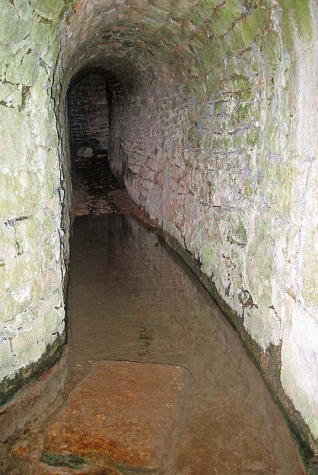
Discreet and modest, this fountain consists of a vaulted conduit forming a catchment and closed by a grille; from here, the water flows gently into a small rectangular basin before flowing towards the Bonnelle.
It has been listed on the Inventaire Supplémentaire des Monuments Historiques since 1925.
The legend of the fairy fountain:
It is said that a long time ago, a young shepherd named Mandola lived in the Bonnelle valley. His Italian origins and taste for solitude made him a rather atypical character in the green valley.
On the heights of Buzon, a hamlet in the same valley, lived a beautiful young girl called Cécile. She was the daughter of a wealthy peasant at an age when the anticipation of love leads to daydreaming.
As the two young people crossed paths and met regularly, they grew so close that they became indispensable to each other. Their feelings were so strong that talk of marriage soon spread and a date was set.
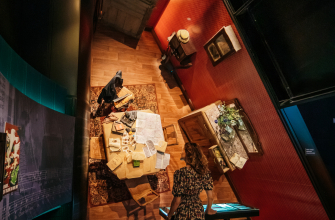
On the eve of this great event, Mandola, so happy, decided to take a walk alone with Cécile in mind. His steps led him to a fountain nestling a few steps from the city walls. Ignoring the advice of the elders, who willingly turned away, he approached the spring, as if drawn by the gentle sound of the water. It was the end of the day and he couldn't resist dozing off beside the pool.|The next day, as preparations were well underway for the wedding, Cécile looked around desperately for her future husband. Someone had spotted him lying by the fairy fountain, his eyes distracted and his complexion pale. Cécile went there to discover, to her great despair, that Mandola had lost his mind. He didn't even recognise her; his eyes seemed to be staring at invisible beings that Cécile couldn't see. He was babbling incomprehensible words, crying out and having strange convulsions... It was as if he was under a spell. Cécile tried to bring him back to reality, but nothing would do. Mandola had been caught up in the evil power of the fairies. Suddenly, weeping and close to fainting, she heard him utter a terrible cry and saw him rush into the fountain as if drawn by the bowels of the earth. No one saw him again and Cécile, broken with grief, ended her life in a convent.
Fontaines aux Fées