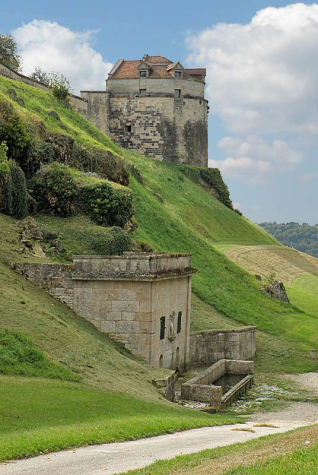
It is located to the north of the town, near the Longe-Porte gate. This gateway was the outlet of the ancient cardo maximus (the north-south axis of the Gallo-Roman town): here too, an arch marked the entrance to the ancient town. Maintained throughout the medieval period, this fountain was renovated in the 17th century. A Gallo-Roman bas-relief found in 1675 was incorporated into the fountain. It depicted a woman carrying a bucket, probably a Libitinaria (a woman who served meals to the dead), although the people of Langrois at the time thought it was a representation of the Samaritan woman! So they naturally gave the fountain this name. In 1785, when the fountain was rebuilt in its current form, this relief disappeared.
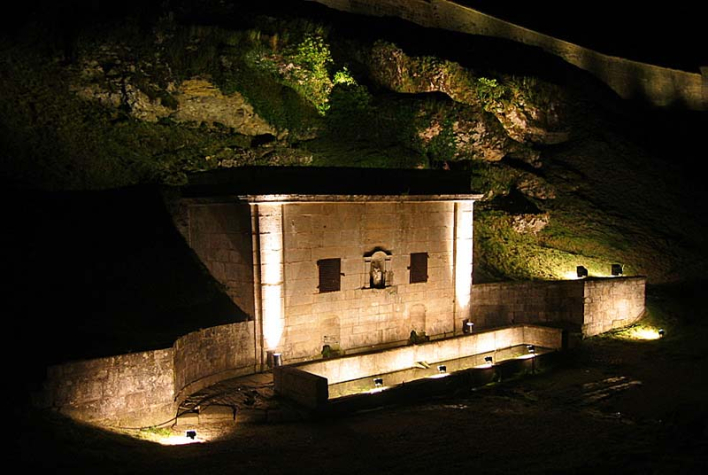
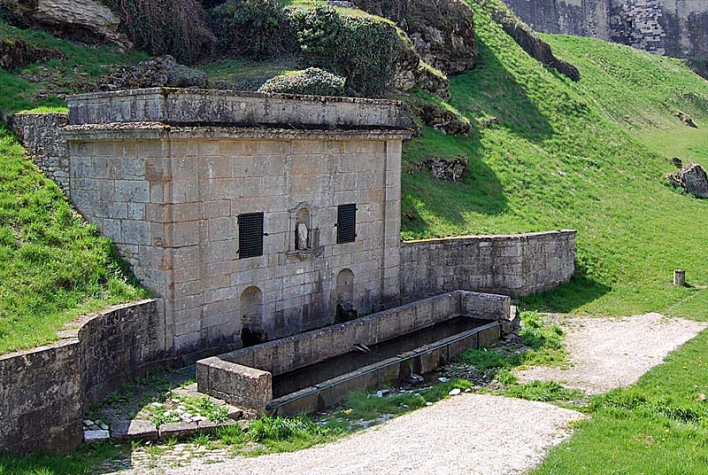
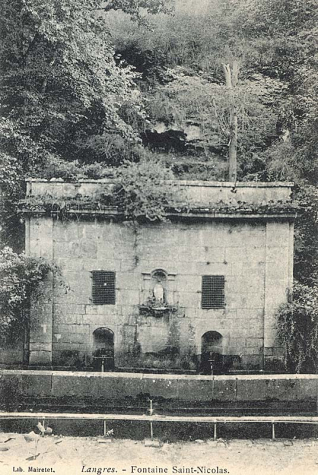
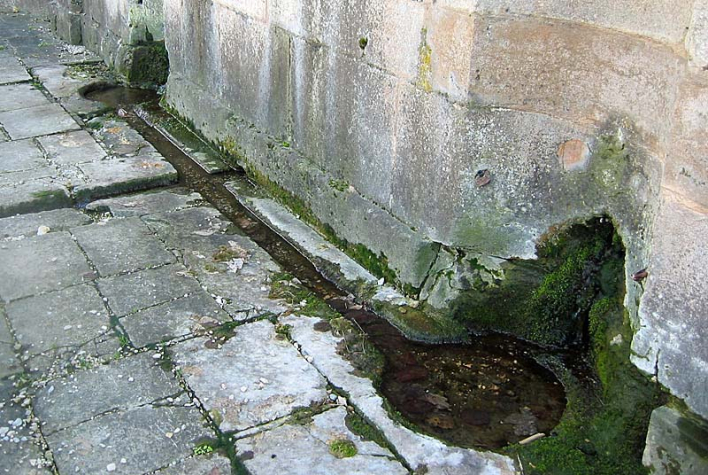
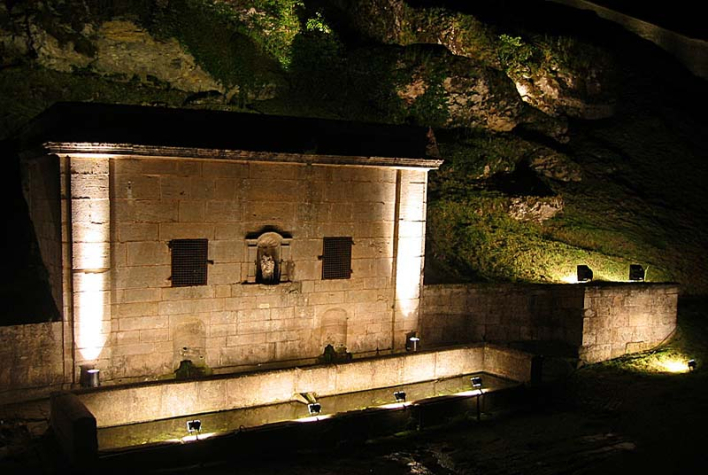
It was rebuilt in the classicist style of the time. The composition of the monument is symmetrical: two pilasters frame two niches from which the water flows. They are surmounted by two grilled openings giving access to a catchment basin. In the centre, a niche is decorated with a statue that is difficult to identify today. The statue probably comes from a nearby fountain that no longer exists. The date of reconstruction is engraved in the stone above the niche. The whole is framed by two rounded walls. Gutters in the ground lead the water to a trough, from where it drains down to a retaining wall on the present-day road.
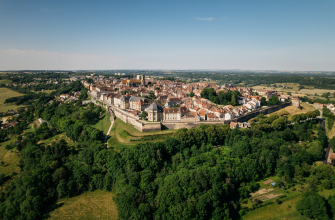
The Saint-Nicolas fountain enjoys an exceptional location. Dominated by the fortifications in the background, it was defended by the Saint-Jean tower and the Longe-Porte gate, and overlooked by impressive rock outcrops that reveal the thickness of the limestone bedrock.
Fontaine Saint-Nicolas