It is the closest to the historic centre. Situated close to the ancient decumanus maximus (the east-west axis of the Gallo-Roman town), this spring undoubtedly played an important role in allowing people and animals to cool off after climbing the slopes of the plateau. At that time, an arch (the present-day Gallo-Roman arch nearby) marked the entrance to the town, the sacred boundary between town and country. This strategic position continued after the construction of the Market Gate (now the Town Hall Gate) in the High Middle Ages. The use of this gateway, particularly by merchants, made the presence of the Saint-Didier fountain essential.
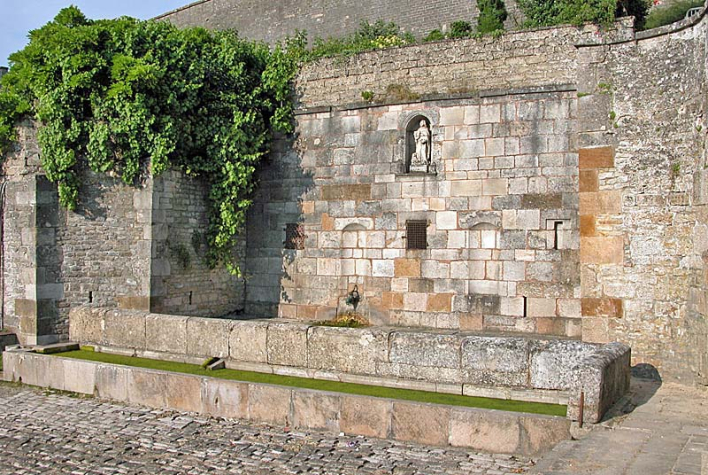
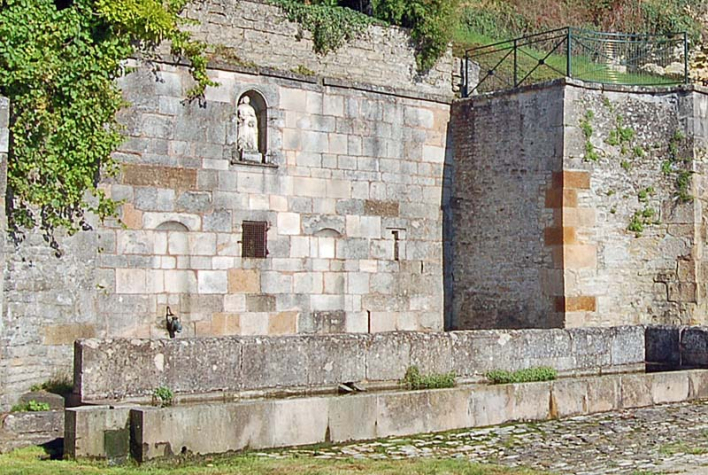
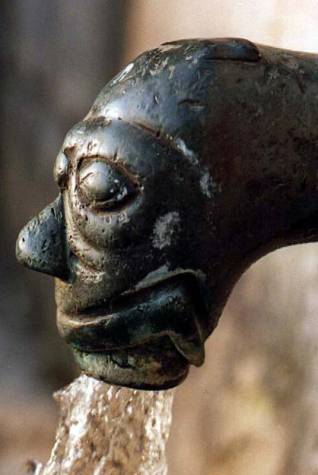
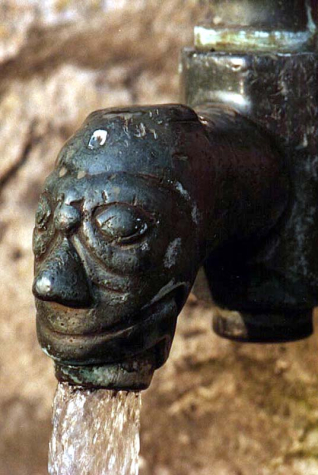
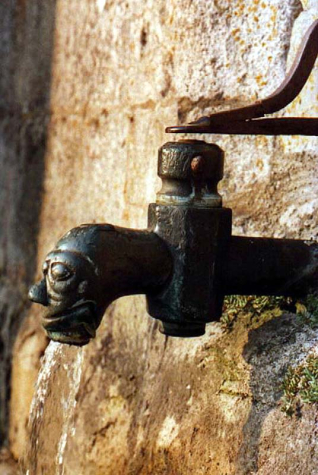
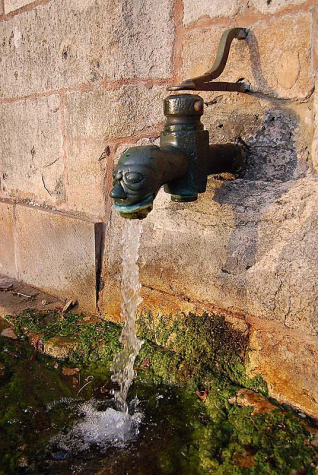
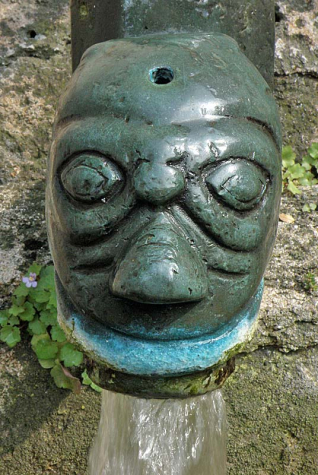
The current fountain dates from the 18th century. It consists of an ashlar wall concealing two vaulted rooms that form catchment basins. From here, the water flows through an anthropomorphic bronze tap into a drinking trough where animals could quench their thirst. Finally, the water flowed to a foot bath to the north. This vast paved area allowed horses in particular to relax their tendons, which had been overheated by the exertions of the journey up to Langres.
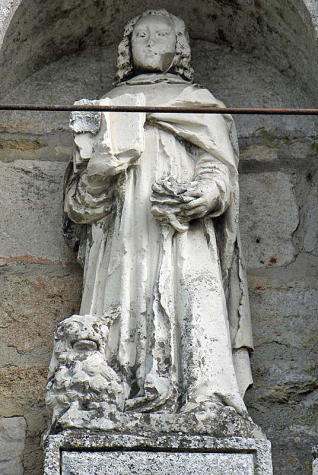
The statuette in the niche represents Saint Mammès*, the patron saint of the diocese of Langres. He is often depicted accompanied by a lion and holding his entrails in his hand, a symbol of his torture. This statue probably replaced the original one, which represented Saint Didier*, more in keeping with the name of the fountain.
The legend of the Saint Didier fountain:| It is said that in the early days of Christianity, the people of Langrois, with Didier as their bishop, had to contend with the first invasions that threatened the declining Roman Empire.
One day, the approach of the Vandals, led by their chief Chrocus, was announced. Didier led the defenders to resist the terrible warriors from the east. Within days, the walled city was completely besieged. One Vandal assault followed another. All to no avail. The Langrois held out until the day when, weakened and increasingly outnumbered, they had to resign themselves to not holding out much longer. Didier then proposed a deal to Chrocus: to exchange his life for that of the inhabitants. Seeming to accept the deal, the Vandal chieftain had his executioner cut off the bishop's head. But he did not resist the temptation of Langres' riches for long. As soon as the bishop was beheaded, and despite his promise, he ordered his men to take and plunder the city. Just as the Vandals were about to attack the city, a miracle occurred: Didier's body came to life, stood up, picked up his head, climbed back on his horse and rode back to his city.
Frightened, the Vandals fled in his wake and the executioner, who had gone mad, smashed his head against one of the city gates, now walled up (perhaps the Gallo-Roman arch located near this fountain). Didier died in the heart of the city, where a chapel was built in his honour. It is now part of the Museum of Art and History.
Fontaine Saint-Didier