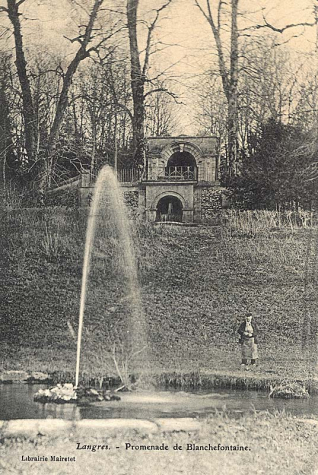
This area of greenery and water was developed as early as the middle of the 17th century. It was at this time that Langres began to see its borders and the associated threats receding. In 1657, the town council undertook the planting of a vast avenue lined with trees ("tillotz": lime trees) forming the promenade leading to the White Fountain. Badly treated by careless ploughmen and sheep eager for young shoots, they had to be replaced over the following years. Between 1733 and 1736, counter-alleys were planted to widen the promenade. It quickly became the favourite promenade of the Langrois people, who appreciated its refreshing shade, its views over the Bonnelle valley and the final enchantment of its fountain. Now a green link between the old town, the "new districts" and the citadel, the design of this promenade remains original; it is too long to be a park, too bushy to be "French-style" and too linear to be "English-style". In 1976, the age-old lime trees were replaced by new plantings.
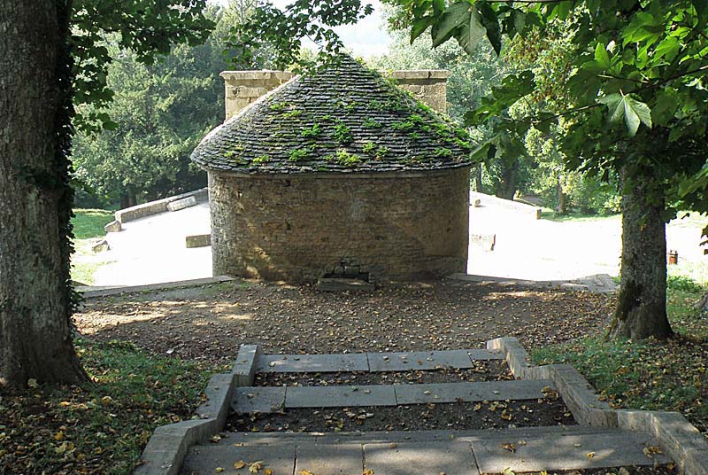
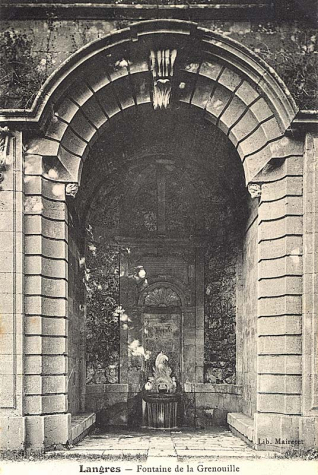
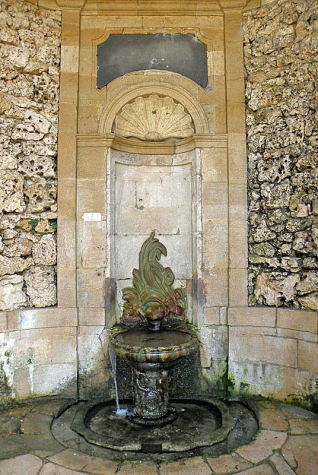
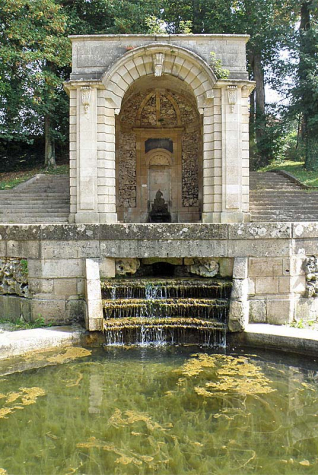
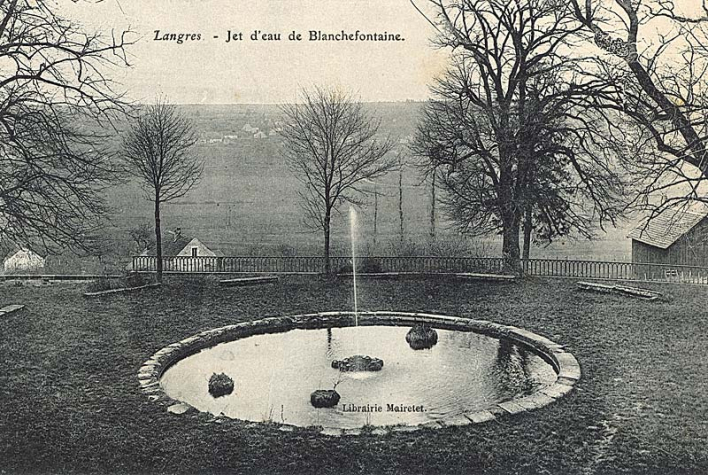
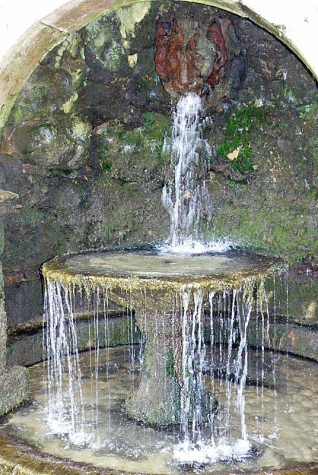
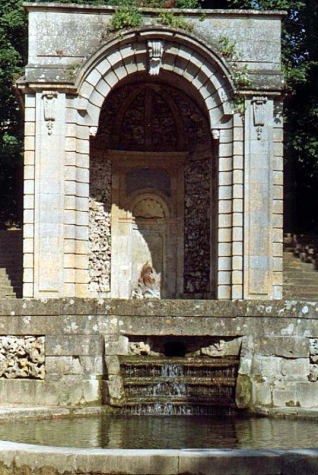
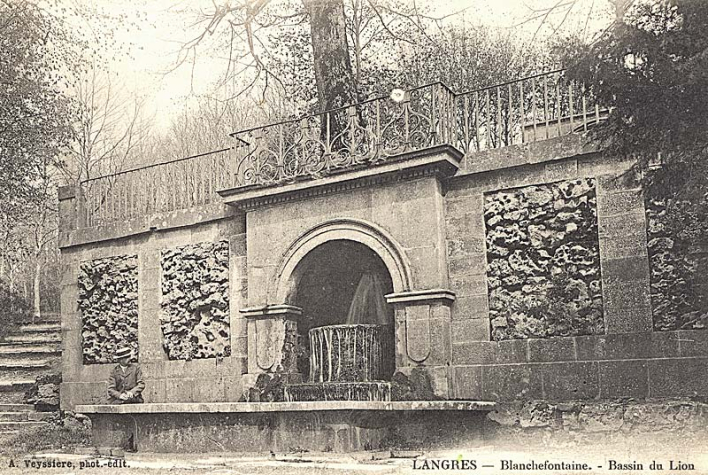
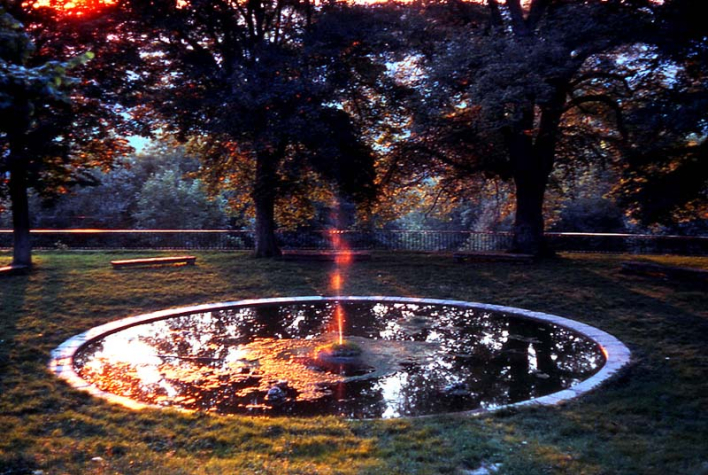
But this promenade is inseparable from the fountain that gives it its name. It seems that they were built at the same time: the construction of the "grotto" (the aedicula housing the spring) and the two upper terraced pools could also date from 1657. In 1678, the Aldermen decided to build "a basin with a jet of water in the White Fountain, below the last one". The layout of the three successive pools still visible today dates from the end of the 17th century. This is the layout that Denis Diderot knew and which gives it its unique character.
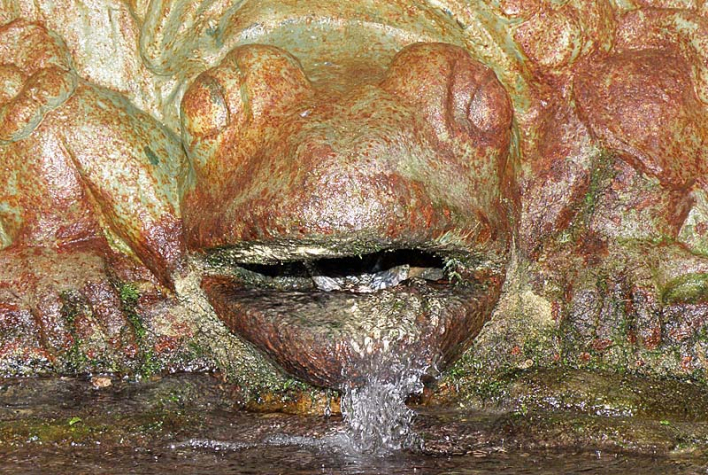
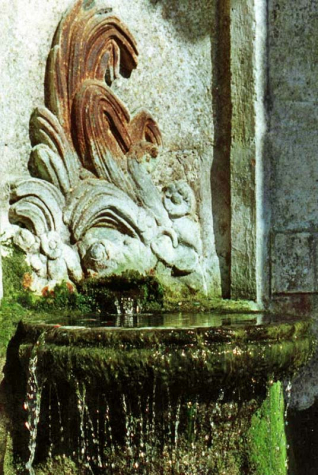
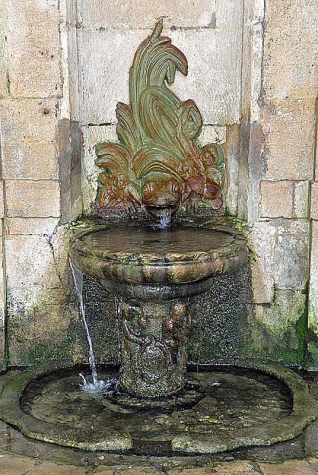
In 1755 and 1758, the architect Claude Forgeot and the sculptor Clément Jayet worked together to give this fountain the aesthetic appeal it has retained. The grotto was completely rebuilt, decorated with "rocaille" and statues (including the famous bronze frog that gives the fountain its name). It was surmounted by a Latin inscription (by Canon Claude Jandin) celebrating the recent embellishment work and referring to the (unfulfilled) project to convey water from this fountain to the town itself ("To the Lingons. I am the nymph who, out of breath, struggled to escape from your mountain so that an urn within your reach could give you my living waters. I will always be grateful for the honour you have done me, because, resplendent, I proudly raise my head among all the Naiads. I am a peasant, but if the gods grant my wishes, I will be a city-dweller and the whole city will be invigorated by my waters. 1755 "). The pools, terraces and staircases were also restored. At the time, unlike today, there was only one entrance to the fountain. From the allée de Blanchefontaine, which ran all the way to the back of the grotto, you would descend to the grotto by way of the sumptuous stone staircase running around it. The effect must have been breathtaking; at the last moment, you would discover the successive series of terraces, where even the sound of the water seemed to have been delicately studied according to the basins (trickles, cascades, jets...)! In his letters to Sophie Volland, Denis Diderot, a local boy, described the pleasure he took in walking around Blanchefontaine, from where he could admire "the most beautiful landscape in the world"...
It has been listed as a Historic Monument since 1906.
Fontaine de la Grenouille