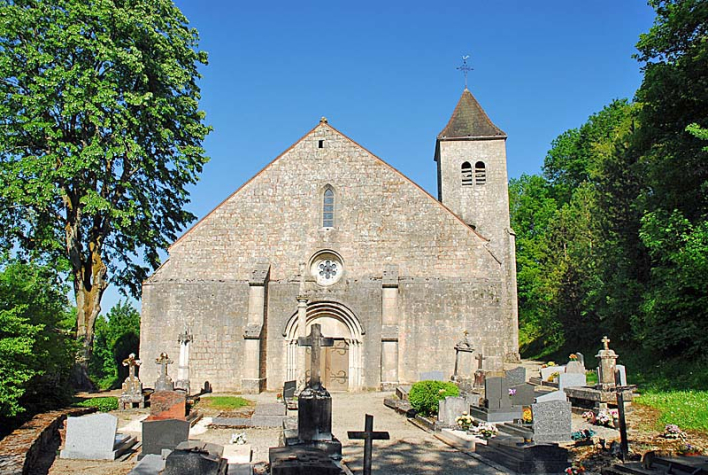
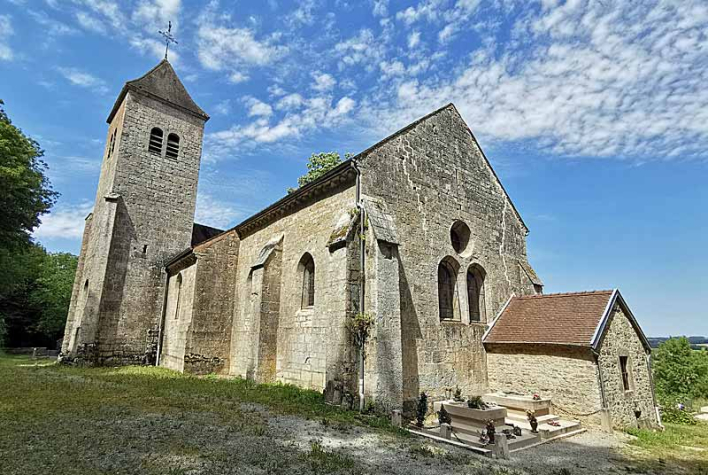
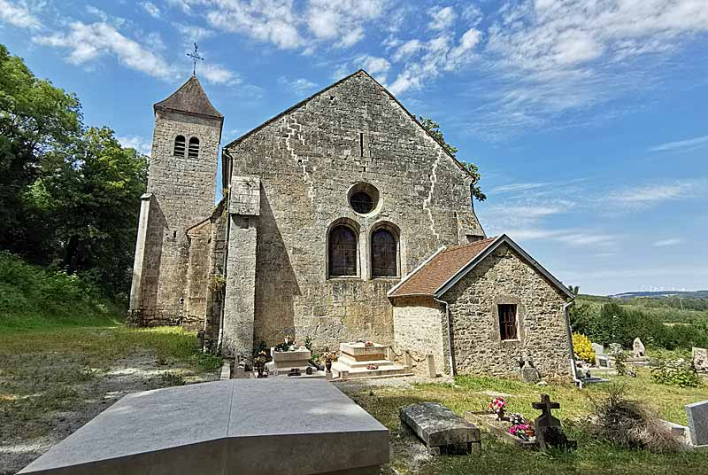
Originally, the church of Aubigny was the parish church for the villages of Aubigny, Vaux, Couzon and Montsaugeon, and it was in this unique regional cemetery of Aubigny that the population of the surrounding area was buried from Merovingian times onwards. It was also in this cemetery that the first lords of the house of Montsaugeon were buried.
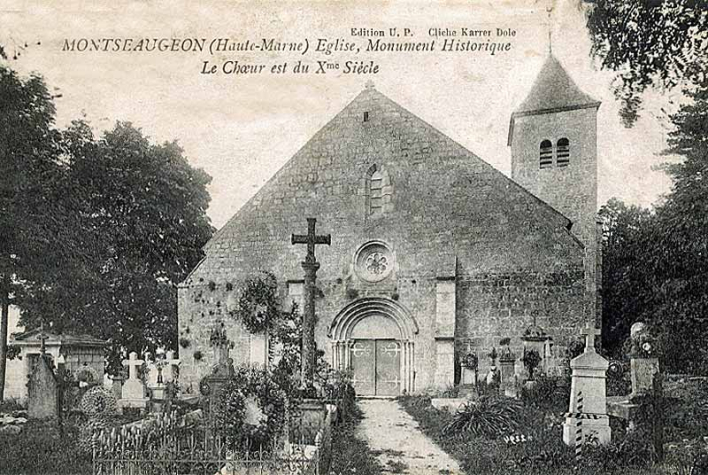
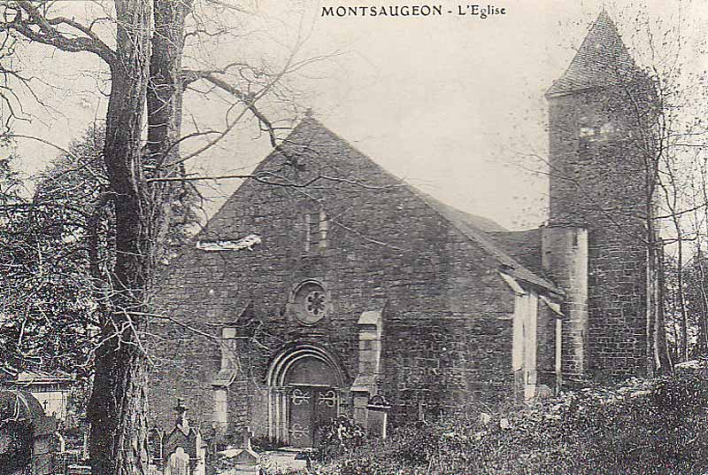
The church (or chapel) of Notre-Dame de Montsaugeon, mentioned in a document dating back to 1098, was rebuilt in the 13th century to become the seat of a parish which was under the temporal authority of the bishops of Langres and the spiritual authority of the abbey of Bèze (Côte d'Or). The parish priest, originally appointed exclusively by the prior of Aubigny (which was dependent on the priory of Bèze), was subsequently appointed alternately by the prior and the bishop of Langres.
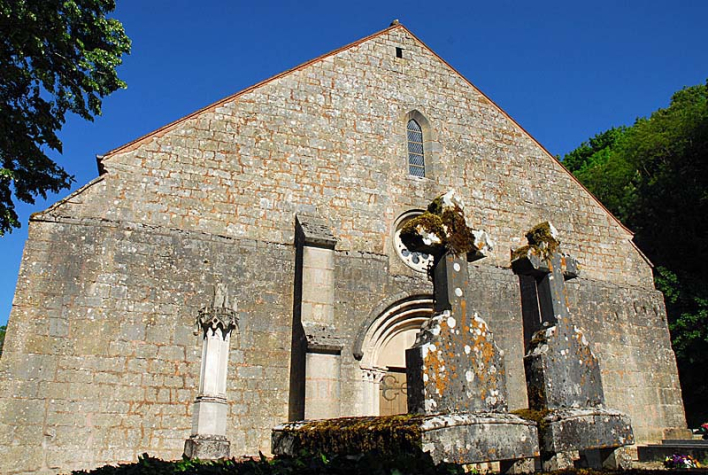
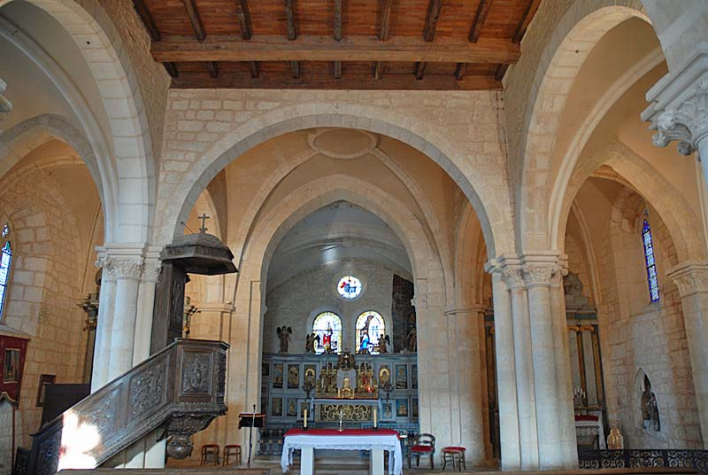
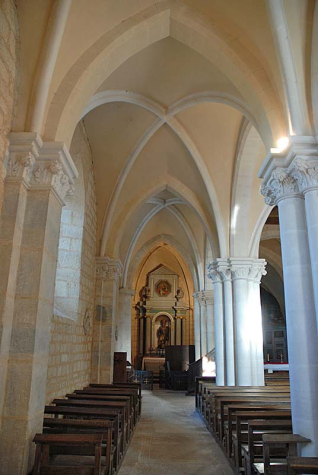
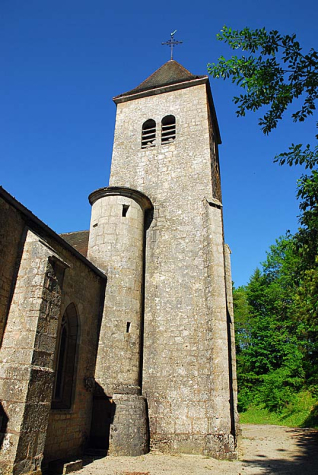
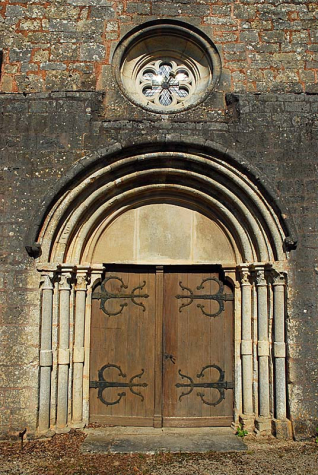
Partly destroyed during the siege of 1494, the building retains its original features, including a magnificent 13th-century doorway with projecting arches in excellent condition, once protected by a porch, the transept, the gable end of the choir and the bay separating the choir from the nave. The choir was rebuilt at the end of the 16th century, after the disasters of the Wars of Religion had brought it down, and the vaulting was completed at the beginning of the following century, when the side bell tower (originally placed at the crossing of the transept) was rebuilt. The nave vault was raised in 1876.
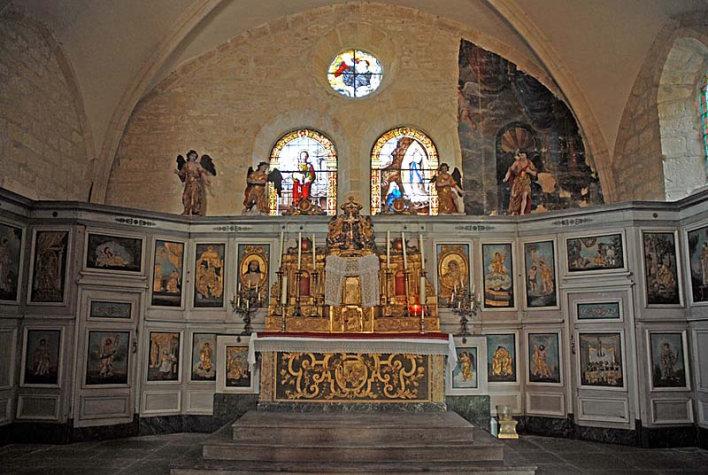
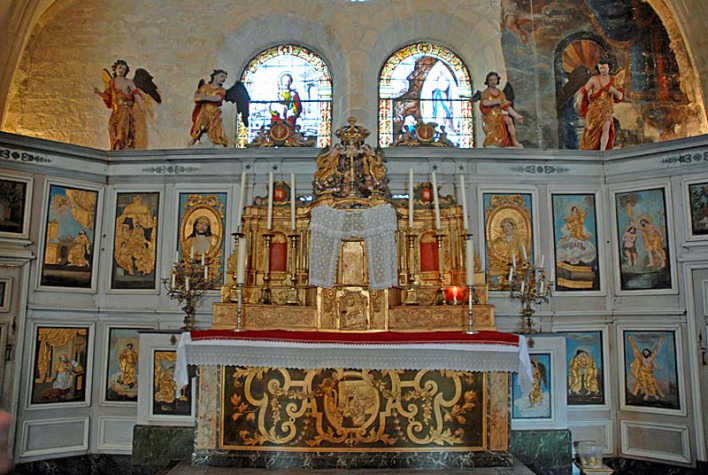
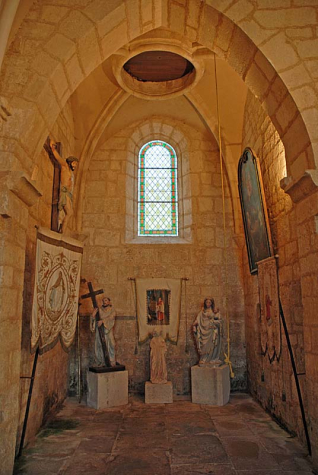
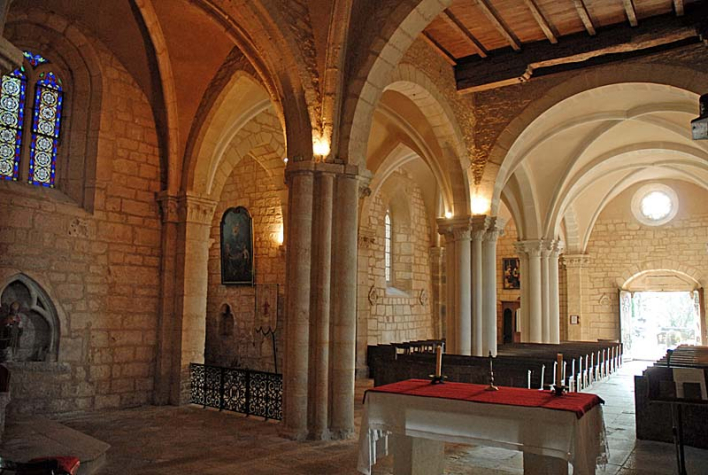
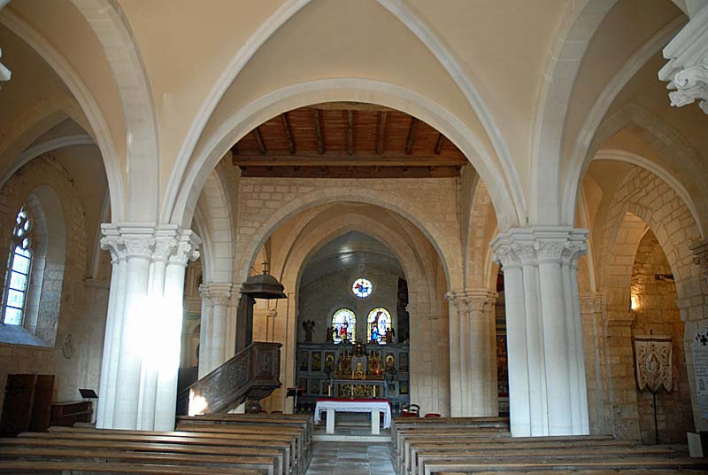
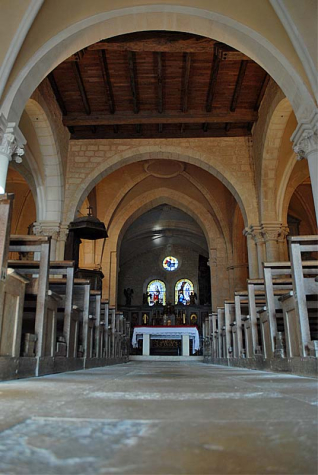
Despite this mixture of styles, the church remains imposing with its three naves, each with an altar. The main stone altar, built in 1680, is undoubtedly the most remarkable, framed by a magnificent and imposing wooden altarpiece installed for the occasion between 1675 and 1880 by the parish priest Germain Clouet as part of the Reformation, which occupies the entire chevet wall and extends beyond it. It consists of a juxtaposition of 27 polychrome sculpted panels depicting biblical figures.
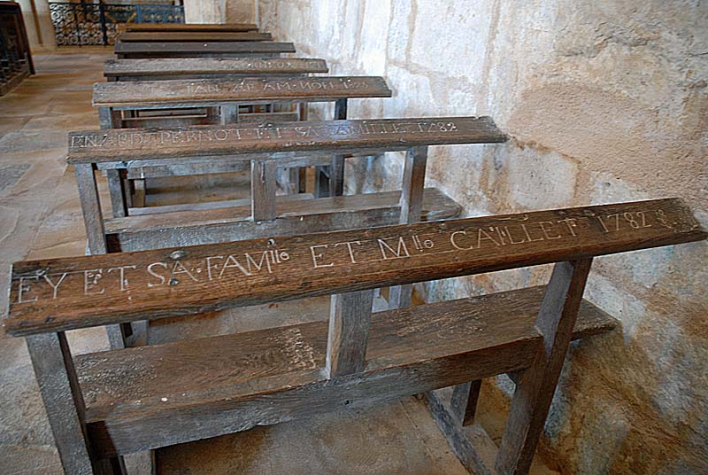
Inside the church, there is a 16th-century cast-iron font at the entrance, listed in 1908. In the choir, there are six stalls dating from 1613, a 16th-century Eucharistic cupboard behind the altar in the space that was once the sacristy and, in the nave to the left, the gravestone of Etienne Bolot, "King's collector in Langres", who died in 1699. Two paintings on wood, a Saint Sebastian (late 16th century) and a Nativity of the Virgin from 1608 can be seen at the back of the nave, the first showing the idealised hilltop of Montsaugeon in an idealised landscape.
To visit the church, ask for a key from Claude De Cointet, at no. 1 Rue de la Goubaud (tel. 06.82.55.09.32).
Eglise Notre-Dame-de-la-Nativité de Montsaugeon