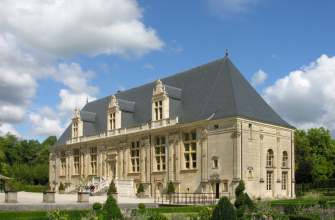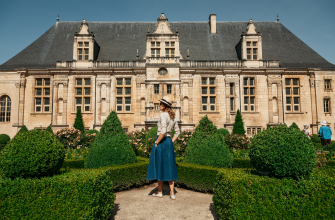
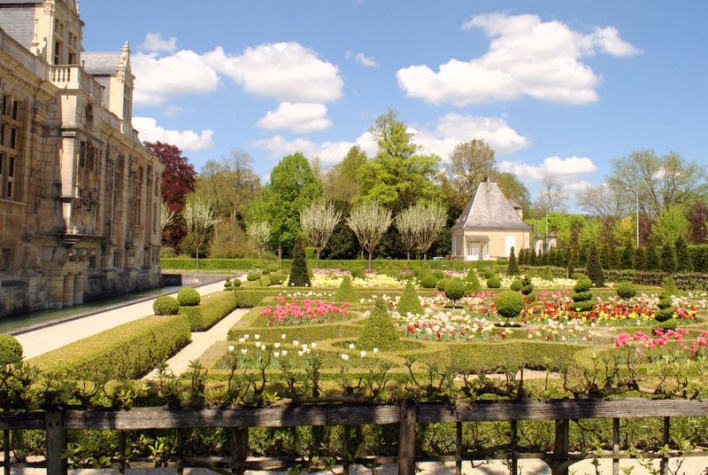
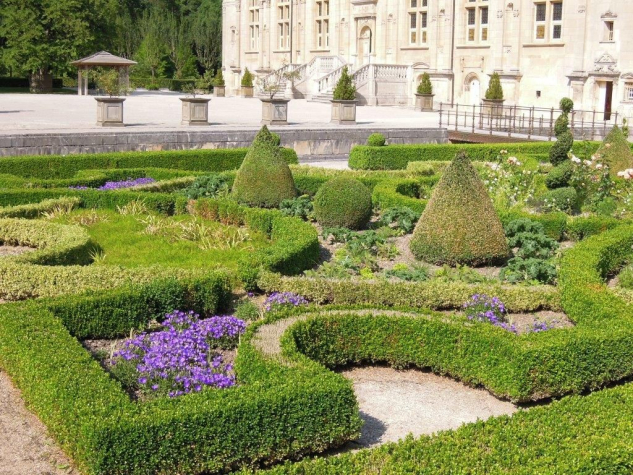
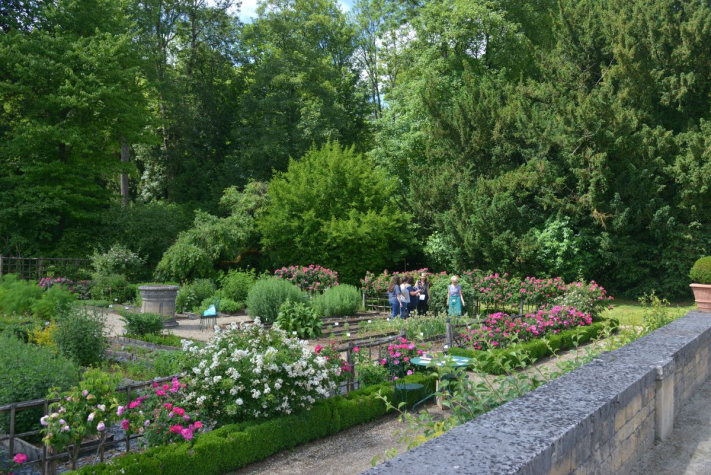
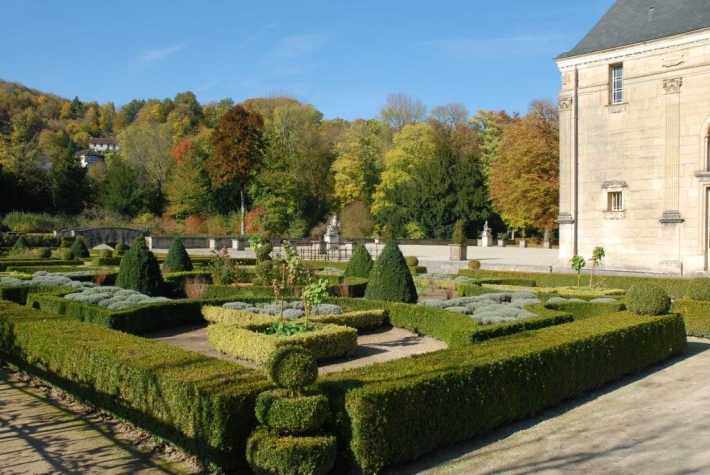
In the spirit of Renaissance pleasure gardens, the following have been recreated around the château:
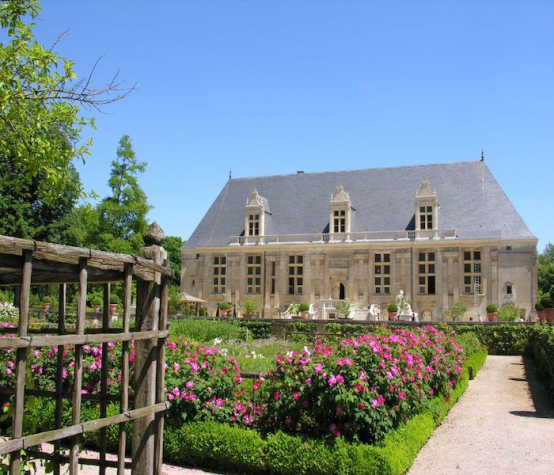
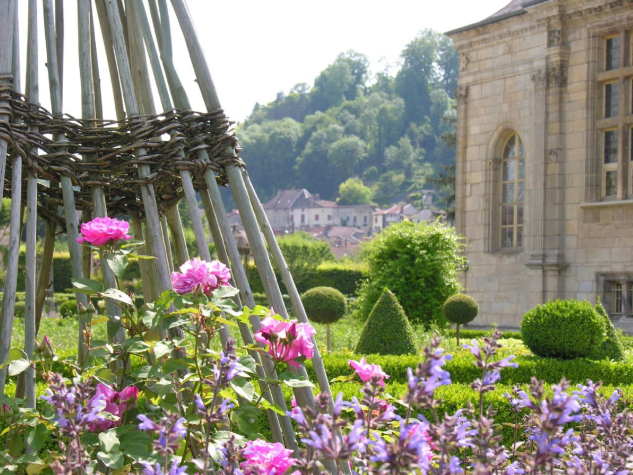
- parterres with compartments made up of knotwork and 139 topiaries of boxwood in geometric shapes
- a labyrinth of greenery,
- a framework cradle,
- a large orchard with 364 fruit trees (old varieties of apple, pear, plum, cherry and quince),
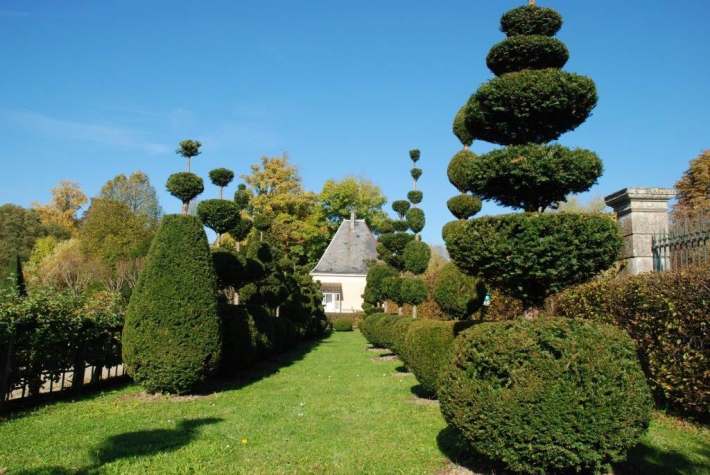
- the yew topiarium (a collection of 56 yew topiaries)
- and medicinal and flower squares.
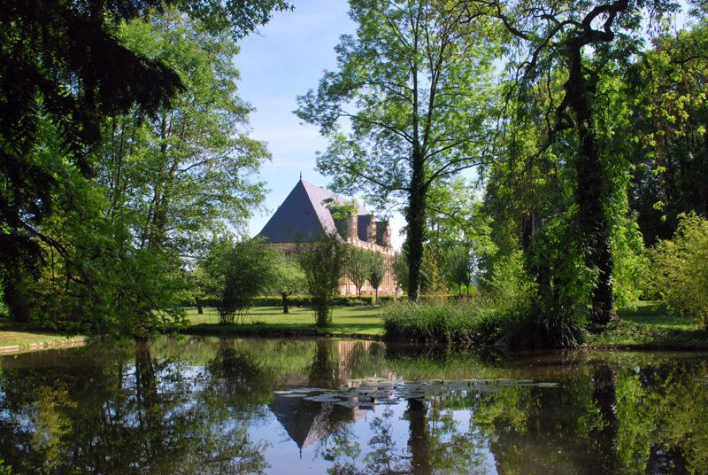
On the remaining two-thirds of the site, visitors can discover a picturesque park laid out in the second half of the 19th century. Unlike the architectural gardens of the Renaissance, these offer a more 'natural', albeit carefully laid-out, vision of the countryside:
- winding paths
- groves adorned with rare species: ginkgo biloba, sequoïalendron, tulip tree, weeping beech, purple beech, etc...
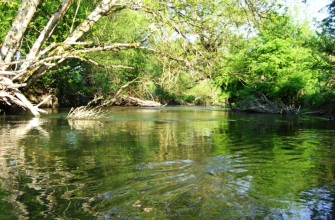
- pond and english river.
- A national collection of box trees (153 varieties) approved by the CCVS (Comité des Collections Végétales Spécialisées) adorns the park's pathways.
The park is also home to cast-iron sculptures inspired by 19th-century models, as well as contemporary works.

Visit available on the free Id-Vizit app!
Id-Vizit is your personal travel companion, offering you personalised, fun and interactive tours!
+ More info on Id-Vizit

Fun tour also available on the Id-Vizit app:
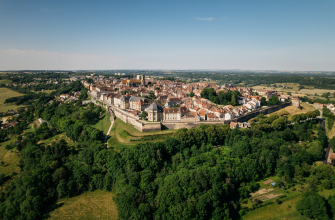
Marie de Lorraine and the Château du Grand-Jardin
Let me introduce myself, my name is Marie de Lorraine, eldest daughter of the family of the Dukes of Guise. Come with me as we discover the Château du Grand Jardin... that is, if you can answer a few riddles...
Château du Grand Jardin, coté jardins