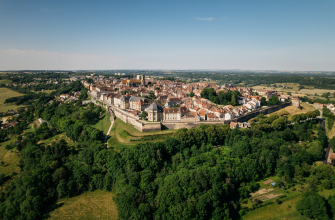
The ZNIEFF covering the Moreux, Côte Prébert and Charmoise woods, covering more than 300 hectares, is located to the north of the municipality of Vicq in the Haute Marne département.
For nature lovers:
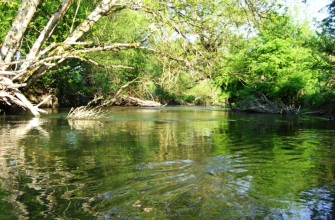
Various types of forest can be found here: the mesotrophic beech-oak-chamber forest is the most represented (45% of the total surface area of the ZNIEFF), accompanied by the neutrophilous oak-chamber forest and the more or less fresh oak-oak forest at the bottom of the slopes, alder-oak woodland at the bottom of valleys and along streams, typical acidiphilous beech-oak woodland or a gully grouping with mountain elm, rich in associated ferns, on steep slopes. Heterogeneous secondary woodlands (dominated by black locust), grasslands and fruticées resulting from the recolonisation of former abandoned vineyards, coniferous stands and poplar plantations complete the site's vegetation.
Vegetation:
Mesotrophic oak woodland thrives on the gently sloping hillsides. The tree layer consists of pedunculate oak, hornbeam, ash, sessile oak and beech. The shrub layer is rich in species: wild rose, hazelnut, bramble, privet, European charcoal, thorny hawthorn, etc. The herbaceous layer is well-diversified, with European daffodil, wood sedge, yellow manure-grass, uniflorous meadow-rue, oxalis sorrel, speedwell, spiny polysticks, etc. At the bottom of the slope, there is a fresher variation with wild garlic, Paris circus, wood chickweed (from the Vosges and very rare on the plains, it only has a few stations in Haute-Marne where it is at the limit of its distribution), mountain speedwell, flexuous cardamine, female fern, etc.
Fauna:
Numerous amphibians can be seen, including the yellow-bellied toad, a small toad typical of the south-east of Haute-Marne, found in ruts, springs and small forest streams. It is protected in France and Europe (Bern Convention and Habitats Directive) and is included on the European Red List of the Habitats Directive (Annex II), in the Red Book of endangered fauna in France and on the Red List of amphibians in Champagne-Ardenne. It is also home to the spotted salamander (regional red list), the common toad, certain newts (alpine newt, palmate newt) and various frogs (green and red-legged frogs). The massif is a feeding and nesting ground for many bird species, particularly birds of prey, woodpeckers and passerines. These include turtle doves, wood pigeons, green woodpeckers, pileated woodpeckers, music thrushes, nuthatches, red grosbeaks, black-headed warblers, siskins, siskins, the common kinglet, the triple-banded kinglet, the blue tit, the European oriole and the oak jay. The more open or scrubby environments are home to the common hypola, the great tit and the garden warbler...
Undeveloped site
Access reserved for an informed and respectful public
Bois de la Charmoise