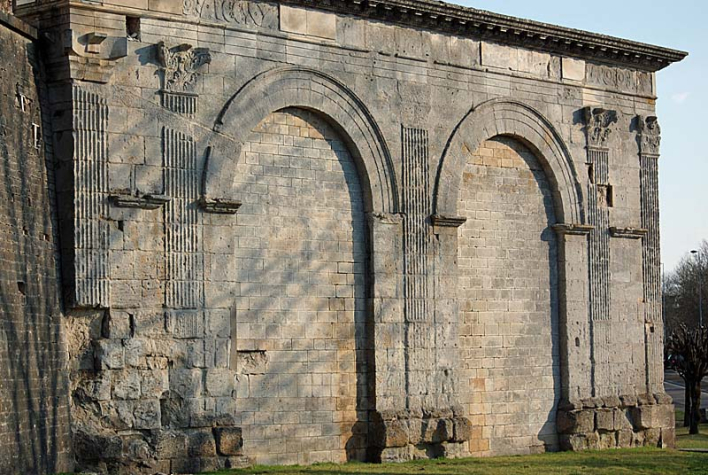
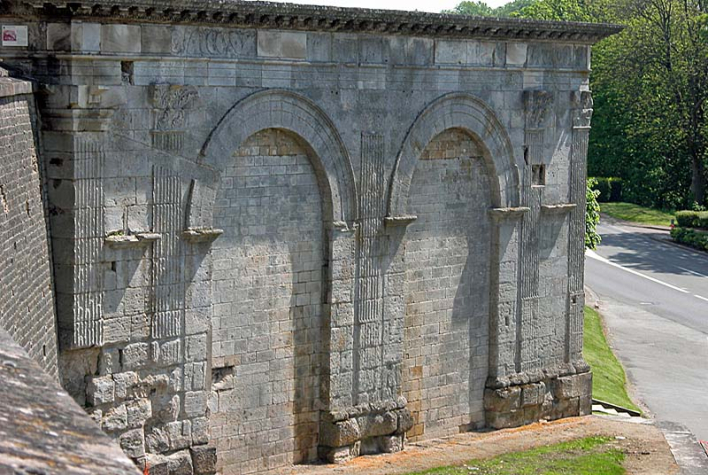
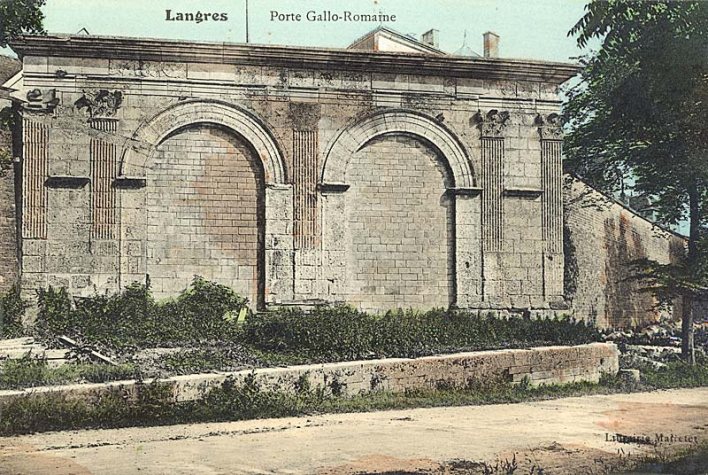
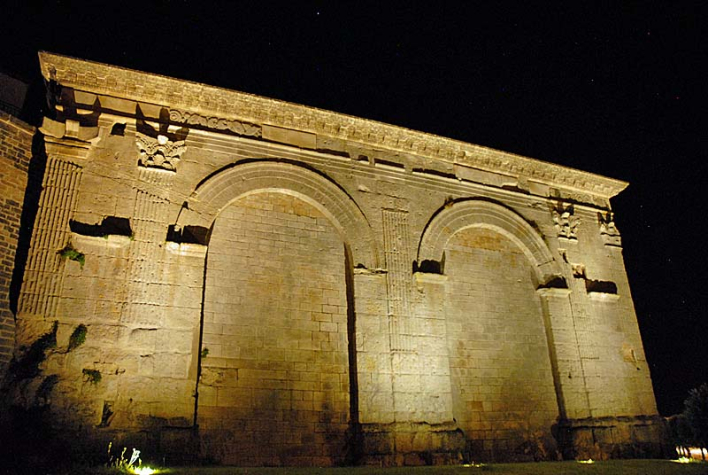
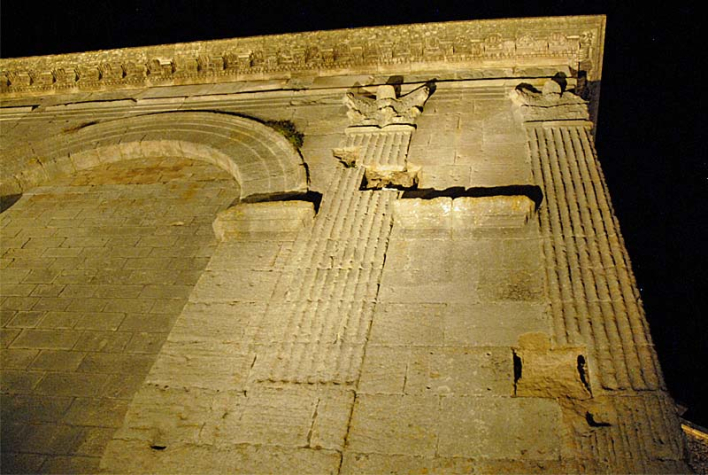
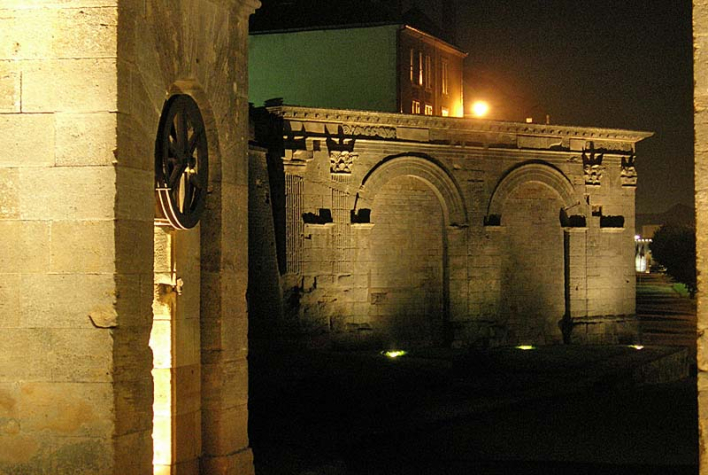
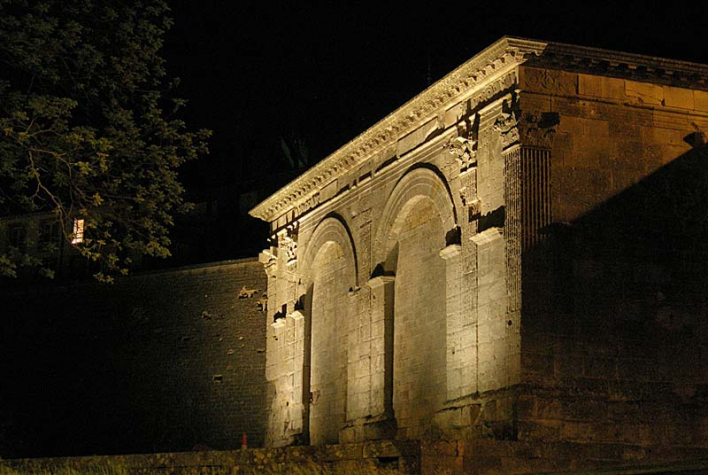
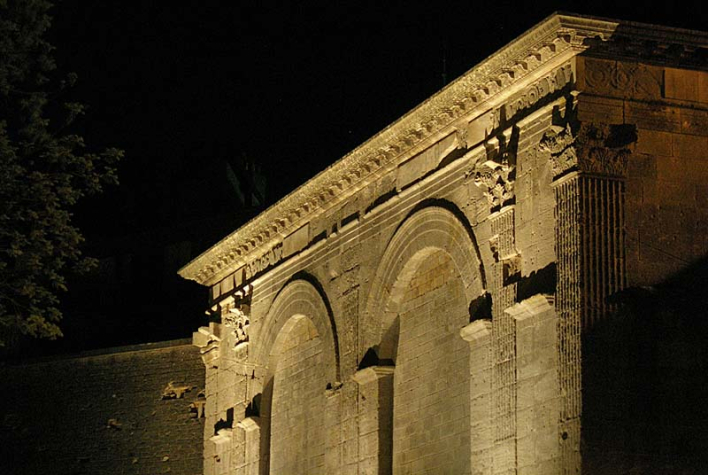
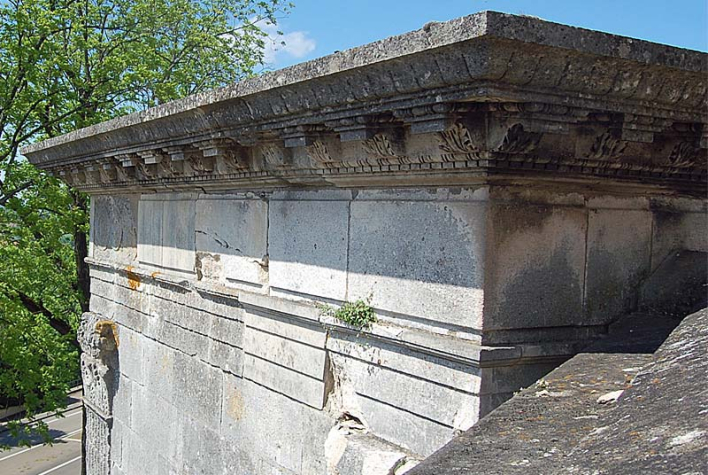
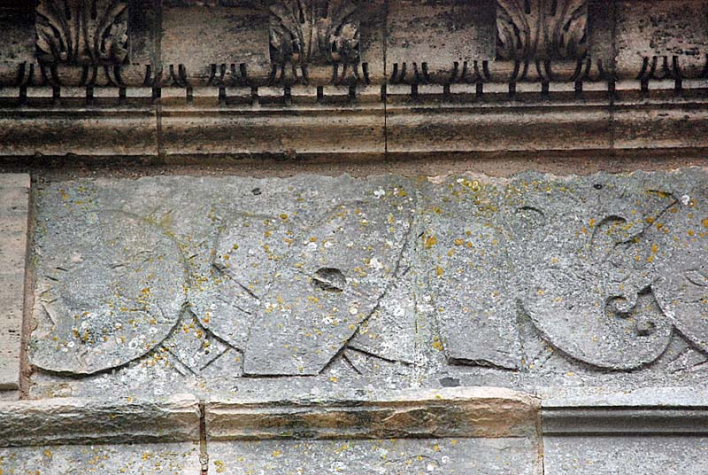
Built around thirty years after Julius Caesar's conquest of Gaul, this monumental arch marked the main entrance to Andematunnum - ancient Langres - from the west. Positioned so that the road from Reims entered the city directly, it is the oldest surviving building in Langres. Unsuitable for effective defence, this arch was incorporated into the first fortifications at the end of the 3rd century; its double access was probably condemned at the same time, in favour of the Town Hall gate. Because of its protruding angle on the enclosure, it was transformed into a covered tower, equipped with a guardhouse and firing embrasures cut into the frieze.
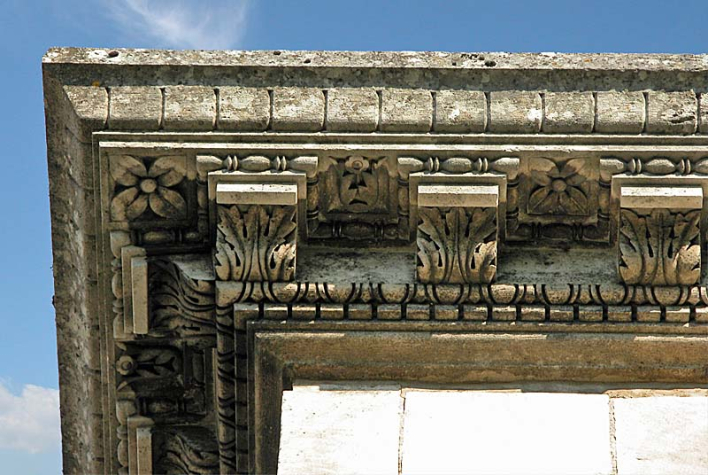
Until the mid-nineteenth century, a building leaned against the arch. As with other parts of the enclosure, these houses were definitively expropriated by the Military Engineers during restoration work, which resulted in the restoration of the cornice crowning the building.
A little background information:
In 1845, due to the work carried out by the Engineers, a project to move this arch was studied by the town and approved by the Prefecture. Following the intervention of the Langres Historical and Archaeological Society, the plan was rejected; the Prefect even suggested reopening the arches "if possible". The cornice of this doorway was restored in 1854 by Eugène Millet, a pupil of Labrouste and Viollet le Duc. Much to the dismay of the members of the Langres Historical and Archaeological Society, who had encouraged the gate to be listed (1846) and restored to its original condition, "a heavy, bright white cornice, with no sculpture, crushes and degrades the Arc de Triomphe de Langres forever".
A slanting mark cutting across the two left-hand pilasters bears witness to the presence of a house whose roof rested on the gateway. Until the middle of the 19th century, many houses were built at the foot of the fortifications, to the point where some curtain walls were no longer visible.
The engineers finally expropriated these hovel-like houses.
Arc gallo-romain