Built in the 19th century, this house was home to the Mauclère family, who gave their name to the street. One of the members of the family, Désiré Mauclère (1833-1911), was director of the Val d'Osne and Joinville factories in 1851: he is listed with his wife Marie Linard in this house in 1876. Look out for the wrought iron entrance gate, surmounted by the initials L and M interlaced: they probably correspond to the two surnames of the owners of the house. The entrance door, preceded by a stone stoop, is topped by an elegant cast-iron marquee.
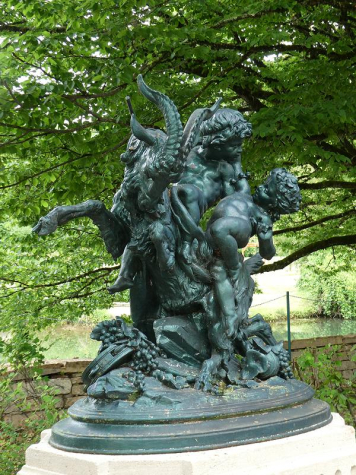
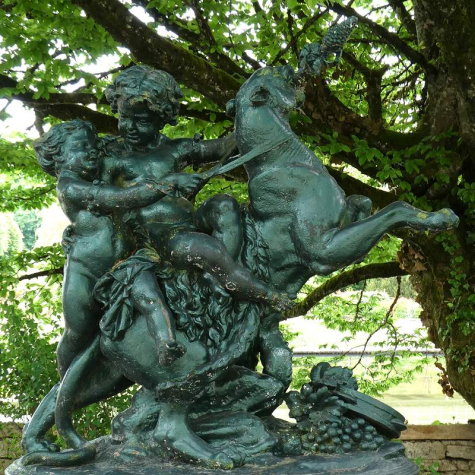
The courtyard houses two cast-iron statues, made in the foundry of Antoine-Aubin Durenne (1822-1895) in Sommevoire, based on a model supplied by sculptor François Carpezat (1827-1876) and presented at the Ecole des Beaux-Arts in Paris in 1857. The first depicts two children riding a goat, bunches of grapes and a tambourine at their feet: it could be an allegory of autumn or an evocation of the Bacchanalia, festivals in honour of Bacchus (Dionysus), god of wine and celebration. In the same spirit, the second statue is a group of two children and a panther, also traditionally associated with Bacchus (Dionysus), beneath which lie bunches of grapes and a tambourine. These two statues form a pair and appear on the same plate in the 1889 Durenne foundry catalogue (plate 480).
Once home to the Direction Départementale des Finances Publiques (DDFiP), it has now been converted by the communauté de communes du bassin de Joinville into a "France Services" centre, to help reduce inequalities in access to public services. Various partners (Public Finance, Family Allowances, Retirement Insurance, Health Insurance, etc.) are on hand on a regular basis.
The statues are accessible during "France Services" opening hours.
Ancienne maison de directeur de forge