Origins and dependencies: Benedictine abbey founded in the VIIᵉ century, attested in 870, paradoxically under the authority of the bishop of Toul from 910, then returned to the authority of Langres around 1005.
Cistercian period: affiliated to Cîteaux in 1147 (probably thanks to Saint Bernard), subject to the abbey of Tart. This period was marked by a fervent beginning (abbatiate of Adeline I, niece of Saint Bernard), then by the return of Benedictine customs and internal conflicts. In 1233, the Bishop of Langres regained control and put an end to the Cistercian experiment: the "graft" had not taken.
Return to Benedictinism: After 1233, Poulangy became a Benedictine abbey under strong episcopal supervision. From 1296, the bishop controlled appointments and income, which led to constant tensions with the abbesses, who were jealous of their independence. Three priories depended on it (Mont-le-Franois, Vaudey and Orimont).
Assets and temporal affairs: Little is known about the temporal affairs of the abbey, but there is evidence of some income, gifts of land and agricultural operations (barns, mills), mainly in the Traire valley and the surrounding area.
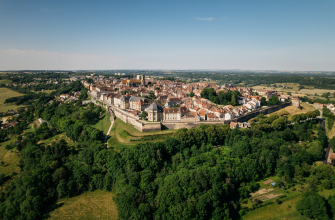
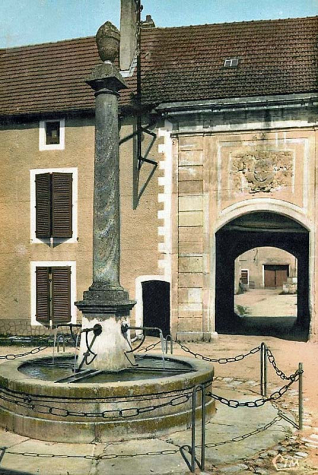
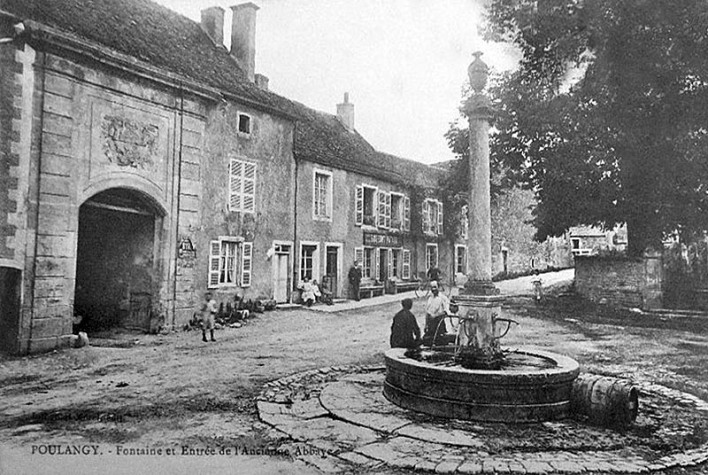
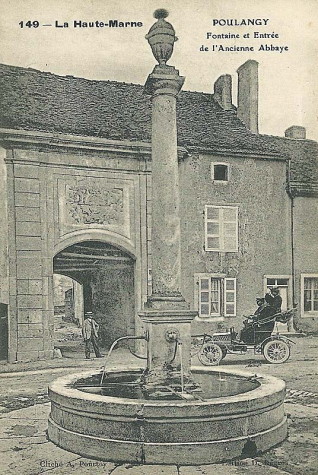
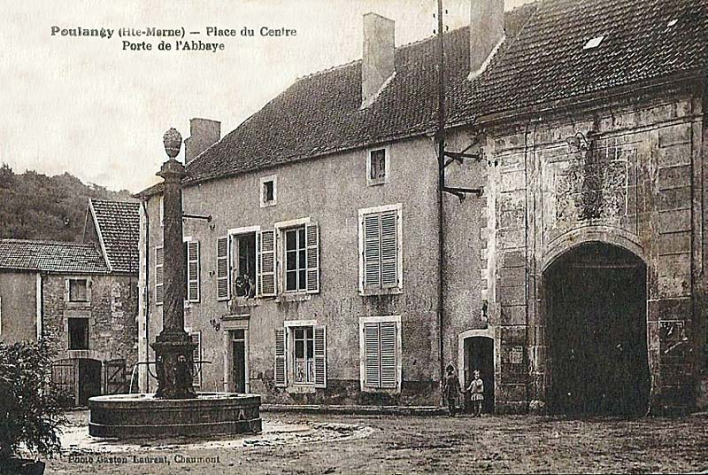
Architecture and material remains: The medieval abbey has disappeared (destroyed during the French Revolution, including the abbey church and the enclosure). All that remains are the monumental porch, the Chapter Gate and a few houses. The whole complex formed a vast enclosed rectangle, organised into two courtyards (lower abbey and upper abbey), with a cloister, cemetery, abbot's palace, gardens and pond.
Abbaye de Poulangy